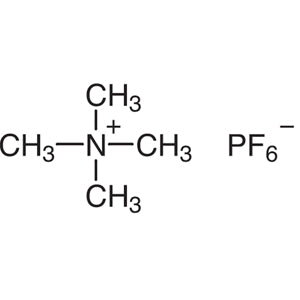
Tetramethylammonium Acetate (TCI T1048), with CAS number 10581-12-1, is a synthetic reagent widely used in laboratory settings as a phase transfer catalyst. This compound plays a crucial role in facilitating chemical reactions by enabling the transfer of ions between polar and non-polar phases. Its unique ionic structure allows it to bridge the gap between these two phases, significantly enhancing the efficiency of chemical processes that are otherwise hindered by phase incompatibility. This makes it an essential tool for chemists working on complex reactions that require precise control over reaction environments.
One of the key properties that make Tetramethylammonium Acetate a preferred choice is its stability under various experimental conditions. It is non-volatile and resistant to decomposition, ensuring consistent performance across different applications. Additionally, its cationic nature allows it to interact effectively with a wide range of substrates, making it versatile for multiple chemical reactions. These characteristics contribute to its reliability and effectiveness in both research and industrial settings.
In Indonesian laboratories, Tetramethylammonium Acetate is commonly used in organic synthesis and catalytic processes. Its availability in the local market supports ongoing research efforts, enabling scientists to conduct experiments efficiently. The compound's role in accelerating reactions and improving experimental outcomes is well recognized, making it a valuable resource for academic and research institutions across Indonesia.
TCI brochures (PDF)
- Quaternary Ammonium Salts 2025-11-10 · p. 8
Related TCI products
- TCI T1397 10581-12-1 Tetramethylammonium Acetate (ca. 15% in Water)
- TCI T4131 1941-24-8 Tetramethylammonium Nitrate
- TCI T1296 558-32-7 Tetramethylammonium Hexafluorophosphate
- TCI T1240 14190-16-0 Tetramethylammonium Sulfate
- TCI T0842 661-36-9 Tetramethylammonium Tetrafluoroborate
- TCI T0139 75-58-1 Tetramethylammonium Iodide
- Organic synthesis reactions benefit from this catalyst as it enhances the transfer of ions between phases, improving reaction efficiency.
- Catalytic processes in polymerization and functional group transformations are supported by its ability to mediate between polar and non-polar environments.
- Analytical chemistry applications use it to improve the solubility and reactivity of compounds in mixed-phase systems.
- Environmental chemistry studies leverage its stability and non-volatility for long-term experiments in varied conditions.
- Industrial chemical processes utilize its phase transfer properties to optimize reaction conditions and reduce energy consumption.
| Brand | TCI |
|---|---|
| CAS number | 10581-12-1 |
| Molecular formula | — |
| Purity | — |
| Category | Chemistry > Synthetic Reagents > Phase Transfer Catalysts |
| Pack sizes | Available in various sizes as per supplier specifications |
| Physical form | Solid powder |
| Storage | Store in a cool, dry place away from moisture and direct sunlight |
Tetramethylammonium Acetate should be stored in a cool, dry environment to maintain its chemical integrity. It is recommended to keep it in airtight containers to prevent moisture absorption, which could affect its performance. Since it is a solid powder, it should be handled with care to avoid inhalation or skin contact. In laboratory settings, it is advisable to use appropriate personal protective equipment, such as gloves and safety goggles, when handling the compound. Proper ventilation should be ensured in areas where it is used to minimize exposure. Its non-volatile nature makes it relatively stable, but it is still important to follow standard chemical safety protocols to ensure safe usage and storage.
—
Produk Terkait
-
TetramethylammoniumAcetate(ca.15%inWater) TCI T1397
Regular price Rp 1.723.050,00Regular priceRp 1.220.100,00Sale price Rp 1.723.050,00 -
TetramethylammoniumNitrate TCI T4131
Regular price From Rp 1.140.300,00Regular priceRp 812.700,00Sale price From Rp 1.140.300,00 -
TetramethylammoniumHexafluorophosphate TCI T1296
Regular price Rp 2.147.250,00Regular priceRp 1.517.250,00Sale price Rp 2.147.250,00 -
TetramethylammoniumSulfate TCI T1240
Regular price Rp 2.279.550,00Regular priceRp 1.609.650,00Sale price Rp 2.279.550,00 -
TetramethylammoniumTetrafluoroborate TCI T0842
Regular price Rp 1.298.850,00Regular priceRp 924.000,00Sale price Rp 1.298.850,00 -
TetramethylammoniumIodide TCI T0139
Regular price From Rp 900.900,00Regular priceRp 645.750,00Sale price From Rp 900.900,00 -
TetramethylammoniumChloride TCI T0136
Regular price From Rp 530.250,00Regular priceRp 386.400,00Sale price From Rp 530.250,00 -
TetramethylammoniumBromide TCI T0135
Regular price From Rp 582.750,00Regular priceRp 423.150,00Sale price From Rp 582.750,00