Explore Organic-Inorganic Hybrid Materials
Organic-Inorganic Perovskite Precursors
- Bismuth Halides [Organic-Inorganic Perovskite Precursors]
- Cesium Halides [Organic-Inorganic Perovskite Precursors]
- Lead Compounds (Others) [Organic-Inorganic Perovskite Precursors]
- Lead Halides [Organic-Inorganic Perovskite Precursors]
- Organic Onium Salts [Organic-Inorganic Perovskite Precursors]
- Rubidium Halides [Organic-Inorganic Perovskite Precursors]
- Tin Halides [Organic-Inorganic Perovskite Precursors]
Silane Coupling Agents/Adhesion Promoters
- Acryloyloxyalkyl Silanes [Silane Coupling Agents/Adhesion Promoters]
- Alkyl Silanes [Silane Coupling Agents/Adhesion Promoters]
- Aminoalkyl Silanes [Silane Coupling Agents/Adhesion Promoters]
- Aryl Silanes, Arylalkyl Silanes [Silane Coupling Agents/Adhesion Promoters]
- Fluoroalkyl Silanes, Fluoroaryl Silanes [Silane Coupling Agents/Adhesion Promoters]
- Glycidyloxyalkyl Silanes [Silane Coupling Agents/Adhesion Promoters]
- Olefinyl Silanes [Silane Coupling Agents/Adhesion Promoters]
- Silanes (Other) [Silane Coupling Agents/Adhesion Promoters]
Related TCI catalogs (PDF)
-
 Organic Linker Molecules for Metal Organic Frameworks (MOFs)
-
 Organic-Inorganic Perovskite Precursors
-
 Perovskite Precursor Tin(II) Iodide Tin(II) Bromide
-
 High Purity Perovskite Precursor Purified Lead(II) Bromide
-
 Perovskite Precursor for Solar Cell Purified Lead(II) Iodide
-
 Perovskite Precursor: Lead Acetate Anhydrous
-
SalicylaldehydeAzine TCI S0850
Vendor:TCIRegular price From Rp 1.829.100,00Regular priceRp 1.294.650,00Sale price From Rp 1.829.100,00 -
2-Methylimidazole TCI M0345
Vendor:TCIRegular price From Rp 637.350,00Regular priceRp 460.950,00Sale price From Rp 637.350,00 -
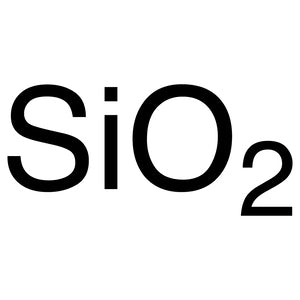
Silicon(IV)Oxide,AEROSIL(regR)200 TCI I1200
Vendor:TCIRegular price Rp 1.220.100,00Regular priceRp 852.600,00Sale price Rp 1.220.100,00 -
Aluminumsec-Butoxide TCI A0244
Vendor:TCIRegular price From Rp 584.850,00Regular priceRp 408.450,00Sale price From Rp 584.850,00 -
Tris(2,4-pentanedionato)aluminum(III) TCI A0241
Vendor:TCIRegular price From Rp 689.850,00Regular priceRp 481.950,00Sale price From Rp 689.850,00 -
AcetylenedicarboxylicAcid TCI A0088
Vendor:TCIRegular price From Rp 1.220.100,00Regular priceRp 868.350,00Sale price From Rp 1.220.100,00 -
AcetamidineHydrochloride TCI A0008
Vendor:TCIRegular price From Rp 610.050,00Regular priceRp 442.050,00Sale price From Rp 610.050,00 -
Zirconium(IV)Butoxide(ca.80%in1-Butanol) TCI Z0016
Vendor:TCIRegular price From Rp 477.750,00Regular priceRp 333.900,00Sale price From Rp 477.750,00 -
Tetrakis(2,4-pentanedionato)zirconium(IV) TCI Z0006
Vendor:TCIRegular price From Rp 1.353.450,00Regular priceRp 946.050,00Sale price From Rp 1.353.450,00 -
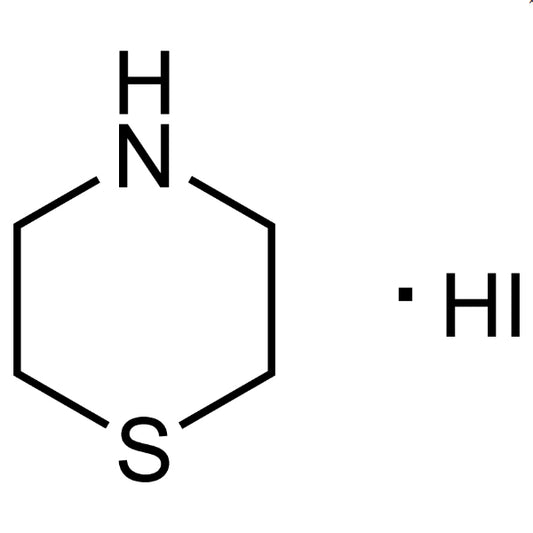
ThiomorpholineHydroiodide TCI T4375
Vendor:TCIRegular price From Rp 1.988.700,00Regular priceRp 1.405.950,00Sale price From Rp 1.988.700,00 -
2,3,5,6-Tetraaminocyclohexa-2,5-diene-1,4-dione TCI T4344
Vendor:TCIRegular price From Rp 2.942.100,00Regular priceRp 2.072.700,00Sale price From Rp 2.942.100,00 -
Titanium(IV)Oxide,AEROXIDE(regR)P25 TCI T4118
Vendor:TCIRegular price Rp 1.220.100,00Regular priceRp 852.600,00Sale price Rp 1.220.100,00 -
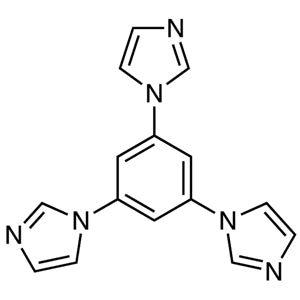
1,3,5-Tri(1H-imidazol-1-yl)benzene TCI T3903
Vendor:TCIRegular price Rp 3.207.750,00Regular priceRp 2.258.550,00Sale price Rp 3.207.750,00 -
Tetrakis(4-carboxyphenyl)methane TCI T3896
Vendor:TCIRegular price Rp 6.863.850,00Regular priceRp 4.799.550,00Sale price Rp 6.863.850,00 -
1,2,4,5-Tetrakis(4-carboxyphenyl)benzene TCI T3894
Vendor:TCIRegular price From Rp 2.837.100,00Regular priceRp 1.983.450,00Sale price From Rp 2.837.100,00 -
Tin(II)Bromide[forPerovskiteprecursor] TCI T3573
Vendor:TCIRegular price From Rp 1.565.550,00Regular priceRp 1.094.100,00Sale price From Rp 1.565.550,00