Collection: Dithiocarbamato Complexes [Magnetic Metal Complexes]
Dithiocarbamato Complexes [Magnetic Metal Complexes] — a collection of transition metal complexes with dithiocarbamate ligands, such as copper(II) and iron(III) complexes with methyl, ethyl, or hydroxyethyl substituents on the dithiocarbamate group. They serve as coordination complexes with magnetic properties studied in inorganic and materials chemistry research.
These dithiocarbamato complexes are used by inorganic chemistry and magnetic materials researchers to study the electronic and magnetic properties of transition metal complexes, and as reference materials in the synthesis of similar coordination complexes. Variation in the central metal, such as copper and iron, allows comparison of magnetic behavior between complexes.
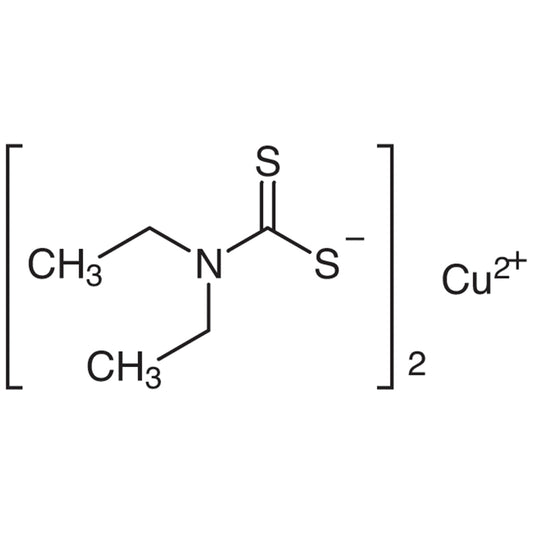
Example products in this collection: TCI B0491 52611-57-1 Copper(II) Bis(2-hydroxyethyl)dithiocarbamate, TCI D0487 13681-87-3 Copper(II) Diethyldithiocarbamate, TCI D1267 14484-64-1 Iron(III) Dimethyldithiocarbamate, TCI D1022 137-29-1 Copper(II) Dimethyldithiocarbamate.
Pay attention to the type of central metal (copper or iron), the substituent on the dithiocarbamate group (methyl, ethyl, or hydroxyethyl), and the purity level of the complex. All products are genuine Tokyo Chemical Industry (TCI) Japan products, with purity, packaging, and storage conditions listed on each item's page.
Other categories parallel under Magnetic Metal Complexes, often used together in a single laboratory workflow:
Back to Magnetic Metal Complexes. For large-volume procurement, special packaging, or specific grades, contact the AMI Scientific team, the official TCI Japan distributor in Indonesia, to check availability and lead time directly from Japan.