Related TCI catalogs (PDF)


-
Bis(2,4-pentanedionato)vanadium(IV)Oxide TCI V0016
Vendor:TCIRegular price Rp 2.199.750,00Regular priceRp 1.538.250,00Sale price Rp 2.199.750,00 -
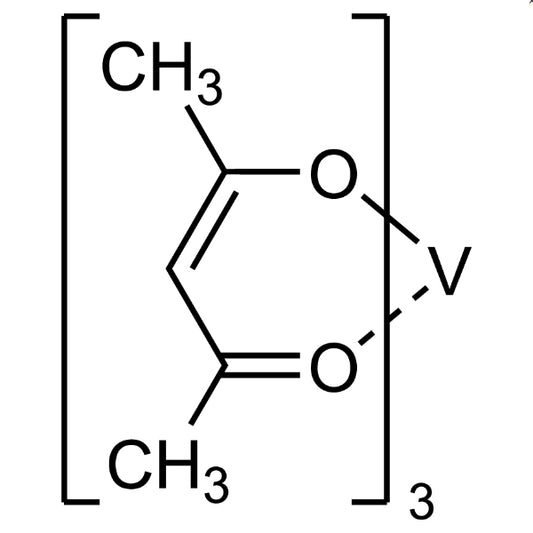
Vanadium(III)Acetylacetonate TCI T4380
Vendor:TCIRegular price From Rp 1.220.100,00Regular priceRp 852.600,00Sale price From Rp 1.220.100,00 -
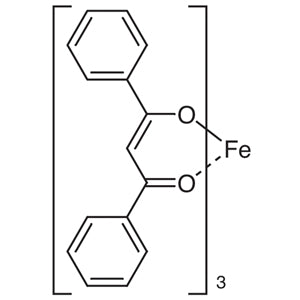
Tris(dibenzoylmethanato)Iron(III) TCI T1686
Vendor:TCIRegular price From Rp 2.837.100,00Regular priceRp 1.983.450,00Sale price From Rp 2.837.100,00 -
TetrabutylphosphoniumBis(1,3-dithiole-2-thione-4,5-dithiolato)nickel(III)Complex TCI T1416
Vendor:TCIRegular price Rp 4.266.150,00Regular priceRp 2.998.800,00Sale price Rp 4.266.150,00 -
TetrabutylammoniumBis(1,3-dithiole-2-thione-4,5-dithiolato)nickel(III)Complex TCI T1272
Vendor:TCIRegular price Rp 1.590.750,00Regular priceRp 1.127.700,00Sale price Rp 1.590.750,00 -
Bis(8-quinolinolato)copper(II)(purifiedbysublimation) TCI B3834
Vendor:TCIRegular price Rp 3.340.050,00Regular priceRp 2.350.950,00Sale price Rp 3.340.050,00 -
Bis(2,4-pentanedionato)cobalt(II) TCI B2681
Vendor:TCIRegular price Rp 1.696.800,00Regular priceRp 1.186.500,00Sale price Rp 1.696.800,00 -
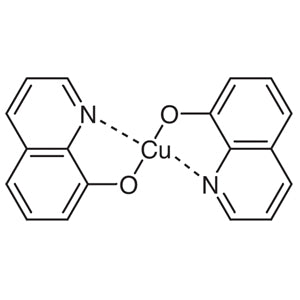
Bis(8-quinolinolato)copper(II) TCI B1677
Vendor:TCIRegular price Rp 1.618.050,00Regular priceRp 1.146.600,00Sale price Rp 1.618.050,00 -
Bis(tetrabutylammonium)Bis(1,3-dithiole-2-thione-4,5-dithiolato)palladium(II) TCI B1437
Vendor:TCIRegular price Rp 1.220.100,00Regular priceRp 868.350,00Sale price Rp 1.220.100,00 -
Copper(II)Bis(2-hydroxyethyl)dithiocarbamate TCI B0491
Vendor:TCIRegular price From Rp 903.000,00Regular priceRp 631.050,00Sale price From Rp 903.000,00 -
Tris(trifluoro-2,4-pentanedionato)chromium(III) TCI T0932
Vendor:TCIRegular price Rp 2.013.900,00Regular priceRp 1.423.800,00Sale price Rp 2.013.900,00 -
Bis(trifluoro-2,4-pentanedionato)cobalt(II) TCI T0746
Vendor:TCIRegular price From Rp 2.597.700,00Regular priceRp 1.832.250,00Sale price From Rp 2.597.700,00 -
Copper(II)Phthalocyanine(beta-form) TCI P1006
Vendor:TCIRegular price From Rp 717.150,00Regular priceRp 500.850,00Sale price From Rp 717.150,00 -
Bis(2,4-pentanedionato)nickel(II)Hydrate TCI N0096
Vendor:TCIRegular price From Rp 2.041.200,00Regular priceRp 1.426.950,00Sale price From Rp 2.041.200,00 -
Manganese(III)TetraphenylporphyrinChloride TCI M2621
Vendor:TCIRegular price Rp 4.186.350,00Regular priceRp 2.943.150,00Sale price Rp 4.186.350,00 -
Tris(2,4-pentanedionato)manganese(III) TCI M0043
Vendor:TCIRegular price From Rp 1.353.450,00Regular priceRp 946.050,00Sale price From Rp 1.353.450,00