Tris(trifluoro-2,4-pentanedionato)chromium(III) is a metal complex compound used in scientific research related to magnetic materials. It plays a key role in laboratory settings where the study of magnetic properties and crystal structures of metal complexes is required. This compound is widely utilized in the synthesis of other complex compounds and as a test material for characterizing magnetic materials. Its unique chemical structure, featuring chromium(III) ions coordinated with trifluoro-2,4-pentanedionato ligands, provides stability and distinct magnetic behavior, making it a valuable tool for advanced research.
The compound's complex structure and stable magnetic properties make it a preferred choice for researchers working in materials science and chemistry. Its ability to exhibit controlled magnetic behavior allows for precise experimentation in various scientific applications. The coordination of chromium(III) with specific ligands enhances its reactivity and functional versatility, enabling it to be used in multiple experimental setups. This combination of chemical and magnetic properties ensures its relevance in both fundamental and applied research.
In Indonesian laboratories, this compound is commonly used by researchers in material science and chemistry for applied studies. It supports the development of new magnetic materials and the investigation of interactions between metals and ligands. Its availability in the local market facilitates access for researchers, reducing the need for imports and ensuring consistent supply for ongoing experiments.
TCI brochures (PDF)
- Magnetic Metal Complexes 2024-12-16 · p. 1
- Transition Metal Catalysts 2026-04-10 · p. 5
Related TCI products
- TCI T0746 16092-38-9 Bis(trifluoro-2,4-pentanedionato)cobalt(II)
- TCI C0336 21679-31-2 Tris(2,4-pentanedionato)chromium(III)
- TCI V0016 3153-26-2 Bis(2,4-pentanedionato)vanadium(IV) Oxide
- TCI B2681 14024-48-7 Bis(2,4-pentanedionato)cobalt(II)
- TCI N0096 120156-44-7 Bis(2,4-pentanedionato)nickel(II) Hydrate
- TCI M0043 14284-89-0 Tris(2,4-pentanedionato)manganese(III)
- Magnetic Material Development: This compound is ideal for creating new magnetic materials due to its stable and controllable magnetic properties.
- Crystal Structure Analysis: Its complex structure makes it suitable for studying the crystalline properties of metal complexes in X-ray diffraction experiments.
- Synthesis of Complex Compounds: It serves as a precursor in the synthesis of other metal complexes, offering a reliable source for chemical reactions.
- Magnetic Characterization Studies: Researchers use it to analyze magnetic behavior under different conditions, aiding in the understanding of magnetic interactions.
- Ligand-Interaction Research: Its coordination with specific ligands makes it useful for studying how metal-ligand interactions influence magnetic and chemical properties.
| Brand | TCI |
|---|---|
| CAS number | 14592-89-3 |
| Molecular formula | — |
| Purity | — |
| Category | Materials Science > Magnetic Materials > Magnetic Metal Complexes |
| Pack sizes | Available in various quantities as per supplier specifications |
| Physical form | Solid powder |
| Storage | Store in a cool, dry place away from moisture and direct sunlight |
This compound should be stored in a cool, dry environment to maintain its chemical integrity and magnetic properties. It is recommended to use airtight containers to prevent exposure to moisture and air, which could affect its stability. Due to its chemical nature, it should be handled with appropriate personal protective equipment, such as gloves and safety goggles, to ensure laboratory safety. Avoid contact with incompatible substances and ensure proper ventilation in the workspace. Regular monitoring of storage conditions helps maintain the compound's effectiveness for research applications.
—
Produk Terkait
-
Bis(trifluoro-2,4-pentanedionato)cobalt(II) TCI T0746
Regular price From Rp 2.597.700,00Regular priceRp 1.832.250,00Sale price From Rp 2.597.700,00 -
Tris(2,4-pentanedionato)chromium(III) TCI C0336
Regular price From Rp 795.900,00Regular priceRp 556.500,00Sale price From Rp 795.900,00 -
Bis(2,4-pentanedionato)vanadium(IV)Oxide TCI V0016
Regular price Rp 2.199.750,00Regular priceRp 1.538.250,00Sale price Rp 2.199.750,00 -
Bis(2,4-pentanedionato)cobalt(II) TCI B2681
Regular price Rp 1.696.800,00Regular priceRp 1.186.500,00Sale price Rp 1.696.800,00 -
Bis(2,4-pentanedionato)nickel(II)Hydrate TCI N0096
Regular price From Rp 2.041.200,00Regular priceRp 1.426.950,00Sale price From Rp 2.041.200,00 -
Tris(2,4-pentanedionato)manganese(III) TCI M0043
Regular price From Rp 1.353.450,00Regular priceRp 946.050,00Sale price From Rp 1.353.450,00 -
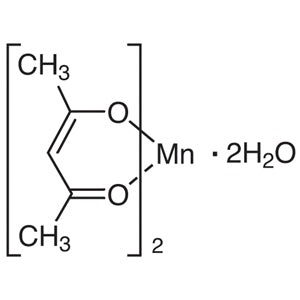
Bis(2,4-pentanedionato)manganese(II)Dihydrate TCI M0042
Regular price Rp 1.378.650,00Regular priceRp 963.900,00Sale price Rp 1.378.650,00 -
Tris(2,4-pentanedionato)iron(III) TCI I0079
Regular price From Rp 743.400,00Regular priceRp 519.750,00Sale price From Rp 743.400,00