Copper(II) Bis(2-hydroxyethyl)dithiocarbamate is a chemical compound widely used in laboratory settings, particularly in catalysis and inorganic chemistry. As a transition metal complex, it plays a crucial role in facilitating chemical reactions by interacting with metal ions, especially copper. This compound is essential for various synthetic processes where metal-based catalysts are required, such as oxidation and reduction reactions. Its unique structure allows it to act as a versatile ligand, making it a valuable tool for chemists working with complex reaction mechanisms.
The compound’s chemical properties, including its stability and reactivity, make it a preferred choice for laboratory applications. The presence of dithiocarbamate groups in its structure enhances its ability to form stable complexes with transition metals, contributing to its effectiveness as a catalyst. Its solubility in organic solvents also simplifies its use in a wide range of experimental procedures. These characteristics ensure that it remains a reliable and efficient material for chemical synthesis and analytical work.
In Indonesian laboratories, Copper(II) Bis(2-hydroxyethyl)dithiocarbamate is commonly used in research related to catalysis and the synthesis of complex compounds. It is particularly favored for its role in metal-based catalytic systems, where it helps to control reaction pathways and improve yields. Its availability and performance make it a standard material in both academic and industrial research environments in Indonesia.
TCI brochures (PDF)
- Magnetic Metal Complexes 2024-12-16 · p. 2
Related TCI products
- TCI D1022 137-29-1 Copper(II) Dimethyldithiocarbamate
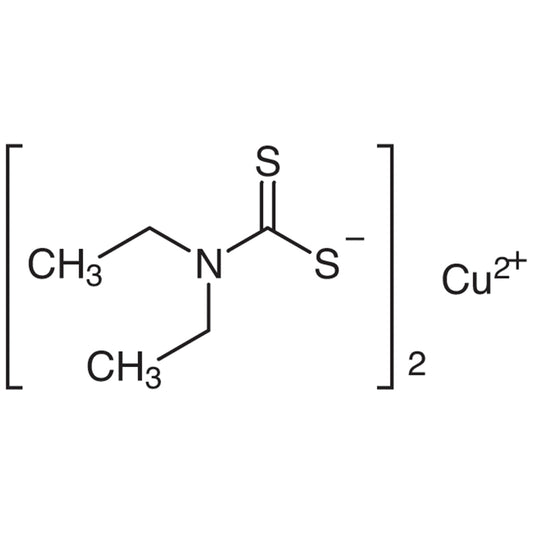
- TCI D0487 13681-87-3 Copper(II) Diethyldithiocarbamate
- TCI D1267 14484-64-1 Iron(III) Dimethyldithiocarbamate
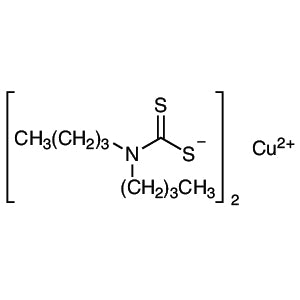
- TCI B6182 13927-71-4 Copper(II) Dibutyldithiocarbamate
- TCI P1006 147-14-8 Copper(II) Phthalocyanine (beta-form)
- TCI H0554 14781-45-4 Bis(hexafluoroacetylacetonato)copper(II)
- Catalytic Oxidation Reactions: This compound is ideal for oxidation processes due to its ability to act as a metal complex catalyst, enhancing reaction efficiency and selectivity.
- Reductive Processes in Organic Synthesis: It supports reductive reactions by providing a stable metal center that facilitates electron transfer, making it suitable for complex organic transformations.
- Metal Complex Formation Studies: Its structure allows for the study of metal-ligand interactions, making it a key material in inorganic chemistry research.
- Analytical Chemistry Applications: It is used in analytical procedures where metal ion detection and complexation are required, offering reliable and consistent results.
- Industrial Chemical Synthesis: Its versatility and effectiveness make it a preferred choice for large-scale chemical synthesis in industrial and research settings.
| Brand | TCI |
|---|---|
| CAS number | 52611-57-1 |
| Molecular formula | — |
| Purity | — |
| Category | Chemistry > Catalysis and Inorganic Chemistry > Transition Elements |
| Pack sizes | Available in various quantities as per standard laboratory supply |
| Physical form | Solid |
| Storage | Store in a cool, dry place away from moisture and direct sunlight |
This compound should be stored in a cool, dry environment to maintain its chemical integrity and prevent degradation. It is recommended to use airtight containers to protect it from moisture and air exposure. Since it is a solid, it should be kept in a secure location away from incompatible materials. Laboratory personnel should handle it with care, using appropriate personal protective equipment such as gloves and safety goggles. Regular monitoring of storage conditions is essential to ensure its stability and effectiveness in experimental applications. Proper labeling and storage practices help maintain a safe and efficient laboratory environment.
—
Produk Terkait
-
Copper(II)Dimethyldithiocarbamate TCI D1022
Regular price Rp 1.803.900,00Regular priceRp 1.261.050,00Sale price Rp 1.803.900,00 -
Copper(II)Diethyldithiocarbamate TCI D0487
Regular price From Rp 875.700,00Regular priceRp 612.150,00Sale price From Rp 875.700,00 -
Iron(III)Dimethyldithiocarbamate TCI D1267
Regular price Rp 743.400,00Regular priceRp 519.750,00Sale price Rp 743.400,00 -
Copper(II)Dibutyldithiocarbamate TCI B6182
Regular price Rp 848.400,00Regular priceRp 593.250,00Sale price Rp 848.400,00 -
Copper(II)Phthalocyanine(beta-form) TCI P1006
Regular price From Rp 717.150,00Regular priceRp 500.850,00Sale price From Rp 717.150,00 -
Bis(hexafluoroacetylacetonato)copper(II) TCI H0554
Regular price From Rp 1.220.100,00Regular priceRp 868.350,00Sale price From Rp 1.220.100,00 -
Copper(II)Tetraphenylporphyrin TCI C2987
Regular price Rp 5.141.850,00Regular priceRp 3.610.950,00Sale price Rp 5.141.850,00 -
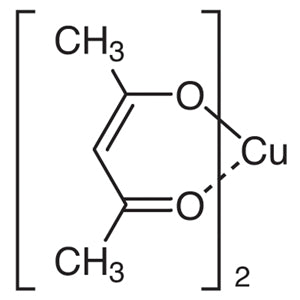
Bis(2,4-pentanedionato)copper(II) TCI C0384
Regular price From Rp 637.350,00Regular priceRp 445.200,00Sale price From Rp 637.350,00