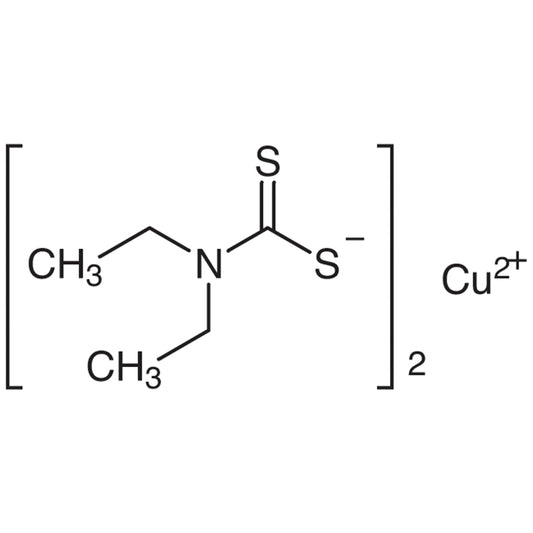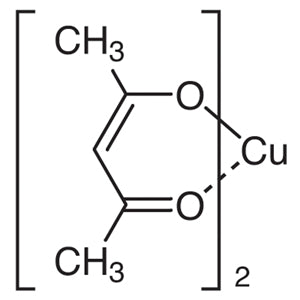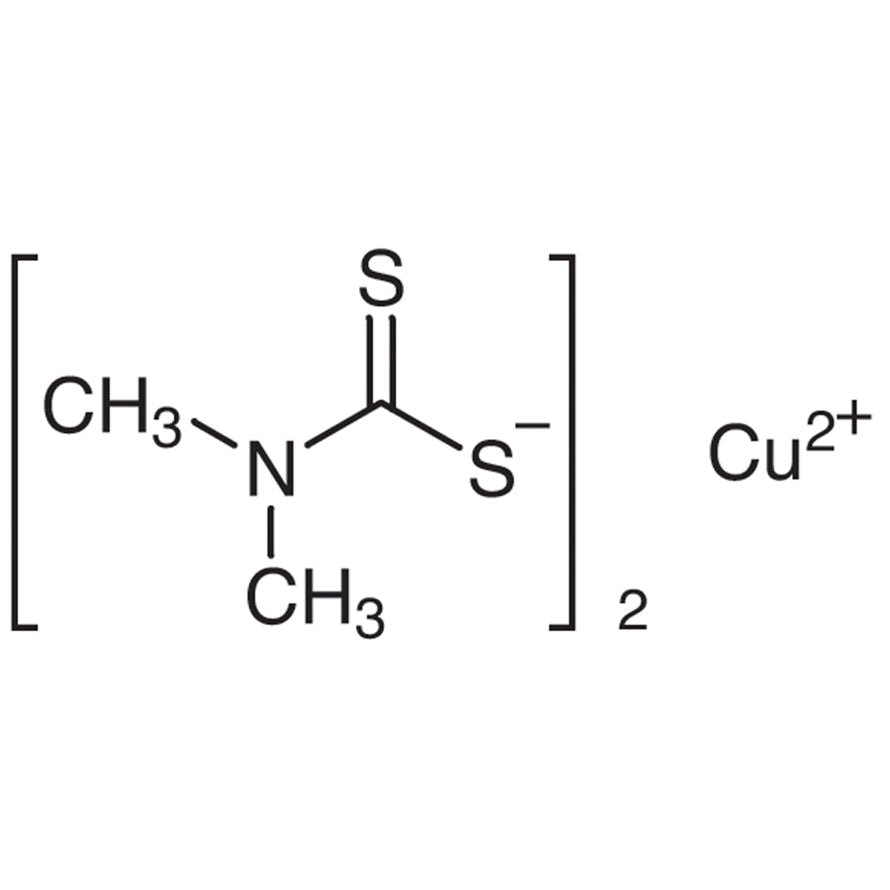
Copper(II) Dimethyldithiocarbamate (CAS 137-29-1) is a chemical compound widely used in laboratory settings for its catalytic and reagent properties. As a transition metal complex, it plays a crucial role in catalytic reactions, especially in the field of inorganic chemistry. This compound is commonly employed in reactions involving copper-based catalysts, where it helps facilitate chemical transformations by lowering activation energy. Its versatility makes it an essential component in both organic and inorganic synthesis processes.
The compound's reactivity and structural complexity make it a preferred choice for applications requiring high specificity and efficiency. Its ability to interact with various molecules allows it to participate in a wide range of chemical reactions, making it valuable in both research and industrial contexts. Additionally, its solubility in organic solvents enhances its usability in diverse experimental setups. The compound's stability under certain conditions further supports its reliability in controlled laboratory environments.
In Indonesian laboratories, Copper(II) Dimethyldithiocarbamate is a key reagent for researchers working in catalysis and inorganic chemistry. Its role in facilitating complex reactions and its availability through suppliers like AMI Scientific make it a practical choice for both academic and industrial applications. Its use aligns with the growing demand for advanced chemical tools in the region’s scientific community.
TCI brochures (PDF)
- Magnetic Metal Complexes 2024-12-16 · p. 2
Related TCI products
- TCI B0491 52611-57-1 Copper(II) Bis(2-hydroxyethyl)dithiocarbamate
- TCI D0487 13681-87-3 Copper(II) Diethyldithiocarbamate
- TCI D1267 14484-64-1 Iron(III) Dimethyldithiocarbamate
- TCI P1006 147-14-8 Copper(II) Phthalocyanine (beta-form)
- TCI H0554 14781-45-4 Bis(hexafluoroacetylacetonato)copper(II)
- TCI C2987 14172-91-9 Copper(II) Tetraphenylporphyrin
- Catalytic Reactions in Organic Synthesis: Copper(II) Dimethyldithiocarbamate is used to facilitate complex organic reactions by acting as a catalyst, enhancing reaction rates without being consumed.
- Inorganic Chemistry Research: The compound is valuable for studying transition metal-based reactions, particularly those involving copper, due to its reactivity and structural properties.
- Coordination Chemistry Studies: Its ability to form coordination complexes makes it ideal for experiments involving metal-ligand interactions and structural analysis.
- Industrial Process Development: The compound is applied in the development of chemical processes where catalytic efficiency and reactivity are critical factors.
- Analytical Chemistry Applications: It is used in analytical methods to detect and quantify copper-based compounds in various samples.
| Brand | TCI |
|---|---|
| CAS number | 137-29-1 |
| Molecular formula | — |
| Purity | — |
| Category | Chemistry > Catalysis and Inorganic Chemistry > Transition Elements |
| Pack sizes | Available in various quantities as per supplier specifications |
| Physical form | Solid (as per standard product description) |
| Storage | Store in a cool, dry place away from moisture and oxidizing agents |
Copper(II) Dimethyldithiocarbamate should be stored in a cool, dry environment to prevent degradation due to moisture and oxidation. It is recommended to use airtight containers made of materials resistant to chemical interaction, such as glass or stainless steel. The compound is sensitive to humidity, so maintaining low moisture levels is essential. Laboratory personnel should handle the material with care, using appropriate personal protective equipment to ensure safety. It should be kept away from strong oxidizers and incompatible substances to avoid unwanted reactions. Proper labeling and storage conditions help maintain the compound's stability and effectiveness in experimental applications.
—
Produk Terkait
-
Copper(II)Bis(2-hydroxyethyl)dithiocarbamate TCI B0491
Regular price From Rp 903.000,00Regular priceRp 631.050,00Sale price From Rp 903.000,00 -
Copper(II)Diethyldithiocarbamate TCI D0487
Regular price From Rp 875.700,00Regular priceRp 612.150,00Sale price From Rp 875.700,00 -
Iron(III)Dimethyldithiocarbamate TCI D1267
Regular price Rp 743.400,00Regular priceRp 519.750,00Sale price Rp 743.400,00 -
Copper(II)Phthalocyanine(beta-form) TCI P1006
Regular price From Rp 717.150,00Regular priceRp 500.850,00Sale price From Rp 717.150,00 -
Bis(hexafluoroacetylacetonato)copper(II) TCI H0554
Regular price From Rp 1.220.100,00Regular priceRp 868.350,00Sale price From Rp 1.220.100,00 -
Copper(II)Tetraphenylporphyrin TCI C2987
Regular price Rp 5.141.850,00Regular priceRp 3.610.950,00Sale price Rp 5.141.850,00 -
Bis(2,4-pentanedionato)copper(II) TCI C0384
Regular price From Rp 637.350,00Regular priceRp 445.200,00Sale price From Rp 637.350,00 -
Tetrakis(acetonitrile)copper(I)Trifluoromethanesulfonate TCI T3905
Regular price From Rp 2.252.250,00Regular priceRp 1.590.750,00Sale price From Rp 2.252.250,00