Related TCI catalogs (PDF)


-
DibutyltinDilaurate TCI D0303
Vendor:TCIRegular price From Rp 557.550,00Regular priceRp 389.550,00Sale price From Rp 557.550,00 -
Tetrakis(2,4-pentanedionato)zirconium(IV) TCI Z0006
Vendor:TCIRegular price From Rp 1.353.450,00Regular priceRp 946.050,00Sale price From Rp 1.353.450,00 -
1,5-Diazabicyclo[4.3.0]-5-nonene TCI D1313
Vendor:TCIRegular price From Rp 1.087.800,00Regular priceRp 775.950,00Sale price From Rp 1.087.800,00 -
Tin(II)2-Ethylhexanoate TCI T3149
Vendor:TCIRegular price From Rp 848.400,00Regular priceRp 609.000,00Sale price From Rp 848.400,00 -
N,N-Dimethylcyclohexylamine TCI D0705
Vendor:TCIRegular price From Rp 505.050,00Regular priceRp 368.550,00Sale price From Rp 505.050,00 -
1,4-Diazabicyclo[2.2.2]octane TCI D0134
Vendor:TCIRegular price From Rp 557.550,00Regular priceRp 405.300,00Sale price From Rp 557.550,00 -
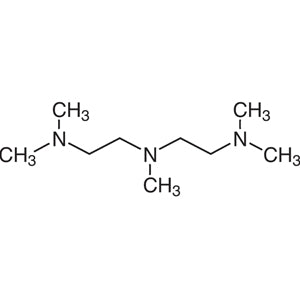
2,6,10-Trimethyl-2,6,10-triazaundecane TCI T1618
Vendor:TCIRegular price From Rp 955.500,00Regular priceRp 667.800,00Sale price From Rp 955.500,00 -
N,N,N',N'-Tetramethyl-1,4-diaminobutane TCI T1289
Vendor:TCIRegular price Rp 3.630.900,00Regular priceRp 2.538.900,00Sale price Rp 3.630.900,00 -
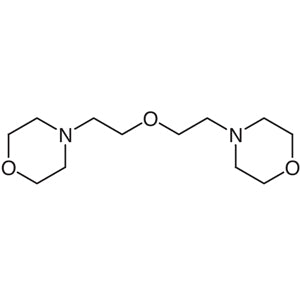
Bis(2-morpholinoethyl)Ether TCI B1784
Vendor:TCIRegular price From Rp 848.400,00Regular priceRp 609.000,00Sale price From Rp 848.400,00 -
N,N,N',N'-Tetramethyl-1,6-diaminohexane TCI T0537
Vendor:TCIRegular price From Rp 477.750,00Regular priceRp 333.900,00Sale price From Rp 477.750,00 -
Bis(2-dimethylaminoethyl)Ether TCI B1291
Vendor:TCIRegular price From Rp 900.900,00Regular priceRp 645.750,00Sale price From Rp 900.900,00 -
(1,4-Diazabicyclo[2.2.2]octan-2-yl)methanol TCI D5950
Vendor:TCIRegular price From Rp 2.068.500,00Regular priceRp 1.461.600,00Sale price From Rp 2.068.500,00 -
N,N,N',N'',N''-Pentamethyldiethylenetriamine TCI P0881
Vendor:TCIRegular price From Rp 557.550,00Regular priceRp 389.550,00Sale price From Rp 557.550,00 -
3,3'-Iminobis(N,N-dimethylpropylamine) TCI I0939
Vendor:TCIRegular price Rp 848.400,00Regular priceRp 593.250,00Sale price Rp 848.400,00