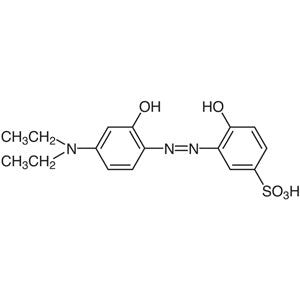
2-Amino-5-(diethylamino)toluene Monohydrochloride is a chemical compound widely used in organic synthesis reactions within laboratory settings. As a building block, it plays a crucial role in the development of complex molecules, including pharmaceuticals, industrial chemicals, and other synthetic compounds. Its structural characteristics allow for high reactivity under various laboratory conditions, making it a versatile tool for chemists. This compound is commonly found in research environments where the synthesis of new materials or compounds is required. Its chemical properties make it a reliable choice for both academic and industrial research.
The compound is known for its stability and reactivity, which are essential for successful chemical reactions. It exhibits good solubility in organic solvents such as ethylamine and dimethyl sulfoxide, facilitating its use in a wide range of experimental procedures. These solubility properties make it easier to dissolve and incorporate into reaction mixtures. Additionally, its non-toxic nature under normal conditions ensures a safer working environment in laboratory settings. These characteristics contribute to its popularity among researchers and chemists.
In Indonesian laboratories, this compound is frequently used in both fundamental and applied chemical research. It is a key component in the development of new chemical compounds and is utilized by educational and research institutions across the country. Its availability and reliability make it a preferred choice for researchers working on organic synthesis and related fields.
Related TCI products
- TCI B1396 1073-62-7 Benzylhydrazine Monohydrochloride
- TCI H0174 2644-70-4 Hydrazine Monohydrochloride
- TCI B1275 90-93-7 4,4'-Bis(diethylamino)benzophenone
- TCI D4852 2873-90-7 4-(Diethylamino)benzonitrile
- TCI S0128 1563-01-5 5-Sulfo-4'-diethylamino-2,2'-dihydroxyazobenzene
- TCI D1126 2481-94-9 4-(Diethylamino)azobenzene
- Organic synthesis reactions benefit from this compound's reactivity and solubility, enabling efficient compound formation.
- Pharmaceutical research utilizes it as a building block for the development of new drug molecules and therapeutic agents.
- Industrial chemical production relies on its stability and versatility for the synthesis of various chemical intermediates.
- Academic research in chemistry uses it to explore new synthetic pathways and molecular structures.
- Analytical chemistry applications take advantage of its predictable behavior in reaction conditions for accurate experimental results.
| Brand | TCI |
|---|---|
| CAS number | 2051-79-8 |
| Molecular formula | — |
| Purity | — |
| Category | Chemistry > Building Blocks > Non-Heterocyclic Building Blocks |
| Pack sizes | Available in various quantities as per standard laboratory supply |
| Physical form | Solid powder |
| Storage | Store in a cool, dry place away from moisture and direct sunlight |
This compound should be stored in a cool, dry environment to maintain its chemical integrity. It is recommended to keep it in airtight containers to prevent exposure to moisture and contaminants. Due to its solubility in organic solvents, it should be handled in a well-ventilated area to avoid inhalation of vapors. Proper personal protective equipment, such as gloves and safety goggles, should be worn when handling the compound. It is important to ensure that the storage area is free from incompatible materials to prevent any chemical interactions. Regular monitoring of storage conditions will help maintain the compound's quality and usability in laboratory applications.
—
Produk Terkait
-
BenzylhydrazineMonohydrochloride TCI B1396
Regular price From Rp 3.815.700,00Regular priceRp 2.683.800,00Sale price From Rp 3.815.700,00 -
HydrazineMonohydrochloride TCI H0174
Regular price From Rp 769.650,00Regular priceRp 537.600,00Sale price From Rp 769.650,00 -
4,4'-Bis(diethylamino)benzophenone TCI B1275
Regular price From Rp 530.250,00Regular priceRp 386.400,00Sale price From Rp 530.250,00 -
4-(Diethylamino)benzonitrile TCI D4852
Regular price From Rp 1.801.800,00Regular priceRp 1.275.750,00Sale price From Rp 1.801.800,00 -
5-Sulfo-4'-diethylamino-2,2'-dihydroxyazobenzene TCI S0128
Regular price Rp 2.094.750,00Regular priceRp 1.464.750,00Sale price Rp 2.094.750,00 -
4-(Diethylamino)azobenzene TCI D1126
Regular price Rp 3.630.900,00Regular priceRp 2.538.900,00Sale price Rp 3.630.900,00 -
Trimethylamine(ca.8%inToluene,ca.1mol/L) TCI T3614
Regular price Rp 1.087.800,00Regular priceRp 760.200,00Sale price Rp 1.087.800,00 -
N,N-Diethylaniline TCI D0475
Regular price From Rp 477.750,00Regular priceRp 333.900,00Sale price From Rp 477.750,00