

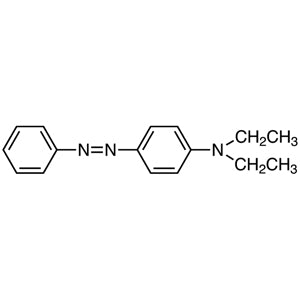
4-(Diethylamino)azobenzene is a chemical compound widely used as a building block in various chemical reactions, particularly in the synthesis of complex molecules. Its azobenzene structure provides reactive properties and stability, making it a valuable tool for organic chemists. In laboratory settings, this compound serves as a key reagent in substitution and aromatic reactions, contributing to the development of new chemical compounds and industrial materials. Its versatility allows it to be integrated into a wide range of experimental protocols, supporting both research and educational activities.
The compound's unique properties, including the presence of a diethylamino group, make it a preferred choice for researchers. This functional group imparts weak basicity and high reactivity, enabling it to participate in multiple reaction pathways. The compound's stability under specific conditions further enhances its utility in controlled chemical environments. These characteristics make it ideal for applications requiring precise chemical manipulation and synthesis. Its ability to interact with various reagents and substrates makes it a reliable component in both academic and industrial laboratory settings.
In Indonesian laboratories, 4-(Diethylamino)azobenzene is commonly used in organic chemistry research, especially in the synthesis of new compounds and the development of chemical materials. It plays a significant role in academic institutions and research centers focused on chemistry and related fields. Its application extends to educational programs, where it is used to teach fundamental chemical reactions and synthesis techniques. This compound is essential for advancing chemical knowledge and innovation in the region.
Related TCI products
- TCI A0565 103-33-3 Azobenzene
- TCI B1275 90-93-7 4,4'-Bis(diethylamino)benzophenone
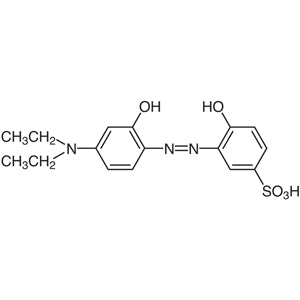
- TCI S0128 1563-01-5 5-Sulfo-4'-diethylamino-2,2'-dihydroxyazobenzene
- TCI M0143 621-90-9 4-(Methylamino)azobenzene
- TCI D4852 2873-90-7 4-(Diethylamino)benzonitrile
- TCI A0289 2051-79-8 2-Amino-5-(diethylamino)toluene Monohydrochloride
- Organic synthesis applications benefit from this compound's reactivity and stability, enabling the creation of complex molecular structures.
- It is ideal for substitution reactions due to its ability to participate in electrophilic and nucleophilic processes.
- Aromatic reaction studies often utilize this compound as a key reagent for exploring reaction mechanisms and pathways.
- It supports the development of new chemical materials by providing a versatile building block for functional group modifications.
- Educational institutions use it to demonstrate chemical reactivity and to train students in synthetic chemistry techniques.
| Brand | TCI |
|---|---|
| CAS number | 2481-94-9 |
| Molecular formula | — |
| Purity | — |
| Category | Chemistry > Building Blocks > Non-Heterocyclic Building Blocks |
| Pack sizes | Available in various quantities as per standard laboratory supply practices |
| Physical form | Solid, typically in crystalline or powder form |
| Storage | Store in a cool, dry place away from light and moisture |
This compound should be stored in a cool, dry environment, away from direct light and moisture to maintain its chemical integrity. It is recommended to use airtight containers to prevent exposure to air and humidity, which could affect its stability. Due to its reactivity, it should be handled with care, using appropriate personal protective equipment such as gloves and safety goggles. It is important to ensure proper ventilation in the laboratory when working with this compound. Avoid contact with incompatible substances, and always follow standard laboratory safety protocols to minimize risks associated with its use.
—
Produk Terkait
-
Azobenzene TCI A0565
Regular price From Rp 2.411.850,00Regular price -
4,4'-Bis(diethylamino)benzophenone TCI B1275
Regular price From Rp 477.750,00Regular price -
5-Sulfo-4'-diethylamino-2,2'-dihydroxyazobenzene TCI S0128
Regular price Rp 2.094.750,00Regular price -
4-(Methylamino)azobenzene TCI M0143
Regular price Rp 4.028.850,00Regular price -
4-(Diethylamino)benzonitrile TCI D4852
Regular price From Rp 1.749.300,00Regular price -
2-Amino-5-(diethylamino)tolueneMonohydrochloride TCI A0289
Regular price Rp 2.571.450,00Regular price -
2,2'-Dihydroxyazobenzene[SpectrophotometricandfluorimetricreagentforAl,Mgandothermetals] TCI A5005
Regular price From Rp 2.625.000,00Regular price -
4-Amino-4'-dimethylaminoazobenzene TCI A1672
Regular price From Rp 1.829.100,00Regular price




![2050-14-8 2,2'-Dihydroxyazobenzene [Spectrophotometric and fluorimetric reagent for Al, Mg and other metals] - AMI Scientific](http://amiscientific.com/cdn/shop/files/TCI2510A5005.jpg?v=1767084831&width=533)
