3-Acetylthiophene is a chemical compound classified under heterocyclic building blocks, featuring a thiophene core modified with an acetyl group. It plays a crucial role in laboratory settings, particularly in organic chemistry and pharmacology, where it serves as a foundational material for synthesizing complex compounds. Its structural versatility makes it an essential reagent for researchers aiming to develop new pharmaceuticals or bioactive substances. Due to its stability and controlled reactivity, it is widely used in various synthetic pathways that require precise chemical transformations.
The compound’s unique properties, including the presence of a sulfur atom, contribute to its polarity and reactivity, making it suitable for a range of chemical reactions. It exhibits good solubility in organic solvents such as ethyl acetate and acetone, which enhances its usability in substitution and condensation reactions. These characteristics ensure that it remains a reliable and efficient choice for chemists working on advanced synthetic projects. Its predictable behavior under different reaction conditions further supports its application in both academic and industrial research environments.
In Indonesian laboratories, 3-Acetylthiophene is commonly utilized by researchers and students in the field of organic chemistry. It is a key component in the synthesis of bioactive compounds and is often integrated into experimental protocols aimed at discovering new drugs or functional materials. Its availability and chemical properties make it a preferred material for both educational and research purposes in the region.
TCI brochures (PDF)
- Thiophenes 2026-06-29 · p. 9
- Organic synthesis applications benefit from 3-Acetylthiophene's structural versatility, enabling the creation of complex molecules with tailored biological activities.
- Pharmaceutical research utilizes this compound to develop new drug candidates, leveraging its reactivity and stability in synthetic pathways.
- Medicinal chemistry experiments often incorporate 3-Acetylthiophene to explore its potential in designing bioactive compounds with therapeutic properties.
- Academic research in chemistry relies on this compound for teaching and experimental purposes, supporting both theoretical and practical learning.
- Industrial chemical processes use 3-Acetylthiophene as a building block for producing specialized chemicals with specific functional properties.
| Brand | TCI |
|---|---|
| CAS number | 1468-83-3 |
| Molecular formula | — |
| Purity | — |
| Category | Chemistry > Building Blocks > Heterocyclic Building Blocks |
| Pack sizes | Available in various quantities as per supplier specifications |
| Physical form | Solid, typically in crystalline or powder form |
| Storage | Store in a cool, dry place away from light and moisture |
3-Acetylthiophene should be stored in a cool, dry environment, away from direct sunlight and sources of moisture. It is recommended to keep the compound in airtight containers to prevent exposure to air and humidity, which may affect its stability. Due to its chemical nature, it should be handled with appropriate personal protective equipment, such as gloves and safety goggles, to ensure laboratory safety. While it is generally stable under normal storage conditions, it is important to avoid contact with strong oxidizing agents or incompatible substances. Proper labeling and storage practices help maintain the integrity of the compound and ensure safe usage in laboratory settings.
—
Produk Terkait
-
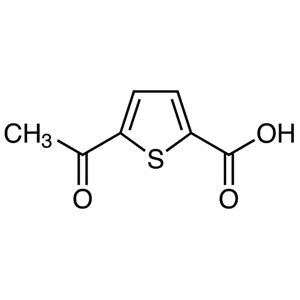
5-Acetylthiophene-2-carboxylicAcid TCI A2866
Regular price From Rp 769.650,00Regular priceRp 553.350,00Sale price From Rp 769.650,00 -
2-Acetylthiophene TCI A0724
Regular price From Rp 742.350,00Regular priceRp 534.450,00Sale price From Rp 742.350,00 -
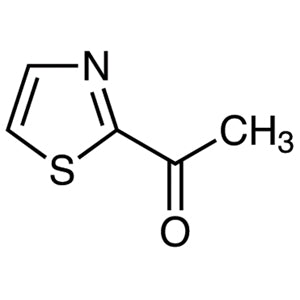
2-Acetylthiazole TCI A1265
Regular price From Rp 1.378.650,00Regular priceRp 979.650,00Sale price From Rp 1.378.650,00 -
3-Butylthiophene TCI B1458
Regular price From Rp 742.350,00Regular priceRp 534.450,00Sale price From Rp 742.350,00 -
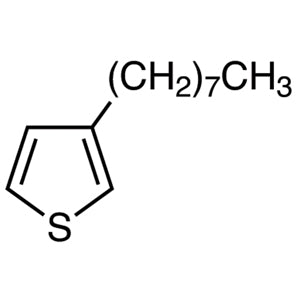
3-n-Octylthiophene TCI O0213
Regular price From Rp 717.150,00Regular priceRp 516.600,00Sale price From Rp 717.150,00 -
1-[(2S)-3-(Acetylthio)-2-methylpropionyl]-L-proline TCI A1528
Regular price From Rp 795.900,00Regular priceRp 572.250,00Sale price From Rp 795.900,00 -
2-Pentylthiophene TCI P1835
Regular price Rp 1.351.350,00Regular priceRp 960.750,00Sale price Rp 1.351.350,00