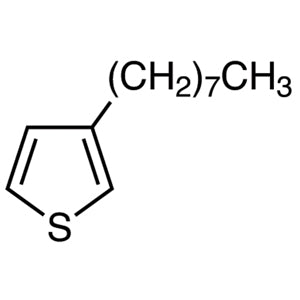
3-n-Octylthiophene is a chemical compound widely used as a foundational building block in the synthesis of heterocyclic compounds. Its unique molecular structure consists of a thiophene ring linked to a nonyl alkyl chain, making it a versatile intermediate in organic chemistry. In laboratory settings, it plays a crucial role in the development of complex molecules with specific biological or chemical properties. This compound is particularly valuable for its ability to participate in various organic reactions, enabling the creation of compounds with tailored functionalities.
The reactivity of 3-n-Octylthiophene, combined with its capacity to bond with multiple functional groups, makes it a preferred choice for synthetic chemists. Its chemical stability under controlled conditions further enhances its utility in laboratory applications. However, it is sensitive to oxidation and light exposure, requiring careful handling and storage. These properties make it an essential component in the synthesis of bioactive compounds and materials with specialized chemical behavior.
In Indonesian laboratories, 3-n-Octylthiophene is commonly used in research focused on organic synthesis and the development of compounds with specific molecular interactions. Its application spans across various scientific fields, including pharmaceutical research and material science. The compound's structural versatility supports its use in creating molecules that can interact with proteins or participate in redox reactions, making it a key reagent in advanced chemical studies.
TCI brochures (PDF)
- Thiophenes 2026-06-29 · p. 2
Related TCI products
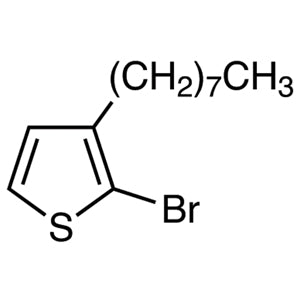
- TCI B3733 145543-83-5 2-Bromo-3-n-octylthiophene
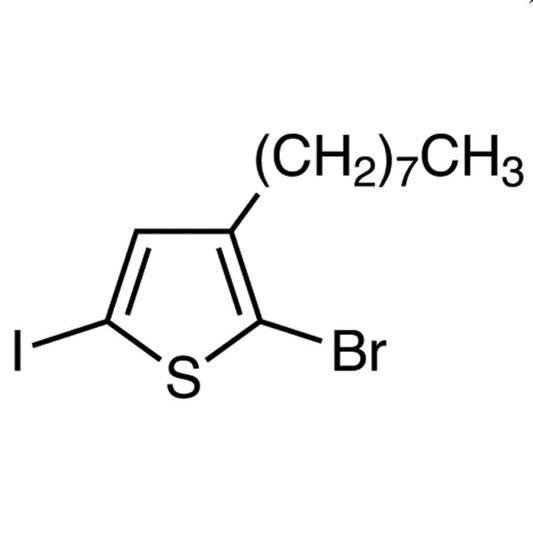
- TCI B4584 1085181-82-3 2-Bromo-5-iodo-3-n-octylthiophene (stabilized with Copper chip)
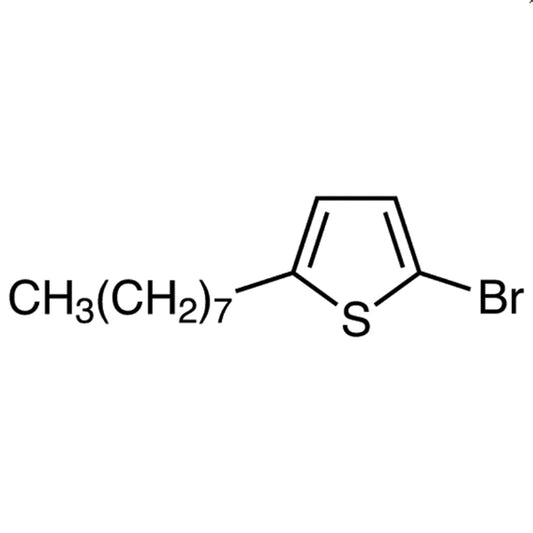
- TCI B3738 172514-63-5 2-Bromo-5-n-octylthiophene
- TCI D4053 149703-84-4 2,5-Dibromo-3-n-octylthiophene
- TCI B1458 34722-01-5 3-Butylthiophene
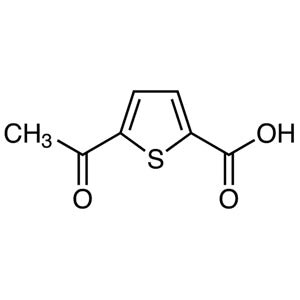
- TCI A2866 4066-41-5 5-Acetylthiophene-2-carboxylic Acid
- Organic synthesis of heterocyclic compounds due to its thiophene ring and alkyl chain structure.
- Development of bioactive molecules for pharmaceutical research because of its reactivity and functional group compatibility.
- Creation of materials with specific chemical properties for advanced material science applications.
- Investigation of redox reactions as it can participate in electron transfer processes.
- Synthesis of compounds that interact with proteins for biochemical and biotechnological studies.
| Brand | TCI |
|---|---|
| CAS number | 65016-62-8 |
| Molecular formula | — |
| Purity | — |
| Category | Chemistry > Building Blocks > Heterocyclic Building Blocks |
| Pack sizes | Available in various quantities as per supplier specifications |
| Physical form | Liquid or solid, depending on the specific formulation |
| Storage | Store in a cool, dark place away from oxidizing agents and light |
3-n-Octylthiophene should be stored in a cool, dark environment to prevent oxidation and degradation. It is recommended to use airtight containers made of glass or inert polymer to minimize exposure to air and moisture. Due to its sensitivity to light, it should be kept in a closed container and stored away from direct sunlight. Laboratory personnel should handle the compound with care, using appropriate personal protective equipment such as gloves and safety goggles. The compound should not be exposed to strong oxidizing agents or high temperatures to maintain its chemical integrity. Proper ventilation is also essential when working with this material to ensure a safe laboratory environment.
—
Produk Terkait
-
2-Bromo-3-n-octylthiophene TCI B3733
Regular price Rp 2.518.950,00Regular price -
2-Bromo-5-iodo-3-n-octylthiophene(stabilizedwithCopperchip) TCI B4584
Regular price Rp 2.386.650,00Regular price -
2-Bromo-5-n-octylthiophene TCI B3738
Regular price From Rp 6.333.600,00Regular price -
2,5-Dibromo-3-n-octylthiophene TCI D4053
Regular price Rp 4.213.650,00Regular price -
3-Butylthiophene TCI B1458
Regular price From Rp 689.850,00Regular price -
5-Acetylthiophene-2-carboxylicAcid TCI A2866
Regular price From Rp 717.150,00Regular price -
3-Acetylthiophene TCI A1006
Regular price Rp 2.757.300,00Regular price -
2-Acetylthiophene TCI A0724
Regular price From Rp 689.850,00Regular price