S-(2-Aminoethyl)isothiouronium Bromide Hydrobromide is a chemical compound widely used in laboratory settings for the synthesis of complex organic compounds. This reagent plays a crucial role in organic chemistry by participating in substitution reactions and the formation of new chemical bonds. It is commonly utilized in the development of heterocyclic compounds and other complex molecular structures. Its versatility makes it an essential component in various synthetic pathways, supporting both academic and industrial research.
The compound is valued for its solubility in organic solvents such as ethyl acetate and acetone, which facilitates its use in a wide range of chemical reactions. Its ability to act as an electron donor enhances its reactivity in synthetic processes. These properties make it a preferred choice for chemists aiming to create specific molecular architectures. Additionally, its stability under controlled laboratory conditions ensures consistent performance in experiments.
In Indonesian laboratories, this compound is extensively used in organic chemistry research, particularly in higher education institutions and research centers. Its availability and compliance with international quality standards make it a reliable option for researchers. The compound's role in the synthesis of heterocyclic compounds and its application in drug development further highlight its significance in the scientific community.
Related TCI products
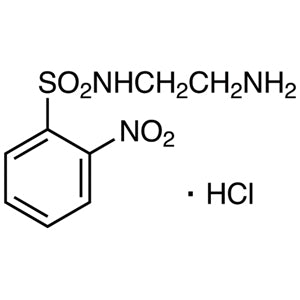
- TCI A2329 92504-03-5 N-(2-Aminoethyl)-2-nitrobenzenesulfonamide Hydrochloride
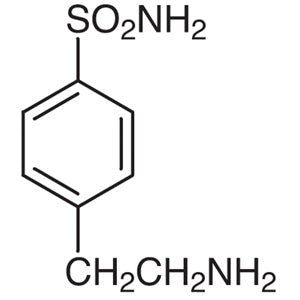
- TCI A1363 35303-76-5 4-(2-Aminoethyl)benzenesulfonamide
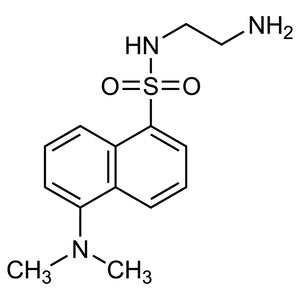
- TCI D6499 35060-08-3 N-(2-Aminoethyl)-5-(dimethylamino)naphthalene-1-sulfonamide
- TCI A1284 19248-13-6 N-(2-Aminoethyl)-N-ethyl-m-toluidine
- TCI A1176 5754-35-8 2-(2-Aminoethyl)-1,3-dioxolane
- TCI M1052 142753-10-4 2-(N-Methyl-2-aminoethyl)-1,3-dioxolane
- Synthesis of heterocyclic compounds for the development of new pharmaceuticals due to its reactivity in forming complex molecular structures.
- Substitution reactions in organic synthesis where its electron-donating properties aid in the creation of new chemical bonds.
- Research in drug development as it supports the creation of compounds with specific functional groups and molecular frameworks.
- Organic chemistry experiments requiring a reliable and stable reagent with good solubility in organic solvents.
- Educational laboratory work in Indonesian universities where it is used to teach fundamental principles of organic synthesis and reaction mechanisms.
| Brand | TCI |
|---|---|
| CAS number | 56-10-0 |
| Molecular formula | — |
| Purity | — |
| Category | Chemistry > Building Blocks > Non-Heterocyclic Building Blocks |
| Pack sizes | Available in various quantities as per standard laboratory supply |
| Physical form | Solid powder |
| Storage | Store in a cool, dry place away from moisture and direct sunlight |
This compound should be stored in a cool, dry environment to maintain its stability and prevent degradation. It is recommended to use airtight containers to protect it from moisture and air exposure. Due to its chemical nature, it should be handled with appropriate personal protective equipment, such as gloves and safety goggles, to ensure laboratory safety. Avoid direct contact with skin and eyes, and ensure proper ventilation when working with it. It is important to keep the compound away from incompatible materials to prevent any potential chemical reactions. Regular inspection of storage conditions is advised to maintain the integrity of the material.
—
Produk Terkait
-
N-(2-Aminoethyl)-2-nitrobenzenesulfonamideHydrochloride TCI A2329
Regular price Rp 3.815.700,00Regular priceRp 2.683.800,00Sale price Rp 3.815.700,00 -
4-(2-Aminoethyl)benzenesulfonamide TCI A1363
Regular price Rp 1.220.100,00Regular priceRp 868.350,00Sale price Rp 1.220.100,00 -
N-(2-Aminoethyl)-5-(dimethylamino)naphthalene-1-sulfonamide TCI D6499
Regular price Rp 1.988.700,00Regular priceRp 1.405.950,00Sale price Rp 1.988.700,00 -
N-(2-Aminoethyl)-N-ethyl-m-toluidine TCI A1284
Regular price Rp 4.001.550,00Regular priceRp 2.798.250,00Sale price Rp 4.001.550,00 -
2-(2-Aminoethyl)-1,3-dioxolane TCI A1176
Regular price From Rp 3.419.850,00Regular priceRp 2.406.600,00Sale price From Rp 3.419.850,00 -
2-(N-Methyl-2-aminoethyl)-1,3-dioxolane TCI M1052
Regular price Rp 10.810.800,00Regular priceRp 7.575.750,00Sale price Rp 10.810.800,00 -
Benzyl(2-Aminoethyl)carbamate TCI B6489
Regular price From Rp 1.431.150,00Regular priceRp 1.016.400,00Sale price From Rp 1.431.150,00 -
N-(2-Aminoethyl)piperazine TCI A0304
Regular price From Rp 557.550,00Regular priceRp 405.300,00Sale price From Rp 557.550,00