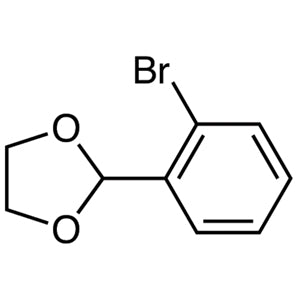
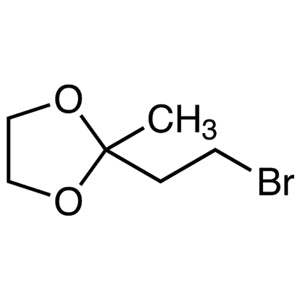
2-(2-Aminoethyl)-1,3-dioxolane is a chemical compound widely used in organic synthesis reactions within laboratory settings. This compound serves as a versatile building block in the creation of complex molecules, offering a stable yet reactive platform for further chemical modifications. Its unique structure, containing both oxygen and nitrogen atoms, allows it to participate in a variety of chemical transformations, making it an essential tool for synthetic chemists. Due to its ability to form new bonds and interact with functional groups, it is frequently used in substitution and coupling reactions.
The compound’s high reactivity and compatibility with various functional groups such as halogens, acids, and bases make it a preferred choice for researchers. Its chemical stability ensures that it remains effective even under different reaction conditions. Additionally, its ability to form stable intermediates and its compatibility with a wide range of solvents enhance its utility in both academic and industrial research. These properties contribute to its popularity in the field of organic chemistry.
In Indonesian laboratories, 2-(2-Aminoethyl)-1,3-dioxolane is commonly used in pharmaceutical research, industrial chemical development, and material science studies. Its availability in solid form and ease of handling make it a practical choice for both educational institutions and research facilities. Its broad applications across multiple scientific disciplines highlight its importance in modern chemical research.
Related TCI products
- TCI M1052 142753-10-4 2-(N-Methyl-2-aminoethyl)-1,3-dioxolane
- TCI T2575 1193-11-9 2,2,4-Trimethyl-1,3-dioxolane
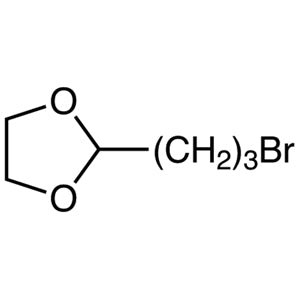
- TCI B3463 62563-07-9 2-(3-Bromopropyl)-1,3-dioxolane
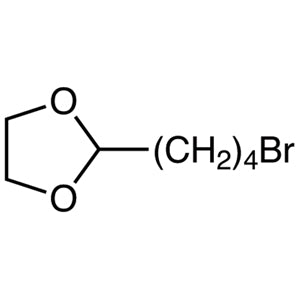
- TCI B2128 87227-41-6 2-(4-Bromobutyl)-1,3-dioxolane
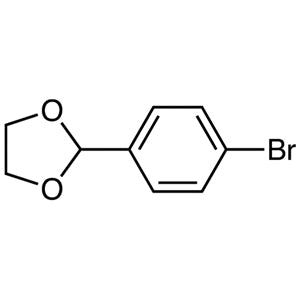
- TCI B2100 10602-01-4 2-(4-Bromophenyl)-1,3-dioxolane
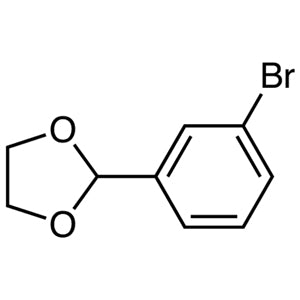
- TCI B2098 17789-14-9 2-(3-Bromophenyl)-1,3-dioxolane
- Organic synthesis reactions benefit from this compound's ability to form stable intermediates and participate in substitution and coupling processes.
- Pharmaceutical research utilizes it to develop new drug compounds by modifying functional groups and creating complex molecular structures.
- Industrial chemical development relies on its reactivity and compatibility with various functional groups to synthesize specialized chemicals.
- Material science applications use it to create new polymers and functional materials through controlled chemical reactions.
- Educational institutions incorporate it into teaching and research programs to train students in synthetic chemistry techniques.
| Brand | TCI |
|---|---|
| CAS number | 5754-35-8 |
| Molecular formula | — |
| Purity | — |
| Category | Chemistry > Building Blocks > Non-Heterocyclic Building Blocks |
| Pack sizes | Available in various quantities as per standard laboratory supply |
| Physical form | Solid |
| Storage | Store in a cool, dry place away from direct sunlight |
This compound should be stored in a cool, dry environment to maintain its chemical stability. It is recommended to use airtight containers to prevent exposure to moisture and air, which could affect its reactivity. Due to its chemical nature, it should be handled in a well-ventilated area, and appropriate personal protective equipment should be worn when working with it. It is important to keep it away from incompatible substances such as strong oxidizers or acids. Proper labeling and storage conditions ensure safe handling and long-term usability in laboratory settings.
—
Produk Terkait
-
2-(N-Methyl-2-aminoethyl)-1,3-dioxolane TCI M1052
Regular price Rp 10.810.800,00Regular priceRp 7.575.750,00Sale price Rp 10.810.800,00 -
2,2,4-Trimethyl-1,3-dioxolane TCI T2575
Regular price Rp 1.856.400,00Regular priceRp 1.313.550,00Sale price Rp 1.856.400,00 -
2-(3-Bromopropyl)-1,3-dioxolane TCI B3463
Regular price From Rp 1.908.900,00Regular priceRp 1.350.300,00Sale price From Rp 1.908.900,00 -
2-(4-Bromobutyl)-1,3-dioxolane TCI B2128
Regular price From Rp 4.425.750,00Regular priceRp 3.110.100,00Sale price From Rp 4.425.750,00 -
2-(4-Bromophenyl)-1,3-dioxolane TCI B2100
Regular price From Rp 5.460.000,00Regular priceRp 3.833.550,00Sale price From Rp 5.460.000,00 -
2-(3-Bromophenyl)-1,3-dioxolane TCI B2098
Regular price From Rp 1.087.800,00Regular priceRp 775.950,00Sale price From Rp 1.087.800,00 -
2-(2-Bromophenyl)-1,3-dioxolane TCI B2084
Regular price From Rp 1.140.300,00Regular priceRp 812.700,00Sale price From Rp 1.140.300,00 -
2-(2-Bromoethyl)-2-methyl-1,3-dioxolane TCI B1598
Regular price From Rp 5.460.000,00Regular priceRp 3.833.550,00Sale price From Rp 5.460.000,00