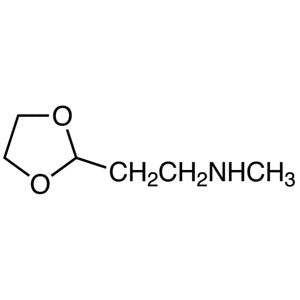
TCI M1052 2-(N-Methyl-2-aminoethyl)-1,3-dioxolane is a bifunctional compound that combines a 1,3-dioxolane ring with an ethyl side chain bearing a methylated secondary amine. The dioxolane ring in this compound is in fact a protected form of an aldehyde group, so the molecule can be regarded as a masked aldehyde that simultaneously carries a reactive amine. In the laboratory, its primary role is that of a building block allowing chemists to install the aminoalkyl group first, then unmask the aldehyde at a later stage when the subsequent transformation is genuinely required.
The property that makes this material highly valued is the orthogonality of its two functional groups. The secondary amine is nucleophilic and basic, ready to undergo acylation, sulfonylation, alkylation, reductive amination, and urea or carbamate formation, while the acetal ring remains robust under neutral to basic conditions. Conversely, the dioxolane ring is readily opened by aqueous acidic hydrolysis to reveal the free aldehyde group. This clean protection–deprotection strategy is precisely what prevents unwanted cross-reaction between the amine and the aldehyde within a single molecule, a classic problem in synthetic planning.
In Indonesian laboratories, this reagent is typically found in synthetic organic chemistry groups at universities and research institutes, as well as in pharmaceutical and fine chemical development units that construct molecular scaffolds step by step. It is generally handled in small-scale glassware work under anhydrous conditions, then carried through to an acidic deprotection stage when the aldehyde functionality is needed for the next coupling.
Related TCI products
- TCI A1176 5754-35-8 2-(2-Aminoethyl)-1,3-dioxolane
- TCI T2575 1193-11-9 2,2,4-Trimethyl-1,3-dioxolane
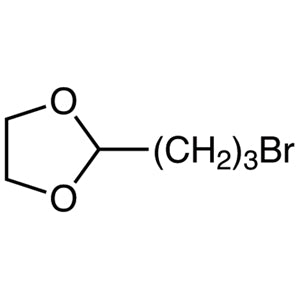
- TCI B3463 62563-07-9 2-(3-Bromopropyl)-1,3-dioxolane
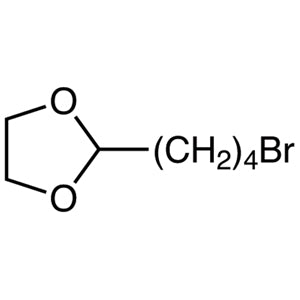
- TCI B2128 87227-41-6 2-(4-Bromobutyl)-1,3-dioxolane
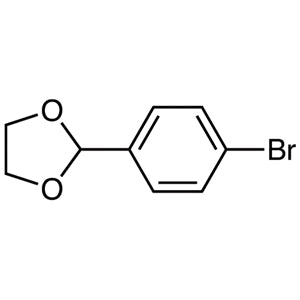
- TCI B2100 10602-01-4 2-(4-Bromophenyl)-1,3-dioxolane
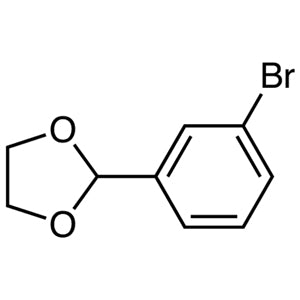
- TCI B2098 17789-14-9 2-(3-Bromophenyl)-1,3-dioxolane
- Masked aldehyde synthesis: the dioxolane ring carries a latent aldehyde safely through basic and neutral steps, then releases it on demand by aqueous acid hydrolysis.
- Secondary amine derivatization: the methylated nitrogen readily undergoes acylation, sulfonylation, and alkylation, letting chemists build amide, sulfonamide, and tertiary amine linkages selectively.
- Reductive amination sequences: the free secondary amine couples with carbonyl partners while the acetal remains untouched, keeping the aldehyde functionality reserved for a later stage.
- Urea and carbamate construction: reaction of the amine with isocyanates or chloroformates gives urea and carbamate motifs common in medicinal chemistry scaffolds.
- Orthogonal scaffold assembly: the two independently addressable functional groups allow multi-step routes to be planned without protecting-group conflicts between amine and aldehyde centres.
| Brand | TCI |
|---|---|
| CAS number | 142753-10-4 |
| Molecular formula | — |
| Purity | — |
| Category | Chemistry > Building Blocks > Non-Heterocyclic Building Blocks |
| Pack sizes | available in standard research-scale reagent packs; please confirm the currently listed sizes when ordering |
| Physical form | — |
| Storage | keep in a cool, dry place, tightly closed, and away from acids and moisture |
- Chemical name: 2-(N-Methyl-2-aminoethyl)-1,3-dioxolane
Store the container tightly closed in a cool, dry, well-ventilated area, protected from moisture and kept clearly separated from acids, since acidic and aqueous conditions will hydrolyse the dioxolane ring and prematurely expose the aldehyde. Original manufacturer bottles or tightly sealed amber glass containers are suitable; transfers are best performed under an inert atmosphere where anhydrous conditions matter. As with any amine-bearing reagent, handle in a fume hood, wear nitrile gloves, safety goggles, and a laboratory coat, avoid skin and eye contact and inhalation of vapours, and consult the manufacturer's safety data sheet before use and before disposing of residues through the laboratory's chemical waste route.
—
Produk Terkait
-
2-(2-Aminoethyl)-1,3-dioxolane TCI A1176
Regular price From Rp 3.367.350,00Regular price -
2,2,4-Trimethyl-1,3-dioxolane TCI T2575
Regular price Rp 1.803.900,00Regular price -
2-(3-Bromopropyl)-1,3-dioxolane TCI B3463
Regular price From Rp 1.856.400,00Regular price -
2-(4-Bromobutyl)-1,3-dioxolane TCI B2128
Regular price From Rp 4.373.250,00Regular price -
2-(4-Bromophenyl)-1,3-dioxolane TCI B2100
Regular price From Rp 5.407.500,00Regular price -
2-(3-Bromophenyl)-1,3-dioxolane TCI B2098
Regular price From Rp 1.035.300,00Regular price -
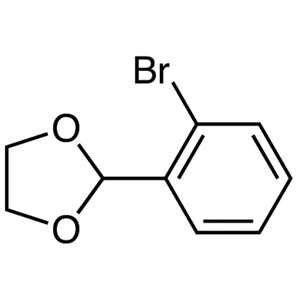
2-(2-Bromophenyl)-1,3-dioxolane TCI B2084
Regular price From Rp 1.087.800,00Regular price -
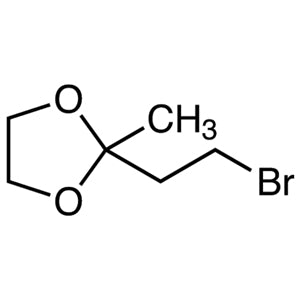
2-(2-Bromoethyl)-2-methyl-1,3-dioxolane TCI B1598
Regular price From Rp 5.407.500,00Regular price