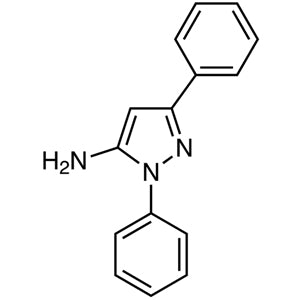
3-Amino-5-methylpyrazole is a chemical compound widely used as a building block in the synthesis of heterocyclic compounds. This versatile molecule plays a crucial role in laboratory settings where the creation of complex chemical structures is required. Its presence in various research fields highlights its importance in the development of pharmaceuticals, agrochemicals, and industrial chemicals. Due to its structural complexity and functional versatility, it is a fundamental component in the toolkit of chemists and researchers.
The compound is valued for its chemical stability and controlled reactivity, making it a preferred choice for a wide range of chemical reactions. It exhibits the ability to undergo substitution and condensation reactions with various other compounds, which enhances its applicability in synthetic pathways. Its compatibility with multiple functional groups further broadens its utility in laboratory applications. These characteristics allow it to be a reliable and flexible reagent in diverse chemical processes.
In Indonesian laboratories, 3-Amino-5-methylpyrazole is commonly used in chemical research, particularly in the synthesis of compounds with biological activity. Its availability and stability during storage make it a practical choice for scientific investigations. Researchers in Indonesia rely on this compound for its consistent performance and adaptability in different experimental conditions. It is an essential material for those working in the field of organic chemistry and related disciplines.
Related TCI products
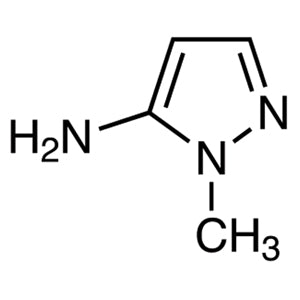
- TCI A3303 1192-21-8 5-Amino-1-methylpyrazole
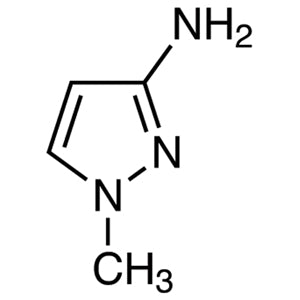
- TCI A2277 1904-31-0 3-Amino-1-methylpyrazole
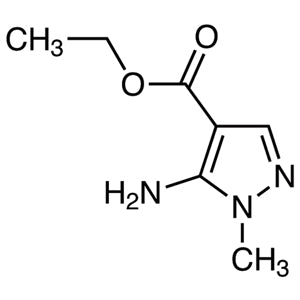
- TCI E0986 31037-02-2 Ethyl 5-Amino-1-methylpyrazole-4-carboxylate
- TCI A0174 826-85-7 5-Amino-1-phenylpyrazole
- TCI T2724 1072-91-9 1,3,5-Trimethylpyrazole
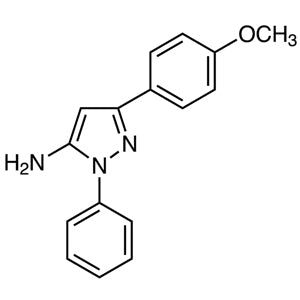
- TCI A3055 19652-13-2 5-Amino-3-(4-methoxyphenyl)-1-phenylpyrazole
- Synthesis of heterocyclic compounds: This compound is ideal for creating complex molecular structures due to its reactivity and compatibility with various functional groups.
- Pharmaceutical research: It serves as a key intermediate in the development of drugs, contributing to the design of compounds with specific biological activities.
- Agrochemical formulation: Its chemical properties make it suitable for the synthesis of pesticides and herbicides, supporting agricultural research efforts.
- Industrial chemical production: It is used in the manufacture of various industrial chemicals, offering a reliable building block for large-scale chemical processes.
- Organic chemistry experiments: Its stability and reactivity make it a valuable reagent for teaching and research in organic chemistry laboratories.
| Brand | TCI |
|---|---|
| CAS number | 31230-17-8 |
| Molecular formula | — |
| Purity | — |
| Category | Chemistry > Building Blocks > Heterocyclic Building Blocks |
| Pack sizes | Available in various quantities as per standard laboratory supply |
| Physical form | Solid, crystalline |
| Storage | Store in a cool, dry place away from direct sunlight |
This compound should be stored in a cool, dry environment to maintain its stability and prevent degradation. It is recommended to keep it in a tightly sealed container to avoid exposure to moisture and air. Due to its chemical nature, it should be handled with appropriate personal protective equipment, such as gloves and safety goggles, to ensure laboratory safety. Storage away from incompatible substances is essential to prevent unwanted reactions. Regular inspection of storage conditions is advised to ensure the compound remains in optimal condition for use in research applications. Proper labeling of containers is also important for safe handling and identification in the laboratory setting.
—
Produk Terkait
-
5-Amino-1-methylpyrazole TCI A3303
Regular price From Rp 1.856.400,00Regular priceRp 1.313.550,00Sale price From Rp 1.856.400,00 -
3-Amino-1-methylpyrazole TCI A2277
Regular price From Rp 582.750,00Regular priceRp 423.150,00Sale price From Rp 582.750,00 -
Ethyl5-Amino-1-methylpyrazole-4-carboxylate TCI E0986
Regular price From Rp 717.150,00Regular priceRp 516.600,00Sale price From Rp 717.150,00 -
5-Amino-1-phenylpyrazole TCI A0174
Regular price From Rp 4.425.750,00Regular priceRp 3.110.100,00Sale price From Rp 4.425.750,00 -
1,3,5-Trimethylpyrazole TCI T2724
Regular price From Rp 769.650,00Regular priceRp 553.350,00Sale price From Rp 769.650,00 -
5-Amino-3-(4-methoxyphenyl)-1-phenylpyrazole TCI A3055
Regular price From Rp 1.140.300,00Regular priceRp 812.700,00Sale price From Rp 1.140.300,00 -
5-Amino-3-(4-chlorophenyl)-1-phenylpyrazole TCI A3033
Regular price From Rp 1.563.450,00Regular priceRp 1.108.800,00Sale price From Rp 1.563.450,00 -
5-Amino-1,3-diphenylpyrazole TCI A2904
Regular price From Rp 875.700,00Regular priceRp 627.900,00Sale price From Rp 875.700,00