4-Aminobenzophenone is a chemical compound widely used in various organic reactions, particularly in the synthesis of heterocyclic and aromatic compounds. It is a versatile building block in chemical research due to its ability to participate in multiple reaction types, including acylation, coupling, and substitution reactions. This compound plays a crucial role in laboratory settings as a foundational material for developing new chemical structures and compounds. Its stability and controlled reactivity make it a reliable choice for researchers seeking consistent results in their experiments.
The properties of 4-Aminobenzophenone that make it a preferred choice include its high purity and consistent physical characteristics. It maintains its structural integrity during chemical reactions, allowing for accurate and reproducible outcomes. The compound’s reactivity toward acids, bases, and organic solvents further enhances its utility in diverse laboratory applications. Its ability to remain stable without significant degradation ensures that it remains a valuable resource in chemical synthesis processes.
In Indonesian laboratories, 4-Aminobenzophenone is frequently used in organic chemistry research, especially in the field of pharmaceutical compound synthesis. Its role in creating complex molecular structures makes it an essential component for researchers working on drug development and other advanced chemical projects. The compound’s reliability and effectiveness have made it a standard material in many laboratory settings across Indonesia.
Advantages (TCI brochure)
- Benzophenones excited by UV (near 360 nm) induce hydrogen abstraction from target molecules
- Reaction efficiency remains high due to reversibility of the excited state
- Photoexcited benzophenones are not water-reactive
TCI brochures (PDF)
- Photo-reactive Crosslinkers 2024-11-07 · p. 2
- Cross-linkers 2026-04-14 · p. 4
- Organic synthesis applications benefit from 4-Aminobenzophenone due to its ability to participate in multiple reaction types, making it ideal for creating complex molecular structures.
- Pharmaceutical research utilizes this compound for the synthesis of heterocyclic and aromatic compounds, which are essential in drug development and medicinal chemistry.
- Coupling reactions often involve 4-Aminobenzophenone because of its stability and controlled reactivity, allowing for precise chemical modifications.
- Acylation processes frequently use this compound as a reagent due to its compatibility with various functional groups and its role in forming new carbon-carbon bonds.
- Substitution reactions rely on 4-Aminobenzophenone for its ability to undergo selective chemical transformations, enhancing the versatility of synthetic pathways.
From the TCI brochure
- Photoaffinity labeling
- Photoaffinity microarray
| Brand | TCI |
|---|---|
| CAS number | 1137-41-3 |
| Molecular formula | — |
| Purity | — |
| Category | Chemistry > Building Blocks > Non-Heterocyclic Building Blocks |
| Pack sizes | Available in standard laboratory quantities |
| Physical form | Solid |
| Storage | Store in a cool, dry place away from direct sunlight |
4-Aminobenzophenone should be stored in a cool, dry place away from direct sunlight to maintain its stability and prevent degradation. It is recommended to use airtight containers to protect the compound from moisture and potential contaminants. In laboratory settings, it is important to handle the compound with appropriate personal protective equipment, such as gloves and safety goggles, to ensure safe handling. Due to its chemical nature, it should be stored separately from incompatible substances to avoid any adverse reactions. Proper storage conditions help preserve the compound’s integrity and ensure its effectiveness in chemical reactions.
References cited in the TCI brochure
- Günther F. Ross. Synthesis of Trifunctional PNA−Benzophenone Derivatives for Mitochondrial Targeting, Selective DNA Binding, and Photo-Cross-Linking Bioconjugate Chemistry, 2003. doi:10.1021/bc034050f
- Yongwon Jung. Photoactivable Antibody Binding Protein: Site-Selective and Covalent Coupling of Antibody Analytical Chemistry, 2009. doi:10.1021/ac8014565
- Alex J. Hughes. Microfluidic Western blotting Proceedings of the National Academy of Sciences, 2012. doi:10.1073/pnas.1207754110
Produk Terkait
-
2-Aminobenzophenone TCI A0788
Regular price From Rp 1.618.050,00Regular priceRp 1.146.600,00Sale price From Rp 1.618.050,00 -
3,4-Diaminobenzophenone TCI D1950
Regular price Rp 2.837.100,00Regular priceRp 1.983.450,00Sale price Rp 2.837.100,00 -
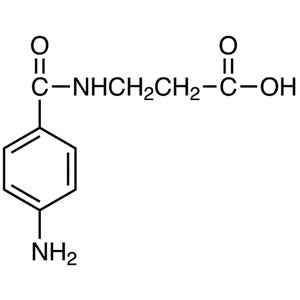
N-(4-Aminobenzoyl)-beta-alanine TCI A2347
Regular price From Rp 822.150,00Regular priceRp 590.100,00Sale price From Rp 822.150,00 -
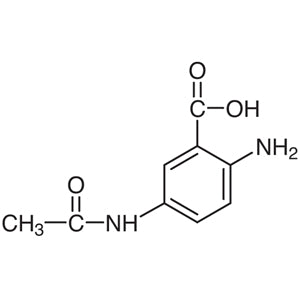
5-Acetamido-2-aminobenzoicAcid TCI A1081
Regular price Rp 9.380.700,00Regular priceRp 6.575.100,00Sale price Rp 9.380.700,00 -
4-Aminobenzohydrazide TCI A1211
Regular price Rp 2.306.850,00Regular priceRp 1.628.550,00Sale price Rp 2.306.850,00 -
3,4-Diaminobenzohydrazide TCI D4551
Regular price From Rp 848.400,00Regular priceRp 609.000,00Sale price From Rp 848.400,00 -
2-Amino-5-chlorobenzophenone TCI A0079
Regular price From Rp 900.900,00Regular priceRp 645.750,00Sale price From Rp 900.900,00 -
4-Bromo-4'-chlorobenzophenone TCI B4224
Regular price From Rp 3.392.550,00Regular priceRp 2.387.700,00Sale price From Rp 3.392.550,00