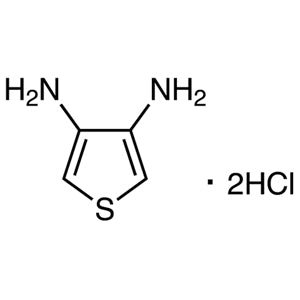
3-Aminoquinuclidine Dihydrochloride is a chemical compound widely used in laboratory settings for chemical experiments and the synthesis of complex molecules. It belongs to the category of heterocyclic building blocks, making it a valuable tool in organic chemistry and pharmaceutical research. This compound is often utilized as a foundational material in the development of bioactive compounds, contributing to the creation of new drugs and medicinal substances. Its unique structure allows for versatile chemical interactions, enhancing its utility in various synthetic pathways.
The compound's chemical properties make it a preferred choice for researchers due to its stability under controlled conditions and its ability to interact with a wide range of functional groups. Its heterocyclic nature provides flexibility in molecular modifications, enabling the synthesis of diverse chemical structures. However, it is sensitive to moisture and UV light, requiring careful handling and storage to maintain its integrity. These characteristics make it a reliable and adaptable material for advanced chemical research.
In Indonesian laboratories, 3-Aminoquinuclidine Dihydrochloride is commonly used in organic chemistry, pharmacology, and medicinal chemistry research. Its availability in multiple packaging options ensures convenience for various experimental needs. The compound is essential for studies involving the development of new pharmaceuticals and the modification of heterocyclic molecules. Its role in laboratory research is significant, supporting both academic and industrial applications.
Related TCI products
- TCI A1055 103831-11-4 3-Aminopyrrolidine Dihydrochloride
- TCI A1005 21302-43-2 5-Amino-8-hydroxyquinoline Dihydrochloride
- TCI P1391 3022-15-9 2-Piperazinecarboxylic Acid Dihydrochloride
- TCI P1119 94021-22-4 1-(2-Pyrimidyl)piperazine Dihydrochloride
- TCI P0450 142-64-3 Piperazine Dihydrochloride Monohydrate
- TCI I1057 1185167-55-8 2-Isopropyl-4-(N-methylaminomethyl)thiazole Dihydrochloride
- Development of pharmacological compounds for new drug discovery due to its ability to participate in complex molecular synthesis.
- Modification of heterocyclic molecules in organic chemistry research for creating diverse chemical structures.
- Testing of bioactive substances in medicinal chemistry to evaluate their potential therapeutic effects.
- Synthesis of complex organic compounds in academic and industrial laboratories for research purposes.
- Investigation of chemical reactivity in pharmaceutical and biochemical studies for compound optimization.
| Brand | TCI |
|---|---|
| CAS number | 6530-09-2 |
| Molecular formula | — |
| Purity | — |
| Category | Chemistry > Building Blocks > Heterocyclic Building Blocks |
| Pack sizes | Available in various packaging options for different research needs |
| Physical form | Solid (as per standard chemical compound form) |
| Storage | Store in a cool, dry place away from moisture and UV light |
This compound should be stored in a cool, dry environment to prevent degradation due to moisture and UV exposure. It is recommended to use airtight containers made of glass or high-density polyethylene to maintain its chemical integrity. Avoid direct sunlight and ensure the storage area is well-ventilated. Due to its sensitivity, it should be handled with care using appropriate personal protective equipment. Regular monitoring of storage conditions is essential to ensure the compound remains stable and suitable for use in laboratory applications. Proper labeling and secure storage are also important to prevent accidental exposure or contamination.
—
Produk Terkait
-
3-AminopyrrolidineDihydrochloride TCI A1055
Regular price From Rp 1.272.600,00Regular priceRp 905.100,00Sale price From Rp 1.272.600,00 -
5-Amino-8-hydroxyquinolineDihydrochloride TCI A1005
Regular price From Rp 3.365.250,00Regular priceRp 2.368.800,00Sale price From Rp 3.365.250,00 -
2-PiperazinecarboxylicAcidDihydrochloride TCI P1391
Regular price From Rp 1.351.350,00Regular priceRp 960.750,00Sale price From Rp 1.351.350,00 -
1-(2-Pyrimidyl)piperazineDihydrochloride TCI P1119
Regular price Rp 2.411.850,00Regular priceRp 1.702.050,00Sale price Rp 2.411.850,00 -
PiperazineDihydrochlorideMonohydrate TCI P0450
Regular price From Rp 717.150,00Regular priceRp 516.600,00Sale price From Rp 717.150,00 -
2-Isopropyl-4-(N-methylaminomethyl)thiazoleDihydrochloride TCI I1057
Regular price From Rp 662.550,00Regular priceRp 478.800,00Sale price From Rp 662.550,00 -
HistamineDihydrochloride TCI H0146
Regular price From Rp 557.550,00Regular priceRp 405.300,00Sale price From Rp 557.550,00 -
3,4-DiaminothiopheneDihydrochloride TCI D2378
Regular price From Rp 557.550,00Regular priceRp 405.300,00Sale price From Rp 557.550,00