2-Piperazinecarboxylic Acid Dihydrochloride from TCI is the dihydrochloride salt of piperazine-2-carboxylic acid. It is a cyclic amino acid built on a six-membered piperazine ring that contains two nitrogen atoms, with a carboxylic acid group on the carbon at position 2. It is an important heterocyclic building block in medicinal chemistry, because piperazine is one of the scaffolds found most often in drug structures. In the laboratory, chemists use it to build substituted piperazine derivatives and conformationally constrained amino acid analogues.
The compound has three functional groups: two amine nitrogen atoms and one carboxylic acid group. Together they allow many kinds of modification, including acylation, alkylation, amide bond formation and selective protection, so one starting material can lead to a wide range of target structures. The dihydrochloride salt is usually more stable than the free base and easier to handle as a solid. It also dissolves readily in water. The fairly rigid piperazine ring limits conformational freedom, and peptidomimetic design uses this property to improve selectivity and resistance to enzymatic breakdown.
In Indonesia, this building block is used mainly by pharmaceutical synthesis and medicinal chemistry laboratories, including university research groups, government research institutes and industrial R&D teams. It is often used in early-stage drug discovery, where researchers make series of piperazine-containing analogues for structure–activity studies. Peptide chemistry groups use it to add constrained, non-natural amino acid units to peptide sequences. Teaching laboratories in advanced organic synthesis can also use it to show protecting-group strategies on a molecule with several functional groups.
Related TCI products
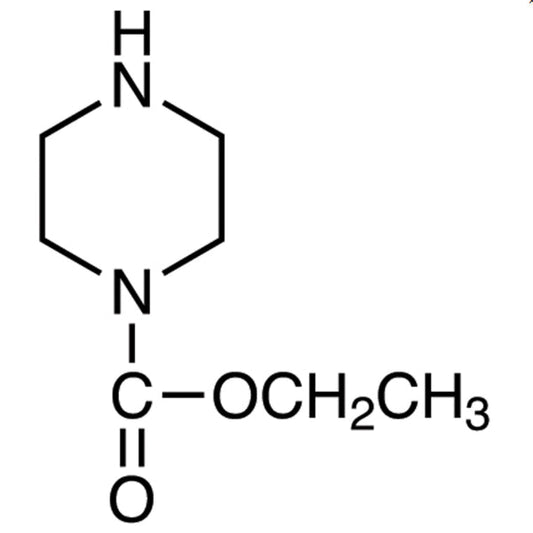
- TCI P1349 120-43-4 Ethyl 1-Piperazinecarboxylate
- TCI P0940 98-97-5 Pyrazinecarboxylic Acid
- TCI M2015 6164-79-0 Methyl 2-Pyrazinecarboxylate
- TCI A1236 6530-09-2 3-Aminoquinuclidine Dihydrochloride
- TCI A1055 103831-11-4 3-Aminopyrrolidine Dihydrochloride
- TCI A1005 21302-43-2 5-Amino-8-hydroxyquinoline Dihydrochloride
- Synthesis of substituted piperazine derivatives: the two ring nitrogens and the carboxylic acid group give separate points for building substituted piperazine scaffolds, which appear widely in medicinal chemistry.
- Peptidomimetic design: the fairly rigid piperazine ring restricts conformational freedom, which helps researchers design peptide analogues with better selectivity and stability against enzymes.
- Conformationally constrained amino acid analogues: as a cyclic amino acid, it can replace flexible natural amino acids in sequences where a fixed backbone geometry is needed.
- Selective protection and functionalization studies: with two amine nitrogens and one carboxylic acid, the compound suits work on orthogonal protection, selective acylation and controlled alkylation.
- Amide coupling and library synthesis: the carboxylic acid group reacts readily in amide-forming reactions, so the compound fits the parallel synthesis of compound libraries for structure–activity relationship screening.
| Brand | TCI (product code P1391) |
|---|---|
| CAS number | 3022-15-9 |
| Molecular formula | — |
| Purity | — |
| Category | Chemistry > Building Blocks > Heterocyclic Building Blocks |
| Pack sizes | as listed in the TCI catalogue; please confirm the available sizes when ordering |
| Physical form | solid (dihydrochloride salt), readily soluble in water |
| Storage | keep the container tightly closed in a cool, dry place; follow the label and the supplier's Safety Data Sheet (SDS) |
Store 2-Piperazinecarboxylic Acid Dihydrochloride in its original, tightly closed container in a cool, dry, well-ventilated place, away from moisture, direct sunlight and incompatible materials such as strong bases and strong oxidizing agents. Hydrochloride salts can absorb moisture from the air, so close the container promptly after each use. Glass or chemically resistant plastic containers with secure caps are suitable for storing smaller portions. Wear standard personal protective equipment when handling it, including a lab coat, safety glasses and chemical-resistant gloves. Weigh the solid in a fume hood or ventilated enclosure so you do not breathe in dust. Always check the Safety Data Sheet for hazard information and disposal guidance before use.
—
Produk Terkait
-
Ethyl1-Piperazinecarboxylate TCI P1349
Regular price Rp 875.700,00Regular price -
PyrazinecarboxylicAcid TCI P0940
Regular price From Rp 1.035.300,00Regular price -
Methyl2-Pyrazinecarboxylate TCI M2015
Regular price From Rp 1.458.450,00Regular price -
3-AminoquinuclidineDihydrochloride TCI A1236
Regular price From Rp 1.829.100,00Regular price -
3-AminopyrrolidineDihydrochloride TCI A1055
Regular price From Rp 1.220.100,00Regular price -
5-Amino-8-hydroxyquinolineDihydrochloride TCI A1005
Regular price From Rp 3.312.750,00Regular price -
1-(2-Pyrimidyl)piperazineDihydrochloride TCI P1119
Regular price Rp 2.359.350,00Regular price -
PiperazineDihydrochlorideMonohydrate TCI P0450
Regular price From Rp 664.650,00Regular price