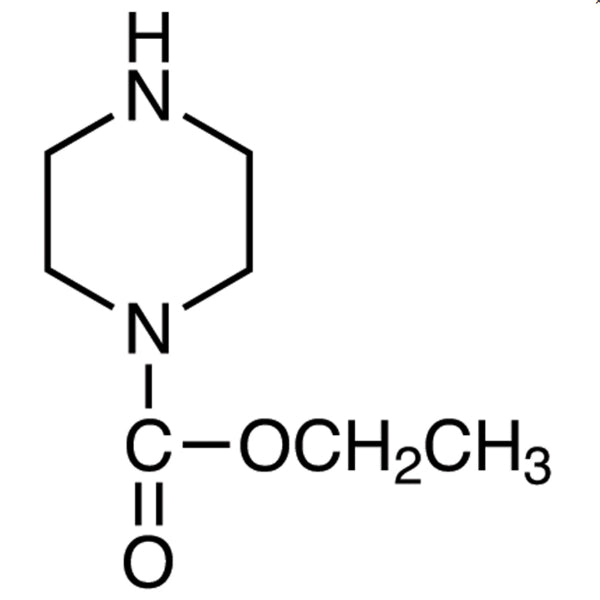
Ethyl 1-Piperazinecarboxylate is a chemical compound widely used in laboratory settings for the synthesis of heterocyclic compounds. As a building block in organic chemistry, it plays a crucial role in the development of pharmaceuticals and bioactive molecules. Its core structure, based on piperazine, features two nitrogen atoms within a six-membered ring, making it a versatile intermediate in various synthetic pathways. This compound is particularly valuable in the creation of drugs and active pharmaceutical ingredients due to its reactivity and structural adaptability.
The chemical properties of Ethyl 1-Piperazinecarboxylate make it a preferred choice in laboratory applications. It exhibits stability under normal conditions and readily reacts with a variety of reagents, especially in basic environments or during substitution reactions. Its predictable behavior and compatibility with different reagents allow chemists to control reaction outcomes effectively. Additionally, its melting point and solubility characteristics enable its use in diverse experimental setups, enhancing its utility across multiple research areas.
In Indonesian laboratories, Ethyl 1-Piperazinecarboxylate is extensively used in organic chemistry research, particularly in pharmacology and the synthesis of bioactive compounds. It is a common component in projects related to drug development and the creation of active pharmaceutical ingredients. Its reliability and versatility make it a standard material in both academic and industrial research environments across the country.
Related TCI products
- TCI P1391 3022-15-9 2-Piperazinecarboxylic Acid Dihydrochloride
- TCI P0940 98-97-5 Pyrazinecarboxylic Acid
- TCI M2015 6164-79-0 Methyl 2-Pyrazinecarboxylate
- TCI T4080 5329-29-3 Hydrazinecarbohydrazonohydrazide Hydrochloride
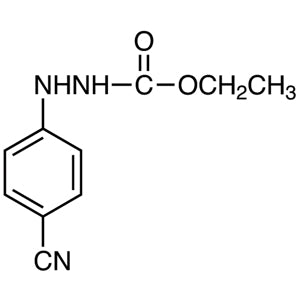
- TCI E1299 700371-70-6 Ethyl 2-(4-Cyanophenyl)hydrazinecarboxylate
- TCI B3880 59378-75-5 1-(tert-Butoxycarbonyl)-3-pyrrolidinecarboxylic Acid
- Organic synthesis of heterocyclic compounds due to its piperazine ring structure and reactivity.
- Pharmaceutical research for the development of bioactive molecules and drug candidates.
- Bioactive compound synthesis where nitrogen-containing rings are essential for molecular activity.
- Academic research in pharmacology and medicinal chemistry for compound modification and testing.
- Industrial applications in the production of active pharmaceutical ingredients and chemical intermediates.
| Brand | TCI |
|---|---|
| CAS number | 120-43-4 |
| Molecular formula | — |
| Purity | — |
| Category | Chemistry > Building Blocks > Heterocyclic Building Blocks |
| Pack sizes | Available in various quantities as per supplier specifications |
| Physical form | Solid, crystalline or powder depending on batch |
| Storage | Store in a cool, dry place away from moisture and direct sunlight |
Ethyl 1-Piperazinecarboxylate should be stored in a cool, dry environment to maintain its chemical stability. It is recommended to keep the material in airtight containers to prevent moisture absorption, which could affect its reactivity and purity. Handling should be done with appropriate personal protective equipment, such as gloves and safety goggles, to ensure laboratory safety. The compound is generally stable under normal storage conditions but should be protected from prolonged exposure to heat or light. It is suitable for storage in glass or polyethylene containers, depending on the specific form and packaging. Always follow standard laboratory safety protocols when working with chemical reagents to minimize risks.
—
Produk Terkait
-
2-PiperazinecarboxylicAcidDihydrochloride TCI P1391
Regular price From Rp 1.298.850,00Regular price -
PyrazinecarboxylicAcid TCI P0940
Regular price From Rp 1.035.300,00Regular price -
Methyl2-Pyrazinecarboxylate TCI M2015
Regular price From Rp 1.458.450,00Regular price -
HydrazinecarbohydrazonohydrazideHydrochloride TCI T4080
Regular price From Rp 2.625.000,00Regular price -
Ethyl2-(4-Cyanophenyl)hydrazinecarboxylate TCI E1299
Regular price From Rp 1.087.800,00Regular price -
1-(tert-Butoxycarbonyl)-3-pyrrolidinecarboxylicAcid TCI B3880
Regular price Rp 1.670.550,00Regular price -
9-AcridinecarboxylicAcidHydrate TCI A1505
Regular price Rp 1.298.850,00Regular price -
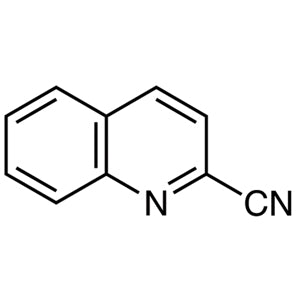
2-Quinolinecarbonitrile TCI Q0099
Regular price From Rp 1.485.750,00Regular price