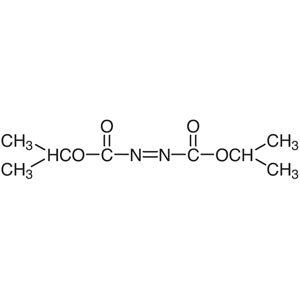
Diisopropyl Azodicarboxylate (DIA) is a chemical compound widely used in organic synthesis as a reagent for carbon bond formation. This reactive liquid plays a crucial role in laboratory settings by facilitating the creation of complex organic molecules such as amines, esters, and heterocyclic compounds. Its high reactivity makes it an essential tool for chemists working on a variety of synthetic pathways. DIA is particularly effective in azodicarboxylate reactions, where it helps form C-N or C-C bonds with precision and efficiency.
One of the key properties that make DIA a preferred choice is its stability under controlled conditions, allowing for consistent and reliable results. Its 40% concentration in toluene provides a convenient and safe working solution for various experimental scales. Additionally, its ability to participate in reactions requiring precise control makes it a versatile reagent for both research and industrial applications. These characteristics ensure that DIA remains a valuable asset in chemical laboratories worldwide.
In Indonesian laboratories, DIA is commonly used in organic chemistry research, especially in universities and research institutions focused on the synthesis of complex compounds. Its role in the development of new chemical substances and its reliability in experimental processes make it a preferred choice among researchers. The compound is integral to advancing chemical innovation and supporting scientific investigations in Indonesia.
TCI brochures (PDF)
- Highly Active Catalyst for Alcohol Oxidation - AZADOL® 2024-07-03 · p. 2
- Mitsunobu Reaction 2026-07-22 · p. 5
Related TCI products
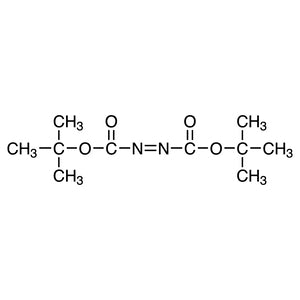
- TCI D3544 870-50-8 Di-tert-butyl Azodicarboxylate (20% in Toluene)
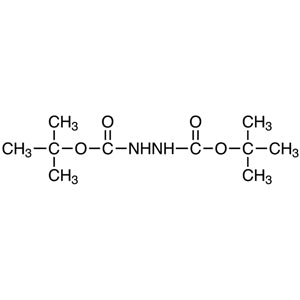
- TCI D4224 16466-61-8 Di-tert-butyl Hydrazodicarboxylate
- TCI D5365 19740-72-8 Diisopropyl Hydrazine-1,2-dicarboxylate
- TCI D4587 54648-79-2 N,N'-Diisopropyl-O-methylisourea
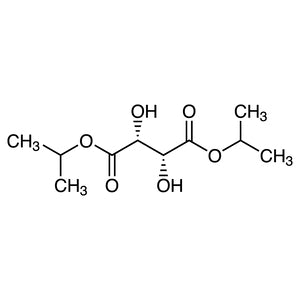
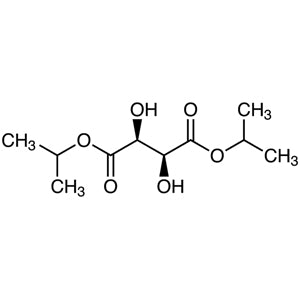
- TCI T1387 62961-64-2 Diisopropyl D-(-)-Tartrate
- TCI A5506 2978-11-2 N,N'-Diisopropyl-O-(4-nitrobenzyl)isourea [for HPLC Labeling]
- Organic synthesis reactions where C-N and C-C bond formation is required, as DIA facilitates efficient and selective bond creation.
- Preparation of heterocyclic compounds, where its reactivity supports the formation of complex ring structures with high yield.
- Amination processes, as DIA acts as a key reagent in the synthesis of amines and related derivatives.
- Esterification reactions, where its chemical properties enable the formation of ester groups under controlled conditions.
- Development of new chemical compounds, as its versatility supports a wide range of synthetic strategies in research laboratories.
From the TCI brochure
- Mitsunobu reagent used as co-oxidant for functional-group-selective oxidation of alcohols
| Brand | TCI |
|---|---|
| CAS number | 2446-83-5 |
| Molecular formula | — |
| Purity | — |
| Category | Chemistry > Synthetic Reagents > C-X(Non-Halogen) Bond Formation |
| Pack sizes | — |
| Physical form | Liquid |
| Storage | Store in a cool, dark place away from heat and direct sunlight |
Diisopropyl Azodicarboxylate should be stored in a cool, dark location, away from heat and direct sunlight to maintain its stability and reactivity. It is recommended to use airtight, glass containers to prevent contamination and evaporation. Due to its reactive nature, it should be handled in a well-ventilated area, preferably under a fume hood, to minimize exposure. Proper personal protective equipment, including gloves and safety goggles, should be worn at all times when handling this compound. It is important to keep the material away from incompatible substances such as strong acids or bases. Regular monitoring of storage conditions ensures the integrity and safety of the reagent in the laboratory environment.
References cited in the TCI brochure
- Masaki Hayashi. Oxidation of Alcohols to Carbonyl Compounds with Diisopropyl Azodicarboxylate Catalyzed by Nitroxyl Radicals The Journal of Organic Chemistry, 2012. doi:10.1021/jo300088b
Produk Terkait
-
Di-tert-butylAzodicarboxylate(20%inToluene) TCI D3544
Regular price Rp 2.571.450,00Regular price -
Di-tert-butylHydrazodicarboxylate TCI D4224
Regular price From Rp 1.326.150,00Regular price -
DiisopropylHydrazine-1,2-dicarboxylate TCI D5365
Regular price From Rp 955.500,00Regular price -
N,N'-Diisopropyl-O-methylisourea TCI D4587
Regular price Rp 3.817.800,00Regular price -
DiisopropylD-(-)-Tartrate TCI T1387
Regular price From Rp 1.881.600,00Regular price -
N,N'-Diisopropyl-O-(4-nitrobenzyl)isourea[forHPLCLabeling] TCI A5506
Regular price Rp 2.411.850,00Regular price -
DiisopropylAdipate TCI A0654
Regular price From Rp 903.000,00Regular price -
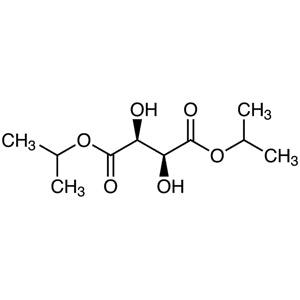
DiisopropylL-(+)-Tartrate TCI T0621
Regular price From Rp 1.326.150,00Regular price


![2978-11-2 N,N'-Diisopropyl-O-(4-nitrobenzyl)isourea [for HPLC Labeling] - AMI Scientific](http://amiscientific.com/cdn/shop/files/TCI2510A5506.jpg?v=1768815053&width=533)