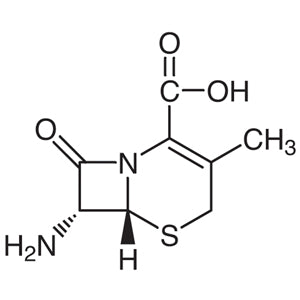
7-Aminocephalosporanic Acid (7-ACA) is a key chemical compound widely used in laboratory settings for the synthesis of third-generation antibiotics such as cefotaxime and ceftriaxone. As a core component in antibiotic production, it plays a vital role in the development of effective treatments against both gram-positive and gram-negative bacteria. In chemical biology and peptide chemistry, 7-ACA serves as a foundational building block for various synthetic reactions, enabling the modification of molecular structures with precision. Its presence in research laboratories underscores its importance in advancing pharmaceutical and biochemical studies.
The compound is known for its stable chemical structure, which allows it to react efficiently with a range of reagents, including acids, bases, and activating agents. This reactivity makes it an ideal candidate for chemical modifications and synthetic pathways. Additionally, 7-ACA exhibits good solubility in organic solvents, facilitating processes such as separation and isolation in laboratory procedures. These properties contribute to its versatility and reliability in both academic and industrial research environments.
In Indonesian laboratories, 7-ACA is commonly used in antibiotic research, drug development, and chemical analysis. Its availability supports local scientists in their efforts to create new medications and test the efficacy of existing antibiotics. As a critical reagent, it is essential for maintaining the quality and innovation of pharmaceutical and biochemical research in the region.
Related TCI products
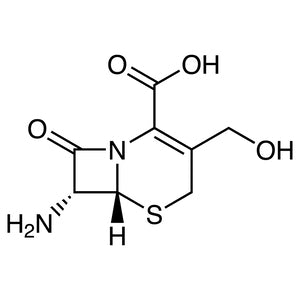
- TCI A2878 15690-38-7 7-Aminodeacetylcephalosporanic Acid
- TCI B5344 87269-87-2 Benzyl (S,S,S)-2-Azabicyclo[3.3.0]octane-3-carboxylate Hydrochloride
- TCI B5322 159622-10-3 (1R,2S)-1-[(tert-Butoxycarbonyl)amino]-2-vinylcyclopropanecarboxylic Acid
- TCI O0468 4876-14-6 3-(2-Oxo-1,2-dihydro-4-quinolinyl)-DL-alanine Hydrochloride
- TCI N0828 96034-64-9 4-Nitrobenzyl (2S,4S)-2-(Dimethylcarbamoyl)-4-mercapto-1-pyrrolidinecarboxylate
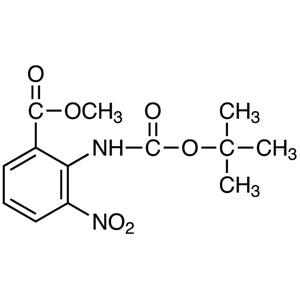
- TCI M2797 57113-90-3 Methyl 2-(tert-Butoxycarbonylamino)-3-nitrobenzoate
- Antibiotic Synthesis: 7-ACA is essential for the production of third-generation cephalosporins, making it ideal for antibiotic research and development.
- Peptide Chemistry: Its structural characteristics make it a preferred choice for modifying and synthesizing complex peptide-based compounds.
- Drug Development: Used in the formulation of new antibiotics, it supports the creation of effective treatments for bacterial infections.
- Chemical Analysis: Its solubility and reactivity aid in analytical procedures, enabling accurate identification and quantification in laboratory settings.
- Research and Education: Widely used in academic institutions, it facilitates teaching and learning in chemical biology and pharmaceutical sciences.
| Brand | TCI |
|---|---|
| CAS number | 957-68-6 |
| Molecular formula | — |
| Purity | — |
| Category | Chemistry > Chemical Biology > Peptide Chemistry |
| Pack sizes | Available in various quantities as per supplier specifications |
| Physical form | White crystalline powder |
| Storage | Store in a cool, dry place away from light and moisture |
7-ACA should be stored in a cool, dry environment, away from direct light and moisture to maintain its chemical stability. It is recommended to use airtight containers to prevent contamination and degradation. Due to its reactivity with acids and bases, it should be handled with appropriate personal protective equipment such as gloves and safety goggles. In laboratory settings, it should be stored separately from incompatible substances to ensure safety. Proper labeling of storage containers is essential for safe handling and easy identification. Regular monitoring of storage conditions ensures the compound remains suitable for use in research applications.
—
Product Categories
- Chemical BiologyPeptide ChemistryUnnatural Amino Acid Derivatives
- Pharmaceutical Development and Drug Discovery Research ReagentsPeptide ChemistryUnnatural Amino Acid Derivatives
- Pharmaceutical Development and Drug Discovery Research ReagentsBuilding Blocks for Pharmaceutical Ingredients (for Research and Experimental Use)
Produk Terkait
-
7-AminodeacetylcephalosporanicAcid TCI A2878
Regular price From Rp 1.723.050,00Regular priceRp 1.220.100,00Sale price From Rp 1.723.050,00 -
Benzyl(S,S,S)-2-Azabicyclo[3.3.0]octane-3-carboxylateHydrochloride TCI B5344
Regular price From Rp 2.041.200,00Regular priceRp 1.442.700,00Sale price From Rp 2.041.200,00 -
(1R,2S)-1-[(tert-Butoxycarbonyl)amino]-2-vinylcyclopropanecarboxylicAcid TCI B5322
Regular price From Rp 689.850,00Regular priceRp 497.700,00Sale price From Rp 689.850,00 -
3-(2-Oxo-1,2-dihydro-4-quinolinyl)-DL-alanineHydrochloride TCI O0468
Regular price From Rp 1.060.500,00Regular priceRp 757.050,00Sale price From Rp 1.060.500,00 -
4-Nitrobenzyl(2S,4S)-2-(Dimethylcarbamoyl)-4-mercapto-1-pyrrolidinecarboxylate TCI N0828
Regular price Rp 3.763.200,00Regular priceRp 2.647.050,00Sale price Rp 3.763.200,00 -
Methyl2-(tert-Butoxycarbonylamino)-3-nitrobenzoate TCI M2797
Regular price From Rp 2.544.150,00Regular priceRp 1.794.450,00Sale price From Rp 2.544.150,00 -
N-[(9H-Fluoren-9-ylmethoxy)carbonyl]-N-methyl-L-valine TCI F1165
Regular price From Rp 1.167.600,00Regular priceRp 831.600,00Sale price From Rp 1.167.600,00 -
7-AminodesacetoxycephalosporanicAcid TCI A2075
Regular price From Rp 1.140.300,00Regular priceRp 812.700,00Sale price From Rp 1.140.300,00