6'-Amino-3',4'-(methylenedioxy)acetophenone is a chemical compound widely used in laboratory settings for its versatility in chemical and pharmacological experiments. This compound serves as a key reagent in the synthesis of bioactive compounds, playing a crucial role in the development of pharmaceuticals and organic chemicals. Its unique molecular structure, featuring an amino group and a methylenedioxy moiety, contributes to its reactivity and stability, making it a valuable asset for researchers. The compound's ability to participate in various chemical reactions, such as substitution, reduction, and oxidation, further enhances its utility in synthetic pathways.
The compound's reactivity and functional groups make it a preferred choice for applications requiring high reactivity and compatibility with diverse substrates. Its molecular structure allows for multiple functionalization opportunities, enabling the creation of complex molecules with specific biological activities. This makes it particularly useful in drug discovery and development processes. Additionally, its chemical stability under controlled conditions ensures reliable results in experimental procedures, contributing to the accuracy and reproducibility of scientific findings.
In Indonesian laboratories, this compound is commonly used in research related to organic chemistry, pharmacology, and chemical analysis. Academic and research institutions rely on it for experiments that demand precision and accuracy. Its availability in the local market ensures that researchers and students have access to this essential reagent for their scientific work.
Related TCI products
- TCI M0874 3162-29-6 3',4'-(Methylenedioxy)acetophenone
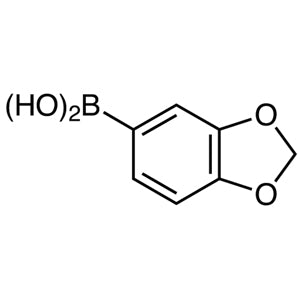
- TCI M2035 94839-07-3 3,4-(Methylenedioxy)phenylboronic Acid (contains varying amounts of Anhydride)
- TCI M1378 7797-83-3 2,3-(Methylenedioxy)benzaldehyde
- TCI M0881 97744-90-6 6,7-Methylenedioxy-4-methyl-3-maleimidocoumarin [for HPLC Labeling]
- TCI B2019 29668-44-8 3,4-Ethylenedioxybenzaldehyde
- TCI B1230 2635-13-4 4-Bromo-1,2-methylenedioxybenzene
- Used in organic synthesis for creating complex bioactive compounds due to its reactive functional groups and structural versatility.
- Applied in pharmacological research for developing new drugs and understanding molecular interactions in biological systems.
- Employed in chemical analysis for identifying and characterizing organic compounds through various analytical techniques.
- Utilized in medicinal chemistry for modifying existing compounds to enhance therapeutic properties and pharmacological profiles.
- Integrated into research projects that require precise chemical reactions and controlled synthetic pathways for scientific innovation.
| Brand | TCI |
|---|---|
| CAS number | 28657-75-2 |
| Molecular formula | — |
| Purity | — |
| Category | TCI |
| Pack sizes | Available in standard laboratory quantities as per supplier specifications |
| Physical form | Solid or liquid, depending on formulation and supplier packaging |
| Storage | Store in a cool, dry place away from direct sunlight and incompatible materials |
This compound should be stored in a cool, dry environment to maintain its chemical stability and prevent degradation. It is recommended to use airtight containers made of materials compatible with its chemical properties, such as glass or high-density polyethylene. Proper labeling of containers is essential for safety and traceability. Laboratory personnel should handle the compound with appropriate personal protective equipment, including gloves and safety goggles, to minimize exposure. Avoid contact with incompatible substances, such as strong oxidizers or acids, to prevent unwanted reactions. Regular monitoring of storage conditions ensures the compound remains suitable for use in scientific experiments.
—
Produk Terkait
-
3',4'-(Methylenedioxy)acetophenone TCI M0874
Regular price Rp 3.365.250,00Regular priceRp 2.368.800,00Sale price Rp 3.365.250,00 -
3,4-(Methylenedioxy)phenylboronicAcid(containsvaryingamountsofAnhydride) TCI M2035
Regular price From Rp 2.359.350,00Regular priceRp 1.665.300,00Sale price From Rp 2.359.350,00 -
2,3-(Methylenedioxy)benzaldehyde TCI M1378
Regular price From Rp 2.491.650,00Regular priceRp 1.757.700,00Sale price From Rp 2.491.650,00 -
6,7-Methylenedioxy-4-methyl-3-maleimidocoumarin[forHPLCLabeling] TCI M0881
Regular price Rp 9.406.950,00Regular priceRp 6.594.000,00Sale price Rp 9.406.950,00 -
3,4-Ethylenedioxybenzaldehyde TCI B2019
Regular price From Rp 582.750,00Regular priceRp 423.150,00Sale price From Rp 582.750,00 -
4-Bromo-1,2-methylenedioxybenzene TCI B1230
Regular price From Rp 822.150,00Regular priceRp 590.100,00Sale price From Rp 822.150,00 -
4,4'-(1,4-Phenylenedioxy)bisphthalicAnhydride TCI P2421
Regular price From Rp 2.994.600,00Regular priceRp 2.109.450,00Sale price From Rp 2.994.600,00 -
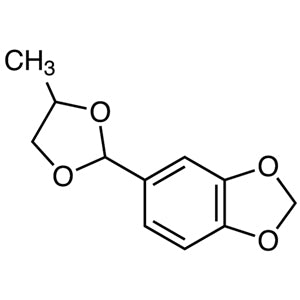
4-(4-Methyl-1,3-dioxolan-2-yl)-1,2-methylenedioxybenzene TCI M2483
Regular price Rp 2.439.150,00Regular priceRp 1.720.950,00Sale price Rp 2.439.150,00