2,3-(Methylenedioxy)benzaldehyde is a chemical compound widely used in laboratory experiments and analytical processes. It is a versatile reagent that plays a crucial role in various chemical reactions, particularly in the synthesis of aromatic compounds and in reactions requiring high reactivity. This compound is commonly found in research settings where precise chemical transformations are required. Its unique molecular structure, featuring two methylenedioxy groups connected to a benzene ring, makes it a valuable tool for chemists and researchers.
One of the key properties that make 2,3-(Methylenedioxy)benzaldehyde a preferred choice is its ability to participate in both nucleophilic and electrophilic reactions. This reactivity allows it to be used in a wide range of chemical processes, from organic synthesis to analytical testing. Additionally, it exhibits a certain level of stability under controlled laboratory conditions, which enhances its usability in various experimental setups. These characteristics make it an essential component in many laboratory workflows.
In Indonesian laboratories, 2,3-(Methylenedioxy)benzaldehyde is extensively used in chemical, pharmaceutical, and qualitative analysis research. It is a common reagent in educational and research institutions, supporting both teaching and advanced scientific investigations. Its reliability and chemical versatility make it a go-to material for experiments requiring high precision and reactivity.
Related TCI products
- TCI A1356 28657-75-2 6'-Amino-3',4'-(methylenedioxy)acetophenone
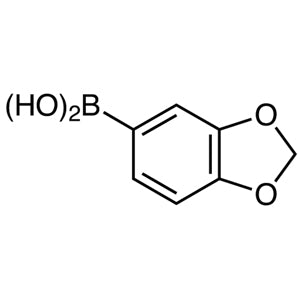
- TCI M2035 94839-07-3 3,4-(Methylenedioxy)phenylboronic Acid (contains varying amounts of Anhydride)
- TCI M0881 97744-90-6 6,7-Methylenedioxy-4-methyl-3-maleimidocoumarin [for HPLC Labeling]
- TCI M0874 3162-29-6 3',4'-(Methylenedioxy)acetophenone
- TCI B2019 29668-44-8 3,4-Ethylenedioxybenzaldehyde
- TCI B1230 2635-13-4 4-Bromo-1,2-methylenedioxybenzene
- Chemical synthesis of aromatic compounds due to its reactivity and molecular structure.
- Pharmaceutical research for the development of new drug compounds and derivatives.
- Qualitative analysis in laboratories for identifying and characterizing organic compounds.
- Organic reaction studies involving nucleophilic and electrophilic mechanisms.
- Teaching and experimental use in educational institutions for demonstrating chemical reactivity.
| Brand | TCI |
|---|---|
| CAS number | 7797-83-3 |
| Molecular formula | — |
| Purity | — |
| Category | TCI |
| Pack sizes | Available in standard laboratory quantities as per supplier guidelines |
| Physical form | Liquid |
| Storage | Store in a cool, dry, and well-ventilated area away from light |
This compound should be stored in a cool, dry, and well-ventilated area, away from direct light. It is recommended to use appropriate containers that are resistant to chemical reactions, such as glass or high-density polyethylene. General laboratory precautions include wearing personal protective equipment, such as gloves and goggles, when handling the material. It should be kept in a secure location to prevent accidental exposure. Proper ventilation is essential to minimize inhalation risks. Always follow standard safety protocols to ensure safe handling and storage in a controlled laboratory environment.
—
Produk Terkait
-
6'-Amino-3',4'-(methylenedioxy)acetophenone TCI A1356
Regular price Rp 2.835.000,00Regular priceRp 1.998.150,00Sale price Rp 2.835.000,00 -
3,4-(Methylenedioxy)phenylboronicAcid(containsvaryingamountsofAnhydride) TCI M2035
Regular price From Rp 2.359.350,00Regular priceRp 1.665.300,00Sale price From Rp 2.359.350,00 -
6,7-Methylenedioxy-4-methyl-3-maleimidocoumarin[forHPLCLabeling] TCI M0881
Regular price Rp 9.406.950,00Regular priceRp 6.594.000,00Sale price Rp 9.406.950,00 -
3',4'-(Methylenedioxy)acetophenone TCI M0874
Regular price Rp 3.365.250,00Regular priceRp 2.368.800,00Sale price Rp 3.365.250,00 -
3,4-Ethylenedioxybenzaldehyde TCI B2019
Regular price From Rp 582.750,00Regular priceRp 423.150,00Sale price From Rp 582.750,00 -
4-Bromo-1,2-methylenedioxybenzene TCI B1230
Regular price From Rp 822.150,00Regular priceRp 590.100,00Sale price From Rp 822.150,00 -
4,4'-(1,4-Phenylenedioxy)bisphthalicAnhydride TCI P2421
Regular price From Rp 2.994.600,00Regular priceRp 2.109.450,00Sale price From Rp 2.994.600,00 -
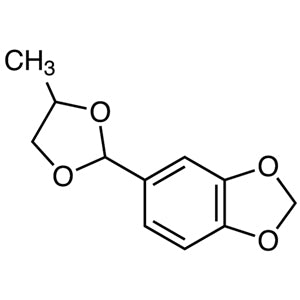
4-(4-Methyl-1,3-dioxolan-2-yl)-1,2-methylenedioxybenzene TCI M2483
Regular price Rp 2.439.150,00Regular priceRp 1.720.950,00Sale price Rp 2.439.150,00