3,4-Ethylenedioxybenzaldehyde is a chemical compound widely used as a building block in the synthesis of heterocyclic compounds. Its unique molecular structure, featuring two oxygen atoms connected via an ethylene bridge, contributes to its reactivity and stability. This compound plays a crucial role in organic chemistry laboratories, particularly in the development of aromatic and heterocyclic molecules. Due to its versatility, it is a key reagent in various synthetic pathways that require both reactivity and structural integrity.
The compound’s polar nature allows it to participate in a wide range of chemical reactions, including nucleophilic and electrophilic substitutions. Its ability to react with various reagents makes it an essential tool for chemists working on complex molecular structures. The presence of the ethylenedioxy group enhances its functional versatility, enabling it to serve as a precursor in multiple synthetic applications. This makes it a preferred choice for researchers aiming to create compounds with specific functional groups and structural features.
In Indonesian laboratories, 3,4-Ethylenedioxybenzaldehyde is commonly used by researchers and students in organic chemistry, pharmaceutical, and materials science fields. Its availability in solid form and compatibility with a variety of reagents make it a valuable resource for both academic and industrial research. Its role in the synthesis of high-reactivity compounds further solidifies its importance in the chemical research landscape in Indonesia.
Related TCI products
- TCI B1230 2635-13-4 4-Bromo-1,2-methylenedioxybenzene
- TCI M0971 15071-04-2 4-Methyl-6,7-methylenedioxycoumarin
- TCI E0523 16498-20-7 3,4-Ethylenedioxynitrobenzene
- TCI E0385 22013-33-8 3,4-Ethylenedioxyaniline
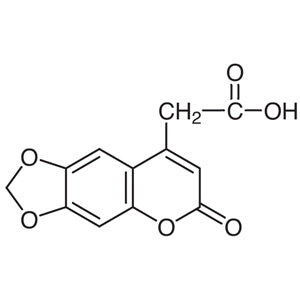
- TCI C1196 97744-77-9 4-Carboxymethyl-6,7-methylenedioxycoumarin
- TCI A1356 28657-75-2 6'-Amino-3',4'-(methylenedioxy)acetophenone
- Organic synthesis of heterocyclic compounds due to its reactive ethylenedioxy group and structural versatility.
- Development of pharmaceutical intermediates where controlled reactivity and stability are required.
- Preparation of aromatic derivatives through nucleophilic and electrophilic substitution reactions.
- Research in material science for the creation of functional polymers and advanced chemical materials.
- Educational use in academic settings for teaching synthetic chemistry and molecular design principles.
| Brand | TCI |
|---|---|
| CAS number | 29668-44-8 |
| Molecular formula | — |
| Purity | — |
| Category | Chemistry > Building Blocks > Heterocyclic Building Blocks |
| Pack sizes | Available in standard laboratory quantities |
| Physical form | Solid |
| Storage | Store in a cool, dry place away from light and moisture |
3,4-Ethylenedioxybenzaldehyde should be stored in a cool, dry environment to maintain its chemical integrity. It is recommended to keep it in a tightly sealed container to prevent exposure to moisture and air. Due to its polar nature, it is advisable to use glass or plastic containers that are chemically inert to avoid any unwanted reactions. The compound should be stored away from heat sources and direct sunlight to ensure long-term stability. Laboratory personnel should handle it with appropriate personal protective equipment, including gloves and safety goggles, to ensure safe handling. Proper ventilation should be maintained in the workspace to minimize inhalation risks.
—
Produk Terkait
-
4-Bromo-1,2-methylenedioxybenzene TCI B1230
Regular price From Rp 822.150,00Regular priceRp 590.100,00Sale price From Rp 822.150,00 -
4-Methyl-6,7-methylenedioxycoumarin TCI M0971
Regular price Rp 2.597.700,00Regular priceRp 1.832.250,00Sale price Rp 2.597.700,00 -
3,4-Ethylenedioxynitrobenzene TCI E0523
Regular price Rp 2.173.500,00Regular priceRp 1.535.100,00Sale price Rp 2.173.500,00 -
3,4-Ethylenedioxyaniline TCI E0385
Regular price Rp 3.127.950,00Regular priceRp 2.202.900,00Sale price Rp 3.127.950,00 -
4-Carboxymethyl-6,7-methylenedioxycoumarin TCI C1196
Regular price From Rp 1.723.050,00Regular priceRp 1.220.100,00Sale price From Rp 1.723.050,00 -
6'-Amino-3',4'-(methylenedioxy)acetophenone TCI A1356
Regular price Rp 2.835.000,00Regular priceRp 1.998.150,00Sale price Rp 2.835.000,00 -
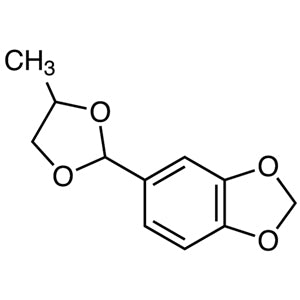
4-(4-Methyl-1,3-dioxolan-2-yl)-1,2-methylenedioxybenzene TCI M2483
Regular price Rp 2.439.150,00Regular priceRp 1.720.950,00Sale price Rp 2.439.150,00 -
2,3-(Methylenedioxy)benzaldehyde TCI M1378
Regular price From Rp 2.491.650,00Regular priceRp 1.757.700,00Sale price From Rp 2.491.650,00