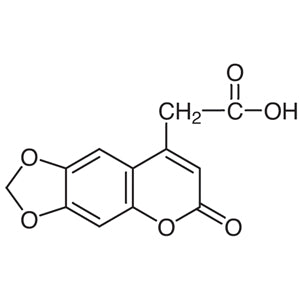
4-Methyl-6,7-methylenedioxycoumarin is a chemical compound widely used in synthetic reactions to produce complex molecules with heterocyclic structures. It serves as a fundamental building block in organic chemistry, enabling researchers to develop new compounds with specific properties. This compound is commonly found in chemical research, particularly in the synthesis of bioactive substances. In the laboratory, it plays a crucial role as a versatile reagent that supports the creation of diverse molecular structures. Its chemical properties make it an essential tool for chemists working on drug discovery and advanced synthetic pathways.
The compound's solubility in organic solvents and its stability under various conditions make it a preferred choice for laboratory use. Its molecular structure allows for efficient participation in substitution and cyclization reactions, enhancing the efficiency of synthetic processes. These characteristics ensure that it remains a reliable and effective component in the development of new chemical entities. Its compatibility with a wide range of reagents and its predictable behavior in different reaction environments further contribute to its popularity among researchers.
In Indonesian laboratories, 4-Methyl-6,7-methylenedioxycoumarin is frequently used in chemical and pharmaceutical research. It is a key reagent in experiments aimed at synthesizing compounds with pharmacological activity. Many research institutions and universities rely on this compound as a foundational material for their studies. Its role in advancing scientific knowledge and innovation is well recognized in the local scientific community.
- Organic synthesis of bioactive compounds due to its versatile reactivity and compatibility with various functional groups.
- Development of pharmaceuticals as a building block for creating complex heterocyclic structures with medicinal properties.
- Research in medicinal chemistry for the design of new drugs with targeted biological activities.
- Academic studies in chemical education to demonstrate synthetic methodologies and molecular manipulation.
- Industrial applications in the production of specialty chemicals requiring precise structural modifications.
| Brand | TCI |
|---|---|
| CAS number | 15071-04-2 |
| Molecular formula | — |
| Purity | — |
| Category | Chemistry > Building Blocks > Heterocyclic Building Blocks |
| Pack sizes | Available in various quantities as per standard laboratory supply options |
| Physical form | Solid (crystalline or powder, depending on formulation) |
| Storage | Store in a cool, dry place away from light and moisture |
This compound should be stored in a cool, dry environment, away from direct sunlight and moisture. It is recommended to use airtight containers to prevent exposure to air and humidity. Proper ventilation should be maintained in the laboratory to ensure safe handling. Due to its chemical nature, it should be handled with appropriate personal protective equipment, including gloves and safety goggles. Avoid contact with incompatible materials and ensure that storage conditions are suitable for maintaining its stability and effectiveness. Regular monitoring of storage conditions is essential to preserve its integrity and ensure safe use in laboratory settings.
—
Produk Terkait
-
4-Carboxymethyl-6,7-methylenedioxycoumarin TCI C1196
Regular price From Rp 1.670.550,00Regular price -
6-Hydroxybenzothiazole TCI H1380
Regular price Rp 2.809.800,00Regular price -
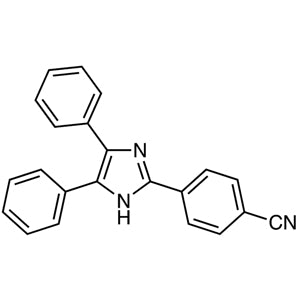
4-(4,5-Diphenyl-1H-imidazol-2-yl)benzonitrile TCI D4655
Regular price Rp 3.710.700,00Regular price -
Phenazine-2,3-diamine TCI D4492
Regular price From Rp 2.359.350,00Regular price -
3,4-Ethylenedioxybenzaldehyde TCI B2019
Regular price From Rp 530.250,00Regular price -
6'-Amino-3',4'-(methylenedioxy)acetophenone TCI A1356
Regular price Rp 2.782.500,00Regular price -
2,3-(Methylenedioxy)benzaldehyde TCI M1378
Regular price From Rp 2.439.150,00Regular price -
3',4'-(Methylenedioxy)acetophenone TCI M0874
Regular price Rp 3.312.750,00Regular price