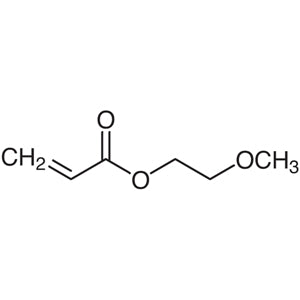
2-Methoxyethyl Acrylate (stabilized with MEHQ), with CAS number 3121-61-7, is a chemical compound widely used as a foundational material in various laboratory reactions. This compound is part of the building blocks category, which plays a crucial role in the synthesis of organic compounds. Its chemical structure allows it to participate in a wide range of chemical transformations, making it an essential component in both academic and industrial research settings. As a versatile reagent, it is frequently utilized in polymerization processes and functional group modifications.
The stability of 2-Methoxyethyl Acrylate is enhanced through stabilization with MEHQ (methyl ethyl ketone peroxide), which significantly prolongs its shelf life and reduces the risk of degradation during storage. This makes it a preferred choice for laboratories requiring reliable and consistent performance. Additionally, its low boiling point and appropriate melting point ensure compatibility with a variety of experimental conditions. The presence of the acrylate group also contributes to its reactivity, making it suitable for applications that demand high chemical activity.
In Indonesian laboratories, 2-Methoxyethyl Acrylate is commonly used in chemical research, material development, and the production of industrial chemicals. It is a favored reagent among research institutions and universities due to its chemical stability and reactivity. Its widespread use in polymer synthesis and adhesive formulations further solidifies its importance in both academic and industrial laboratories across Indonesia.
TCI brochures (PDF)
- Biomaterials Research Reagents 2025-02-19 · p. 9
- Monomers 2025-05-28 · p. 3
Related TCI products
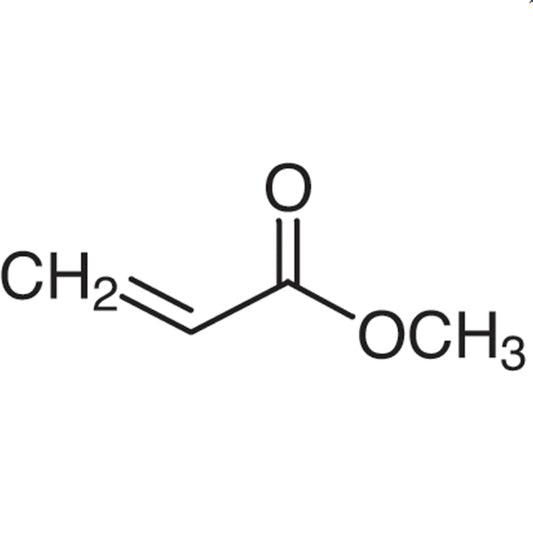
- TCI A0145 96-33-3 Methyl Acrylate (stabilized with MEHQ)
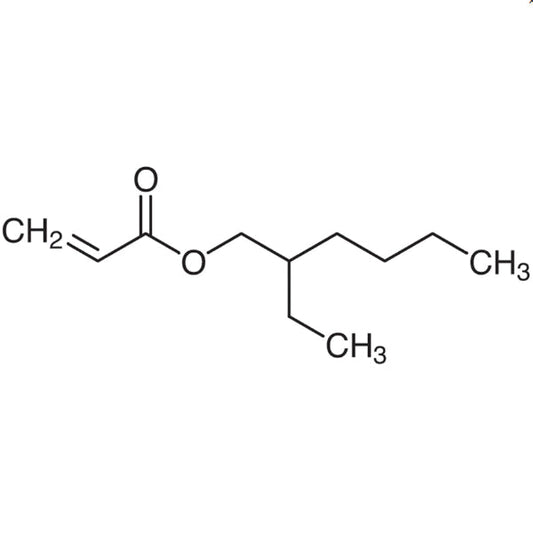
- TCI A0144 103-11-7 2-Ethylhexyl Acrylate Monomer (stabilized with MEHQ)
- TCI A0142 141-32-2 Butyl Acrylate (stabilized with MEHQ)
- TCI U0117 31098-20-1 3-Sulfopropyl Acrylate Potassium Salt
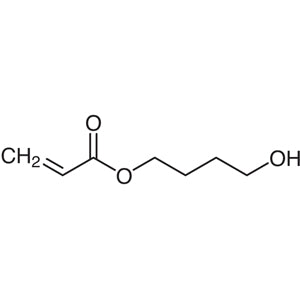
- TCI A1390 2478-10-6 4-Hydroxybutyl Acrylate (stabilized with MEHQ)
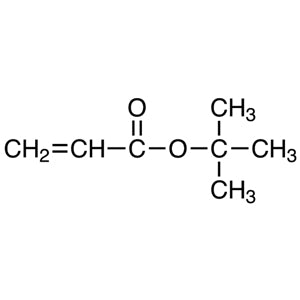
- TCI A1389 1663-39-4 tert-Butyl Acrylate (stabilized with MEHQ)
- Polymer synthesis and functional group modification due to its reactivity and compatibility with various monomers.
- Adhesive and coating formulation as it provides strong bonding properties and chemical resistance.
- Organic synthesis applications because of its ability to participate in a wide range of chemical reactions.
- Research and development in material science for creating new polymers and composite materials.
- Industrial chemical production where stability and reactivity are essential for process efficiency.
| Brand | TCI |
|---|---|
| CAS number | 3121-61-7 |
| Molecular formula | — |
| Purity | — |
| Category | Chemistry > Building Blocks > Non-Heterocyclic Building Blocks |
| Pack sizes | — |
| Physical form | Liquid |
| Storage | Store in a cool, dry place away from light and incompatible materials |
This material should be stored in a cool, dry place, away from direct sunlight and sources of heat. It is recommended to use sealed containers made of materials compatible with organic solvents to prevent evaporation and contamination. Due to its chemical reactivity, it should be kept away from strong oxidizers and reducing agents to avoid potential hazardous reactions. Proper ventilation is essential when handling this compound to minimize exposure. Laboratory personnel should wear appropriate personal protective equipment, including gloves and safety goggles, to ensure safe handling and reduce the risk of skin or eye contact. Regular monitoring of storage conditions is advised to maintain the integrity and stability of the compound.
—
Product Categories
Produk Terkait
-
MethylAcrylate(stabilizedwithMEHQ) TCI A0145
Regular price From Rp 477.750,00Regular price -
2-EthylhexylAcrylateMonomer(stabilizedwithMEHQ) TCI A0144
Regular price From Rp 505.050,00Regular price -
ButylAcrylate(stabilizedwithMEHQ) TCI A0142
Regular price From Rp 505.050,00Regular price -
3-SulfopropylAcrylatePotassiumSalt TCI U0117
Regular price Rp 1.565.550,00Regular price -
4-HydroxybutylAcrylate(stabilizedwithMEHQ) TCI A1390
Regular price From Rp 557.550,00Regular price -
tert-ButylAcrylate(stabilizedwithMEHQ) TCI A1389
Regular price From Rp 452.550,00Regular price -
HydroxypropylAcrylate(mixtureof2-Hydroxypropyland2-Hydroxy-1-methylethylAcrylate)(stabilizedwithMEHQ) TCI A0744
Regular price From Rp 477.750,00Regular price -
2-HydroxyethylAcrylate(stabilizedwithMEHQ) TCI A0743
Regular price From Rp 452.550,00Regular price