Azobenzene-4,4'-dicarbonyl Dichloride is a chemical compound widely used in organic reactions for the synthesis of complex molecules. It serves as a fundamental building block in the creation of compounds with specific structural features, particularly in substitution and covalent reactions. In laboratory settings, this compound is essential for producing materials with defined chemical and physical properties, such as those with biological activity or optical characteristics. Its molecular structure is stable, allowing for controlled reactivity through targeted chemical processes. This makes it a reliable choice for applications requiring precision and reproducibility.
The compound’s reactivity and ability to form bonds with various functional groups make it highly versatile in synthetic chemistry. Its predictable behavior under different reaction conditions enables chemists to design and execute complex molecular transformations with confidence. This adaptability is particularly valuable in research environments where the synthesis of novel compounds is a priority. Additionally, its chemical stability ensures that it remains effective over time, reducing the risk of unintended side reactions during experimentation.
In Indonesian laboratories, Azobenzene-4,4'-dicarbonyl Dichloride is commonly used by researchers in educational and research institutions. It plays a key role in organic chemistry, pharmaceutical development, and materials science. Its availability in the local market supports ongoing scientific investigations and helps meet the growing demand for high-quality chemical reagents in the region.
TCI brochures (PDF)
- Monomers 2025-05-28 · p. 36
Related TCI products
- Organic synthesis: This compound is ideal for constructing complex molecules due to its reactivity and structural versatility.
- Pharmaceutical research: It is used in the development of new drugs, where precise molecular structures are essential for biological activity.
- Material science applications: Its ability to form stable bonds makes it useful in creating advanced materials with specific properties.
- Functional group modification: It enables the introduction of new functional groups into organic molecules, enhancing their reactivity and utility.
- Analytical chemistry: It serves as a reference standard in various analytical techniques, ensuring accurate and reproducible results.
| Brand | TCI |
|---|---|
| CAS number | 10252-29-6 |
| Molecular formula | — |
| Purity | — |
| Category | Chemistry > Building Blocks > Non-Heterocyclic Building Blocks |
| Pack sizes | Available in various quantities as per standard laboratory requirements |
| Physical form | Solid |
| Storage | Store in a cool, dry place away from light and moisture |
Azobenzene-4,4'-dicarbonyl Dichloride should be stored in a cool, dry environment, away from direct sunlight and sources of moisture. It is recommended to use airtight containers made of materials that are chemically inert, such as glass or high-density polyethylene. Due to its reactivity, it should be handled with care, using appropriate personal protective equipment like gloves and safety goggles. In laboratory settings, it is important to ensure proper ventilation to minimize exposure to vapors. This compound is not flammable but should be stored separately from incompatible substances to prevent any potential chemical interactions. Always follow standard laboratory safety protocols when handling and storing this material.
—
Produk Terkait
-
DodecanedioylDichloride TCI D2544
Regular price From Rp 1.405.950,00Regular priceRp 998.550,00Sale price From Rp 1.405.950,00 -
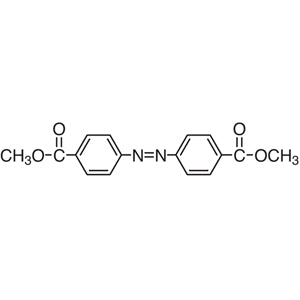
DimethylAzobenzene-4,4'-dicarboxylate TCI A1581
Regular price From Rp 2.571.450,00Regular priceRp 1.797.600,00Sale price From Rp 2.571.450,00 -
1,3,5-BenzenetricarbonylTrichloride TCI T1262
Regular price From Rp 1.856.400,00Regular priceRp 1.297.800,00Sale price From Rp 1.856.400,00 -
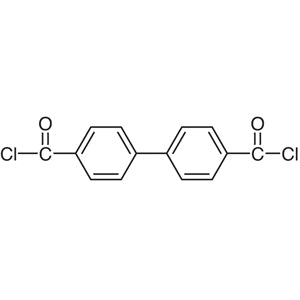
4,4'-BiphenyldicarbonylChloride TCI B1308
Regular price Rp 6.784.050,00Regular priceRp 4.743.900,00Sale price Rp 6.784.050,00 -
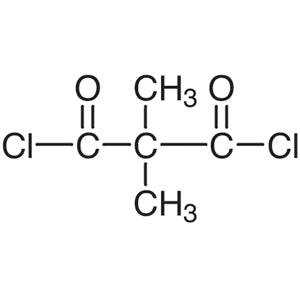
DimethylmalonylDichloride TCI D2723
Regular price From Rp 3.683.400,00Regular priceRp 2.591.400,00Sale price From Rp 3.683.400,00 -
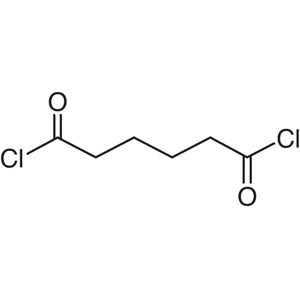
AdipoylChloride TCI A0169
Regular price From Rp 1.272.600,00Regular priceRp 905.100,00Sale price From Rp 1.272.600,00 -
AzelaoylChloride TCI A0562
Regular price Rp 2.464.350,00Regular priceRp 1.738.800,00Sale price Rp 2.464.350,00 -
TerephthaloylChloride TCI T0017
Regular price From Rp 505.050,00Regular priceRp 352.800,00Sale price From Rp 505.050,00