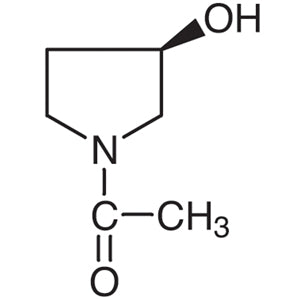
(R)-1-Acetyl-3-pyrrolidinol is a chiral building block widely used in asymmetric synthesis to construct complex molecular structures. This compound plays a crucial role in the development of molecules with specific stereochemistry, making it an essential tool in modern chemical research. Its application extends to the synthesis of bioactive compounds, including pharmaceuticals and industrial chemicals, where precise stereochemical control is required. In the laboratory, it serves as a key intermediate in the creation of chiral molecules with defined functional groups and spatial arrangements.
The compound's chiral nature and chemical stability make it a preferred choice for synthetic chemists. It exhibits good reactivity under controlled conditions, allowing for efficient and selective transformations. Its ability to participate in various reaction mechanisms, such as acylation and nucleophilic substitution, enhances its versatility in organic synthesis. These properties ensure that it remains a reliable and effective component in the synthesis of complex molecules with specific stereochemical configurations.
In Indonesian laboratories, (R)-1-Acetyl-3-pyrrolidinol is commonly used in scientific research and product development. It is a fundamental reagent in academic and industrial settings, supporting studies in pharmacology, organic chemistry, and chemical engineering. Researchers and chemists rely on its predictable behavior and high purity to achieve consistent results in their experiments. Its availability through AMI Scientific ensures that it is accessible for use in both educational and commercial applications.
TCI brochures (PDF)
- Chiral Building Blocks 2025-04-14 · p. 3
Related TCI products
- TCI B3055 101469-92-5 (S)-1-(tert-Butoxycarbonyl)-3-pyrrolidinol
- TCI B3054 109431-87-0 (R)-1-(tert-Butoxycarbonyl)-3-pyrrolidinol
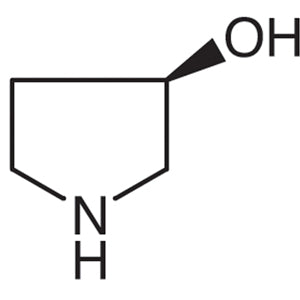
- TCI P1667 100243-39-8 (S)-3-Pyrrolidinol
- TCI P1608 2799-21-5 (R)-3-Pyrrolidinol
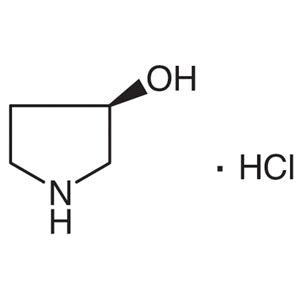
- TCI P1140 104706-47-0 (R)-(-)-3-Pyrrolidinol Hydrochloride
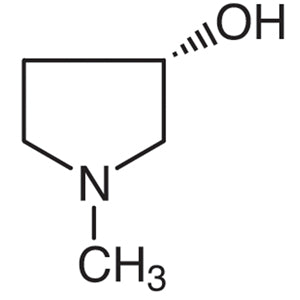
- TCI M1938 104641-59-0 (S)-1-Methyl-3-pyrrolidinol
- Asymmetric synthesis is a key application where this compound is used to create chiral molecules with specific stereochemistry, enabling the development of pharmaceuticals and bioactive compounds.
- Organic chemistry research benefits from its reactivity and stability, allowing for the synthesis of complex structures with controlled stereochemical outcomes.
- Pharmaceutical development relies on its role as a chiral building block, supporting the creation of drug candidates with precise molecular configurations.
- Industrial chemical synthesis uses this compound to produce compounds with defined functional groups and spatial arrangements.
- Academic research in pharmacology and chemical engineering utilizes it for experiments requiring precise stereochemical control and reproducible results.
| Brand | TCI |
|---|---|
| CAS number | 916733-17-0 |
| Molecular formula | — |
| Purity | — |
| Category | Chemistry > Asymmetric Synthesis > Chiral Building Blocks |
| Pack sizes | Available in various quantities as per supplier specifications |
| Physical form | Liquid |
| Storage | Store in a cool, dry place away from light and moisture |
This compound should be stored in a cool, dry environment, away from direct light and moisture to maintain its chemical stability. It is recommended to use airtight containers made of glass or high-density polyethylene to prevent contamination and degradation. Due to its chiral nature, it is important to handle it with care to avoid any unintended stereochemical changes during synthesis. Always ensure proper ventilation in the laboratory when working with this compound. Keep it out of reach of children and away from incompatible materials. Regular monitoring of storage conditions is advised to ensure the integrity of the material throughout its shelf life.
—
Produk Terkait
-
(S)-1-(tert-Butoxycarbonyl)-3-pyrrolidinol TCI B3055
Regular price From Rp 530.250,00Regular price -
(R)-1-(tert-Butoxycarbonyl)-3-pyrrolidinol TCI B3054
Regular price From Rp 1.803.900,00Regular price -
(S)-3-Pyrrolidinol TCI P1667
Regular price Rp 2.544.150,00Regular priceRp 1.794.450,00Sale price Rp 2.544.150,00 -
(R)-3-Pyrrolidinol TCI P1608
Regular price Rp 1.961.400,00Regular priceRp 1.387.050,00Sale price Rp 1.961.400,00 -
(R)-(-)-3-PyrrolidinolHydrochloride TCI P1140
Regular price Rp 875.700,00Regular priceRp 627.900,00Sale price Rp 875.700,00 -
(S)-1-Methyl-3-pyrrolidinol TCI M1938
Regular price Rp 1.563.450,00Regular priceRp 1.108.800,00Sale price Rp 1.563.450,00 -
(R)-1-Methyl-3-pyrrolidinol TCI M1937
Regular price Rp 1.563.450,00Regular priceRp 1.108.800,00Sale price Rp 1.563.450,00 -
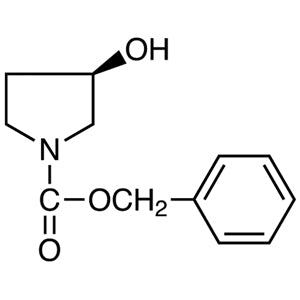
(R)-1-Carbobenzoxy-3-pyrrolidinol TCI C2585
Regular price Rp 1.008.000,00Regular priceRp 720.300,00Sale price Rp 1.008.000,00