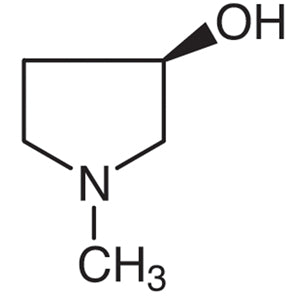
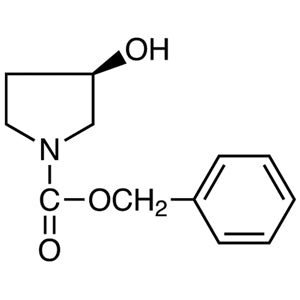
(R)-1-(tert-Butoxycarbonyl)-3-pyrrolidinol is a chiral building block essential in asymmetric synthesis, playing a critical role in the creation of optically active molecules. This compound is widely used in chemical research to control stereochemistry, which is vital in the development of pharmaceuticals and organic compounds. Its chirality allows it to act as a key intermediate in complex molecular structures, enabling the synthesis of compounds with specific spatial configurations. As a versatile reagent, it supports a wide range of chemical transformations, making it a fundamental tool in modern synthetic chemistry.
The compound's stability under certain conditions and its reactivity in specific chemical reactions, such as hydrolysis and deprotection, make it a preferred choice for researchers. Its tert-butoxycarbonyl (Boc) group provides functional group protection, which is essential in multi-step synthesis processes. This feature enhances its utility in protecting sensitive functional groups during complex reactions. Additionally, its compatibility with various reaction conditions ensures its reliability in laboratory settings.
In Indonesian laboratories, this compound is commonly used in organic chemistry research, particularly in asymmetric synthesis and the development of bioactive compounds. It is a standard material in academic and industrial research, supporting experiments that require precise stereochemical control. Its availability and reliability make it a go-to reagent for chemists working on drug discovery and advanced chemical synthesis.
TCI brochures (PDF)
- Chiral Building Blocks 2025-04-14 · p. 3
Related TCI products
- Asymmetric synthesis is a key application where this compound serves as a chiral auxiliary, enabling the selective formation of enantiomers with high stereocontrol.
- Organic chemistry research benefits from its use in constructing complex molecular frameworks, especially in the development of bioactive compounds.
- Pharmaceutical development relies on this compound for the synthesis of optically active pharmaceutical intermediates, ensuring drug efficacy and safety.
- Bioactive compound synthesis requires precise stereochemical control, which this compound provides through its chiral structure.
- Academic research in Indonesian universities often employs this compound in teaching and experimental settings to illustrate asymmetric synthesis principles.
| Brand | TCI |
|---|---|
| CAS number | 109431-87-0 |
| Molecular formula | — |
| Purity | — |
| Category | Chemistry > Asymmetric Synthesis > Chiral Building Blocks |
| Pack sizes | Available in standard laboratory quantities as per supplier specifications |
| Physical form | Solid or liquid, depending on formulation and supplier packaging |
| Storage | Store in a cool, dry place away from moisture and direct sunlight |
This compound should be stored in a cool, dry environment to maintain its chemical integrity. It is recommended to keep it in airtight containers to prevent exposure to moisture and air, which may lead to degradation. For optimal storage, it should be placed in a location with controlled temperature and humidity levels. When handling, it is important to use appropriate personal protective equipment, such as gloves and safety goggles, to ensure safety. The compound is generally non-hazardous under normal conditions but should be handled with care to avoid contamination. Proper labeling and storage practices are essential to maintain its quality and ensure safe usage in laboratory settings.
—
Produk Terkait
-
(S)-1-(tert-Butoxycarbonyl)-3-pyrrolidinol TCI B3055
Regular price From Rp 582.750,00Regular priceRp 423.150,00Sale price From Rp 582.750,00 -
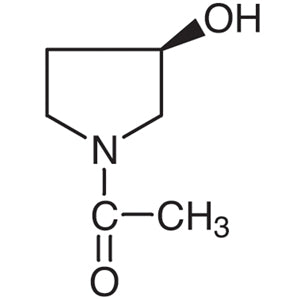
(R)-1-Acetyl-3-pyrrolidinol TCI A2049
Regular price Rp 3.207.750,00Regular priceRp 2.258.550,00Sale price Rp 3.207.750,00 -
(S)-3-Pyrrolidinol TCI P1667
Regular price From Rp 2.544.150,00Regular priceRp 1.794.450,00Sale price From Rp 2.544.150,00 -
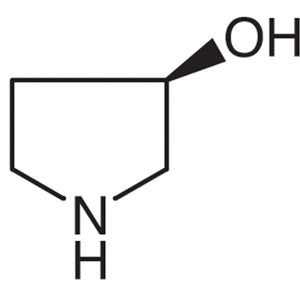
(R)-3-Pyrrolidinol TCI P1608
Regular price From Rp 1.961.400,00Regular priceRp 1.387.050,00Sale price From Rp 1.961.400,00 -
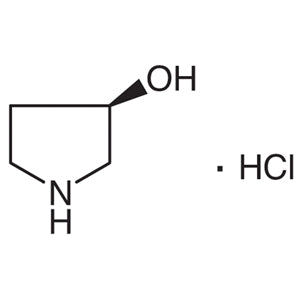
(R)-(-)-3-PyrrolidinolHydrochloride TCI P1140
Regular price Rp 875.700,00Regular priceRp 627.900,00Sale price Rp 875.700,00 -
(S)-1-Methyl-3-pyrrolidinol TCI M1938
Regular price From Rp 1.563.450,00Regular priceRp 1.108.800,00Sale price From Rp 1.563.450,00 -
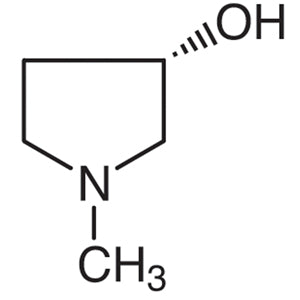
(R)-1-Methyl-3-pyrrolidinol TCI M1937
Regular price From Rp 1.563.450,00Regular priceRp 1.108.800,00Sale price From Rp 1.563.450,00 -
(R)-1-Carbobenzoxy-3-pyrrolidinol TCI C2585
Regular price From Rp 1.008.000,00Regular priceRp 720.300,00Sale price From Rp 1.008.000,00