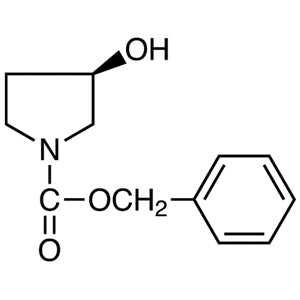
(R)-3-Pyrrolidinol from TCI is a chiral building block with a five-membered pyrrolidine ring that carries a hydroxyl group at the 3-position in the R configuration. This small molecule has two important functional groups, a secondary amine and a secondary alcohol, which make it a versatile starting material for asymmetric synthesis. In the laboratory it is used to bring a defined chiral centre into target molecules, especially in medicinal chemistry research and the development of active pharmaceutical ingredients.
Its main advantage is that the stereochemistry is already fixed. Researchers do not need to resolve a racemate or run an extra asymmetric reaction to get the enantiomer they want. Each functional group can be modified selectively. The nitrogen can be protected with Boc or Cbz groups, alkylated, or acylated. The hydroxyl group can be etherified, oxidised, or converted into a leaving group for substitution with inversion of configuration. The pyrrolidine scaffold is also a very common motif in pharmaceuticals, so this compound is a practical and relevant starting point for drug-like molecules.
In Indonesian laboratories, this material is relevant to research groups in organic synthesis, medicinal chemistry, and pharmacy that develop new compounds with defined stereochemistry. University chemistry and pharmacy departments, research institutes, and pharmaceutical development teams can use it in multistep synthesis, structure–activity relationship studies, and student research projects. Because it comes from TCI, a well-known reagent brand, researchers can use it as a dependable source of a chiral pyrrolidine intermediate for both routine and exploratory synthetic work.
TCI brochures (PDF)
- Chiral Building Blocks 2025-04-14 · p. 2
Related TCI products
- TCI B3055 101469-92-5 (S)-1-(tert-Butoxycarbonyl)-3-pyrrolidinol
- TCI B3054 109431-87-0 (R)-1-(tert-Butoxycarbonyl)-3-pyrrolidinol
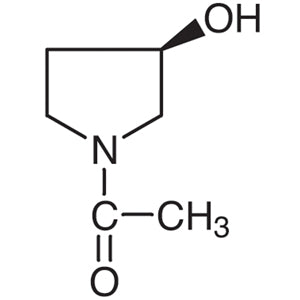
- TCI A2049 916733-17-0 (R)-1-Acetyl-3-pyrrolidinol
- TCI P1667 100243-39-8 (S)-3-Pyrrolidinol
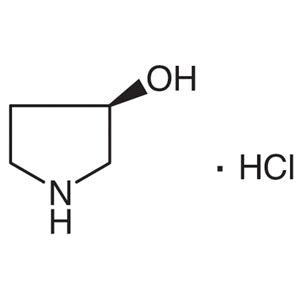
- TCI P1140 104706-47-0 (R)-(-)-3-Pyrrolidinol Hydrochloride
- TCI M1938 104641-59-0 (S)-1-Methyl-3-pyrrolidinol
- Asymmetric synthesis: the fixed R configuration at the 3-position gives a ready-made stereocentre, so chemists can skip racemate resolution or extra asymmetric steps.
- Medicinal chemistry research: the pyrrolidine ring is a common motif in drugs, which makes this compound a useful scaffold for building and testing new candidate molecules.
- Active pharmaceutical ingredient development: its defined stereochemistry helps carry the correct enantiomer into intermediates during route design for pharmaceutical targets.
- Nitrogen functionalisation studies: the secondary amine can be protected with Boc or Cbz, alkylated, or acylated, so it can be modified selectively within multistep sequences.
- Stereochemical inversion and substitution: the hydroxyl group can be converted into a leaving group and displaced with inversion of configuration, which gives access to different stereochemical outcomes.
| Brand | TCI (product code P1608) |
|---|---|
| CAS number | 2799-21-5 |
| Molecular formula | — |
| Purity | — |
| Category | Chemistry > Asymmetric Synthesis > Chiral Building Blocks |
| Pack sizes | available in TCI's standard pack sizes; please confirm the current options with AMI Scientific |
| Physical form | see the TCI label and certificate of analysis for the supplied lot |
| Storage | follow the storage conditions on the TCI label and safety data sheet |
Keep (R)-3-Pyrrolidinol in its original, tightly closed TCI container and follow the storage conditions given on the product label and safety data sheet. Store it in a cool, dry, well-ventilated area, away from moisture, direct sunlight, heat sources, and incompatible materials such as strong oxidising agents and acids. Close the container promptly after use to protect the material from air and humidity. Handle it in a fume hood while wearing suitable personal protective equipment, including safety glasses, chemical-resistant gloves, and a lab coat. Avoid skin and eye contact and do not breathe in vapours. Read the safety data sheet before use, and dispose of waste according to institutional and local regulations.
—
Produk Terkait
-
(S)-1-(tert-Butoxycarbonyl)-3-pyrrolidinol TCI B3055
Regular price From Rp 530.250,00Regular price -
(R)-1-(tert-Butoxycarbonyl)-3-pyrrolidinol TCI B3054
Regular price From Rp 1.803.900,00Regular price -
(R)-1-Acetyl-3-pyrrolidinol TCI A2049
Regular price Rp 3.155.250,00Regular price -
(S)-3-Pyrrolidinol TCI P1667
Regular price From Rp 2.491.650,00Regular price -
(R)-(-)-3-PyrrolidinolHydrochloride TCI P1140
Regular price Rp 823.200,00Regular price -
(S)-1-Methyl-3-pyrrolidinol TCI M1938
Regular price From Rp 1.510.950,00Regular price -
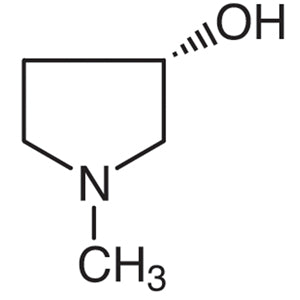
(R)-1-Methyl-3-pyrrolidinol TCI M1937
Regular price From Rp 1.510.950,00Regular price -
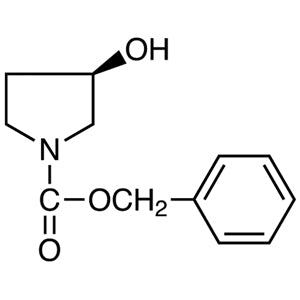
(R)-1-Carbobenzoxy-3-pyrrolidinol TCI C2585
Regular price From Rp 955.500,00Regular price