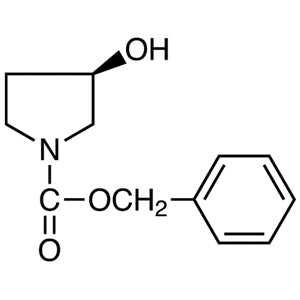
(S)-1-Methyl-3-pyrrolidinol, bearing CAS number 104641-59-0, is the enantiomeric counterpart of the R form: a cyclic amino alcohol built on a pyrrolidine ring with a methyl group on the nitrogen and a hydroxyl group at the three position, locked in the S configuration. As a chiral building block, this compound supplies a stereocentre that is already established, allowing researchers to assemble target molecules directly with controlled stereochemistry. This approach saves a significant amount of laboratory time because it avoids the resolution step required for racemic mixtures, a step that typically returns no more than half of the starting material as usable product.
The property that makes this compound attractive is its combination of compact size and rich functionality. The tertiary amine is nucleophilic and basic, so it is readily quaternised or used as a metal coordination site, while the secondary alcohol at the three position serves as a connection point for esterification, etherification, or conversion into a leaving group. The S configuration presents a spatial orientation different from that of the R form, and it is precisely this difference in orientation that often determines whether a molecule binds strongly to its biological target. Both enantiomers are therefore frequently kept on hand for comparison.
In Indonesian laboratories, this material is typically found in academic and industrial research groups working on asymmetric synthesis, medicinal chemistry, and the preparation of pharmaceutical intermediates. It is commonly ordered alongside the R enantiomer so that a research team can evaluate both spatial orientations within the same synthetic route and determine which one delivers the desired activity profile before committing to a larger preparation.
TCI brochures (PDF)
- Chiral Building Blocks 2025-04-14 · p. 3
Related TCI products
- TCI B3055 101469-92-5 (S)-1-(tert-Butoxycarbonyl)-3-pyrrolidinol
- TCI B3054 109431-87-0 (R)-1-(tert-Butoxycarbonyl)-3-pyrrolidinol
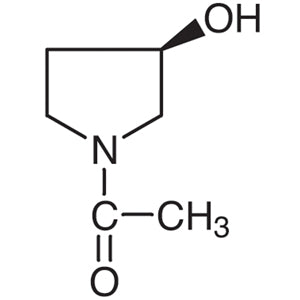
- TCI A2049 916733-17-0 (R)-1-Acetyl-3-pyrrolidinol
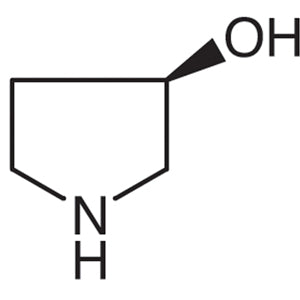
- TCI P1667 100243-39-8 (S)-3-Pyrrolidinol
- TCI P1608 2799-21-5 (R)-3-Pyrrolidinol
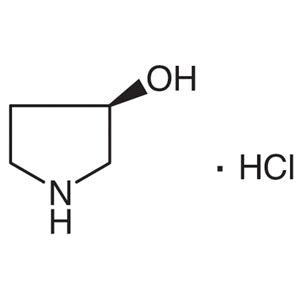
- TCI P1140 104706-47-0 (R)-(-)-3-Pyrrolidinol Hydrochloride
- Asymmetric synthesis of target molecules, where the pre-formed S stereocentre lets chemists build stereochemically controlled products without running a separate resolution of a racemic mixture.
- Medicinal chemistry and structure-activity studies, because the S spatial orientation frequently determines whether a candidate molecule binds strongly to its intended biological target compared with the R form.
- Preparation of pharmaceutical intermediates, where the compact pyrrolidine scaffold introduces a basic nitrogen and a functionalisable hydroxyl into a drug-like framework in a single step.
- Derivatisation chemistry through the secondary alcohol at position three, which serves as a handle for esterification, etherification, or conversion into a leaving group for subsequent substitution.
- Ligand and metal-complex work, since the tertiary amine is both basic and nucleophilic and can act as a coordination site or be quaternised to alter the electronic character of the molecule.
| Brand | TCI |
|---|---|
| CAS number | 104641-59-0 |
| Molecular formula | — |
| Purity | — |
| Category | Chemistry > Asymmetric Synthesis > Chiral Building Blocks |
| Pack sizes | please refer to the packaging options listed on this product page |
| Physical form | — |
| Storage | keep tightly closed in a cool, dry place away from light; see handling notes below |
- Chemical class: cyclic amino alcohol, pyrrolidine ring with N-methyl group and hydroxyl at position three, S configuration
Store the container tightly closed in a cool, dry, well-ventilated area, protected from light and kept away from strong oxidising agents and acids. Amino alcohols are hygroscopic in character, so the original supplier bottle with an intact seal remains the most suitable container; transfer only the quantity required for immediate use and reseal the stock bottle promptly to limit exposure to atmospheric moisture. Handle in a fume hood while wearing nitrile gloves, safety glasses, and a laboratory coat, and avoid contact with skin and eyes. Consult the manufacturer's safety data sheet before first use and follow the disposal procedures set by your institution.
—
Produk Terkait
-
(S)-1-(tert-Butoxycarbonyl)-3-pyrrolidinol TCI B3055
Regular price From Rp 530.250,00Regular price -
(R)-1-(tert-Butoxycarbonyl)-3-pyrrolidinol TCI B3054
Regular price From Rp 1.803.900,00Regular price -
(R)-1-Acetyl-3-pyrrolidinol TCI A2049
Regular price Rp 3.155.250,00Regular price -
(S)-3-Pyrrolidinol TCI P1667
Regular price From Rp 2.491.650,00Regular price -
(R)-3-Pyrrolidinol TCI P1608
Regular price From Rp 1.908.900,00Regular price -
(R)-(-)-3-PyrrolidinolHydrochloride TCI P1140
Regular price Rp 823.200,00Regular price -
(R)-1-Methyl-3-pyrrolidinol TCI M1937
Regular price From Rp 1.510.950,00Regular price -
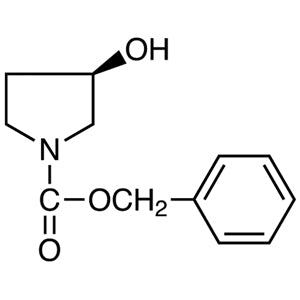
(R)-1-Carbobenzoxy-3-pyrrolidinol TCI C2585
Regular price From Rp 955.500,00Regular price