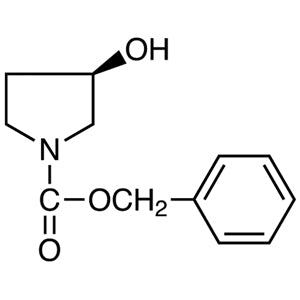
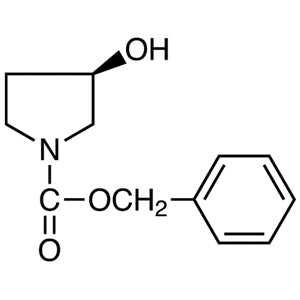
(S)-3-Pyrrolidinol is a chiral building block widely used in asymmetric synthesis to construct molecules with optical activity. This compound plays a crucial role in the development of pharmaceuticals and organic chemicals, enabling precise control over the stereochemistry of final products. Its importance lies in its ability to participate in complex chemical reactions where the configuration of the molecule is critical. In laboratory settings, (S)-3-Pyrrolidinol is essential for creating compounds with specific biological activities, making it a key component in medicinal and biochemical research.
The compound is valued for its stable molecular structure and predictable chemical behavior, which simplifies reaction processes and enhances reproducibility. Its chiral nature allows for the synthesis of enantiomerically pure compounds, a requirement in many pharmaceutical applications. The reliability and consistency of (S)-3-Pyrrolidinol make it a preferred choice for researchers aiming to achieve high precision in their synthetic pathways. Additionally, its availability ensures that scientists can access this critical reagent without interruption.
In Indonesian laboratories, (S)-3-Pyrrolidinol is extensively used in chemical and pharmaceutical research. It supports the development of bioactive compounds, particularly in the fields of pharmacology and organic chemistry. Its presence in research facilities enables scientists to explore new drug candidates and conduct advanced chemical studies. The compound's versatility and reliability make it an essential tool for both academic and industrial research in Indonesia.
TCI brochures (PDF)
- Chiral Building Blocks 2025-04-14 · p. 2
Related TCI products
- TCI B3055 101469-92-5 (S)-1-(tert-Butoxycarbonyl)-3-pyrrolidinol
- TCI B3054 109431-87-0 (R)-1-(tert-Butoxycarbonyl)-3-pyrrolidinol
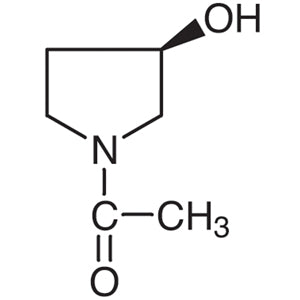
- TCI A2049 916733-17-0 (R)-1-Acetyl-3-pyrrolidinol
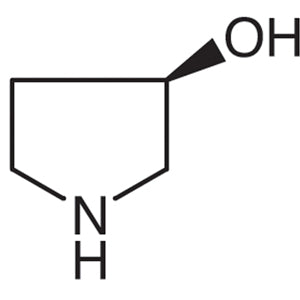
- TCI P1608 2799-21-5 (R)-3-Pyrrolidinol
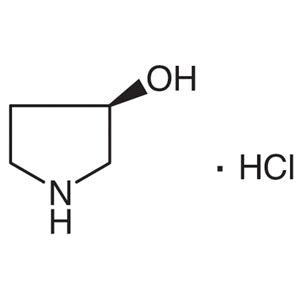
- TCI P1140 104706-47-0 (R)-(-)-3-Pyrrolidinol Hydrochloride
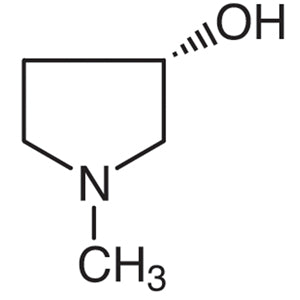
- TCI M1938 104641-59-0 (S)-1-Methyl-3-pyrrolidinol
- Asymmetric Synthesis: This compound is ideal for creating enantiomerically pure compounds, essential in pharmaceutical development.
- Organic Chemistry Research: Its stable structure and predictable reactivity make it suitable for complex molecular transformations.
- Pharmaceutical Development: Used in the synthesis of bioactive molecules, supporting drug discovery and formulation.
- Biochemical Studies: Enables the study of stereochemical effects on biological activity, crucial in understanding drug mechanisms.
- Chiral Compound Production: Facilitates the production of chiral intermediates required in the synthesis of various pharmaceuticals.
| Brand | TCI |
|---|---|
| CAS number | 100243-39-8 |
| Molecular formula | — |
| Purity | — |
| Category | Chemistry > Asymmetric Synthesis > Chiral Building Blocks |
| Pack sizes | Available in various quantities as per supplier specifications |
| Physical form | Liquid or crystalline, depending on supplier packaging |
| Storage | Store in a cool, dry place away from light and moisture |
(S)-3-Pyrrolidinol should be stored in a cool, dry environment, away from direct sunlight and sources of heat. It is recommended to keep the compound in a sealed container to prevent moisture absorption and contamination. Proper ventilation is essential when handling this material to minimize exposure to vapors. Due to its chiral nature, it is important to maintain the integrity of the compound during storage and use. Always use appropriate personal protective equipment, such as gloves and safety goggles, when handling the substance. The compound is generally non-hazardous under normal conditions but should be treated with care to ensure safe laboratory practices.
—
Produk Terkait
-
(S)-1-(tert-Butoxycarbonyl)-3-pyrrolidinol TCI B3055
Regular price From Rp 530.250,00Regular price -
(R)-1-(tert-Butoxycarbonyl)-3-pyrrolidinol TCI B3054
Regular price From Rp 1.803.900,00Regular price -
(R)-1-Acetyl-3-pyrrolidinol TCI A2049
Regular price Rp 3.155.250,00Regular price -
(R)-3-Pyrrolidinol TCI P1608
Regular price From Rp 1.908.900,00Regular price -
(R)-(-)-3-PyrrolidinolHydrochloride TCI P1140
Regular price Rp 823.200,00Regular price -
(S)-1-Methyl-3-pyrrolidinol TCI M1938
Regular price From Rp 1.510.950,00Regular price -
(R)-1-Methyl-3-pyrrolidinol TCI M1937
Regular price From Rp 1.510.950,00Regular price -
(R)-1-Carbobenzoxy-3-pyrrolidinol TCI C2585
Regular price From Rp 955.500,00Regular price