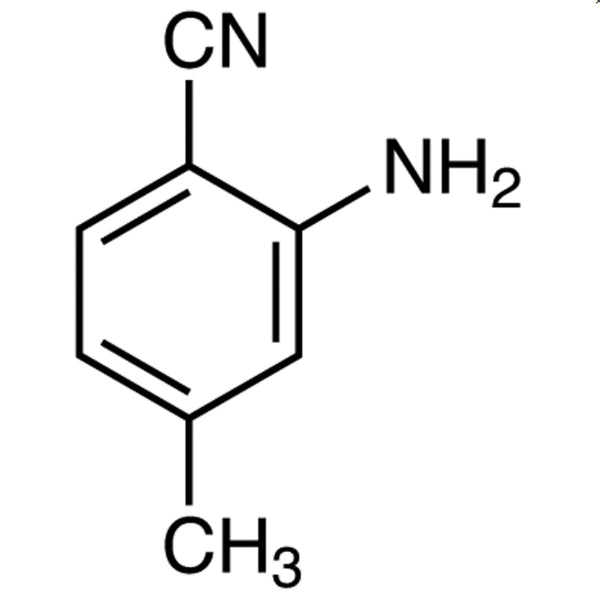
2-Amino-4-methylbenzonitrile is a chemical compound widely used as a foundational building block in organic synthesis. Its unique molecular structure, featuring an amino group, a nitrile group, and a methyl group, makes it highly versatile for various chemical reactions. In the laboratory, this compound plays a crucial role in the development of complex organic molecules, particularly those with biological activity. It is a key reagent in the synthesis of pharmaceuticals and industrial chemicals, offering researchers the flexibility needed to create new compounds with specific properties.
The compound is known for its chemical stability and reactivity, which allow it to participate in a wide range of reaction types, including nucleophilic and electrophilic reactions. Its reactive nature enables structural modifications, making it a valuable tool in synthetic chemistry. The ability to adapt to different reaction conditions and functional group transformations makes it a preferred choice for chemists seeking to design and synthesize novel compounds.
In Indonesian laboratories, 2-Amino-4-methylbenzonitrile is extensively used in organic chemistry research, especially in pharmacology and the synthesis of complex molecules. Its availability and reliability make it a go-to material for researchers working on drug development and chemical innovation. This compound supports a wide range of experimental applications, contributing to scientific advancements in both academic and industrial settings.
Related TCI products
- Organic synthesis is a primary application where this compound serves as a versatile building block for creating complex molecules with specific biological activities.
- Pharmaceutical research benefits from its use in the development of new drugs, as it can be modified to produce compounds with desired therapeutic properties.
- Industrial chemical production utilizes this compound due to its reactivity and ability to participate in various synthetic pathways.
- Academic research in chemistry relies on it for exploring new synthetic methods and understanding molecular reactivity.
- Bioactive compound development leverages its structural features to design molecules with targeted biological effects.
| Brand | TCI |
|---|---|
| CAS number | 26830-96-6 |
| Molecular formula | — |
| Purity | — |
| Category | Chemistry > Building Blocks > Non-Heterocyclic Building Blocks |
| Pack sizes | As available from supplier |
| Physical form | Solid (as per standard product description) |
| Storage | Store in a cool, dry place away from moisture and direct sunlight |
This compound should be stored in a cool, dry environment to maintain its chemical stability. It is recommended to keep it in a sealed container to prevent exposure to moisture and air. Due to its reactive nature, it should be handled with care, using appropriate personal protective equipment such as gloves and safety goggles. It is advisable to store it in a well-ventilated area to minimize any potential risks associated with its chemical properties. Proper labeling of storage containers is essential for safe handling and to ensure that it is easily identifiable in the laboratory setting.
—
Produk Terkait
-
2-Amino-5-methylbenzonitrile TCI A2843
Regular price Rp 3.075.450,00Regular price -
5-Amino-2-methylbenzonitrile TCI A2814
Regular price From Rp 477.750,00Regular price -
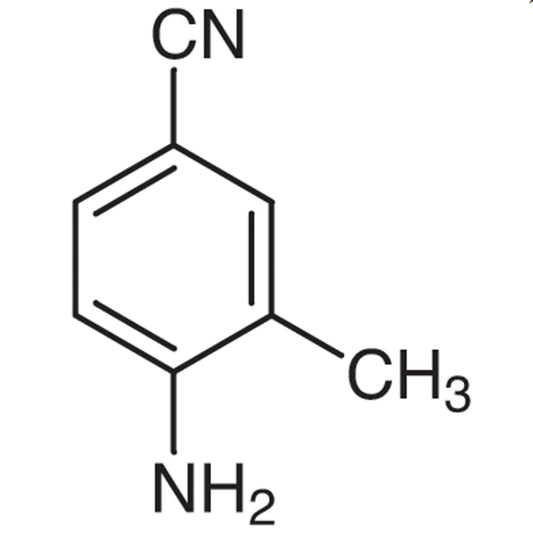
4-Amino-3-methylbenzonitrile TCI A2107
Regular price From Rp 769.650,00Regular price -
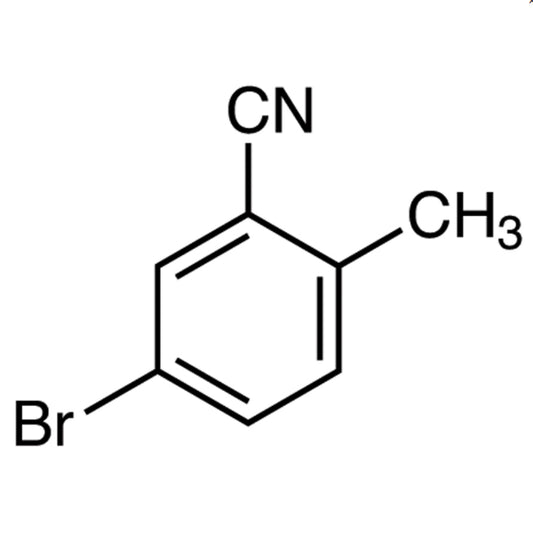
5-Bromo-2-methylbenzonitrile TCI B4808
Regular price From Rp 717.150,00Regular price -
2-Bromo-5-methylbenzonitrile TCI B4678
Regular price From Rp 717.150,00Regular price -
4-Bromo-2-methylbenzonitrile TCI B3993
Regular price Rp 2.359.350,00Regular price -
4-Bromo-3-methylbenzonitrile TCI B2718
Regular price From Rp 2.041.200,00Regular price -
4-tert-Butylbenzonitrile TCI B1576
Regular price From Rp 1.618.050,00Regular price