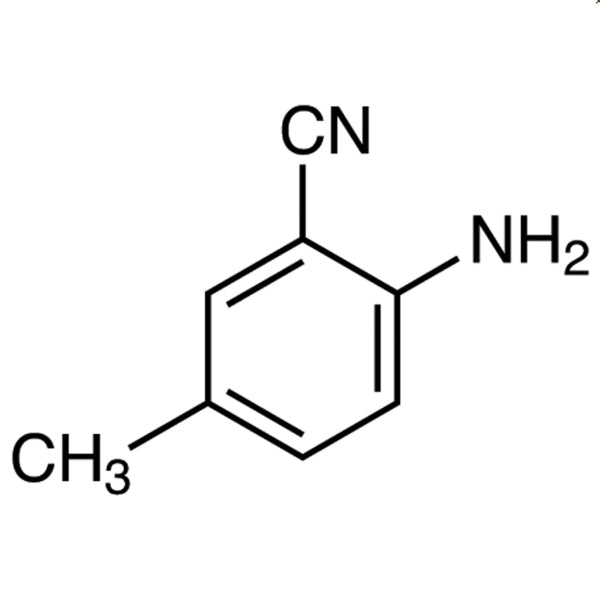
2-Amino-5-methylbenzonitrile is a chemical compound widely used in organic synthesis reactions within laboratory settings. It serves as a fundamental building block for the creation of complex molecules, particularly those involving heterocyclic structures or carbon chains. This compound plays a critical role in various synthetic pathways, enabling the development of new materials and pharmaceutical compounds. Its versatility makes it a valuable resource for researchers aiming to explore chemical transformations and functional group modifications.
The compound's stability and reactivity make it a preferred choice for laboratory applications. It contains both an amino group and a nitrile group, which contribute to its ability to participate in multiple chemical reactions, such as substitution, reduction, and condensation. These functional groups enhance its utility in the synthesis of bioactive compounds, making it a key reagent in drug discovery and material science. Its chemical properties allow it to interact effectively with a wide range of reagents, offering researchers flexibility in experimental design.
In Indonesian laboratories, 2-Amino-5-methylbenzonitrile is commonly used in organic chemistry research, especially in the synthesis of complex compounds. It is a staple in academic and industrial research settings, supporting studies aimed at developing new chemical structures with potential applications in pharmaceuticals and advanced materials. Its consistent performance and reliability make it a trusted component in chemical synthesis processes.
Related TCI products
- Organic synthesis for creating complex molecules with heterocyclic structures due to its functional groups.
- Pharmaceutical research to develop bioactive compounds through chemical modifications and reactions.
- Material science applications in the production of advanced polymers and specialty chemicals.
- Educational use in academic institutions for teaching synthetic chemistry techniques and reaction mechanisms.
- Industrial research for the development of new chemical products and processes in the chemical industry.
| Brand | TCI |
|---|---|
| CAS number | 5925-93-9 |
| Molecular formula | — |
| Purity | — |
| Category | Chemistry > Building Blocks > Non-Heterocyclic Building Blocks |
| Pack sizes | Available in various quantities as per standard laboratory supply options |
| Physical form | Solid, typically in crystalline or powder form |
| Storage | Store in a cool, dry place away from direct sunlight and moisture |
This compound should be stored in a cool, dry environment to maintain its chemical stability. It is recommended to keep it in airtight containers to prevent exposure to moisture and air, which could affect its reactivity. Due to its chemical nature, it should be handled in a well-ventilated area to minimize inhalation risks. Laboratory personnel should wear appropriate personal protective equipment, such as gloves and safety goggles, when working with this substance. It should not be stored near incompatible materials, such as strong acids or bases, to avoid potential chemical reactions. Proper labeling and storage conditions are essential to ensure safe handling and long-term usability in laboratory settings.
—
Produk Terkait
-
5-Amino-2-methylbenzonitrile TCI A2814
Regular price From Rp 477.750,00Regular price -
2-Amino-4-methylbenzonitrile TCI A2448
Regular price From Rp 2.068.500,00Regular price -
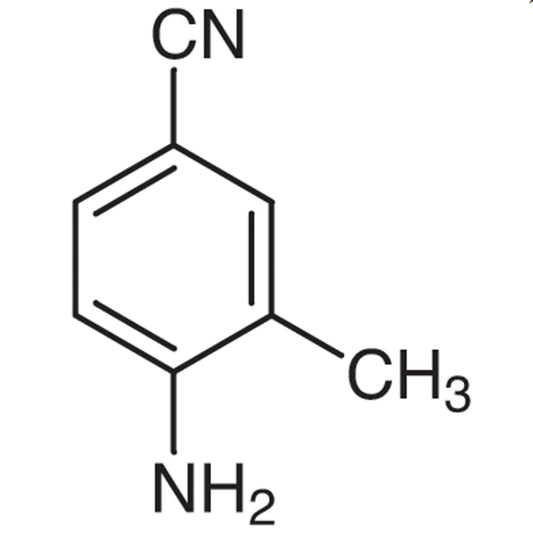
4-Amino-3-methylbenzonitrile TCI A2107
Regular price From Rp 769.650,00Regular price -
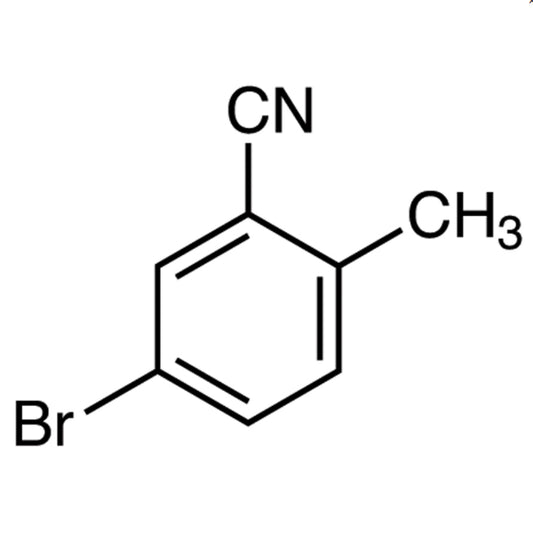
5-Bromo-2-methylbenzonitrile TCI B4808
Regular price From Rp 717.150,00Regular price -
2-Bromo-5-methylbenzonitrile TCI B4678
Regular price From Rp 717.150,00Regular price -
4-Bromo-2-methylbenzonitrile TCI B3993
Regular price Rp 2.359.350,00Regular price -
4-Bromo-3-methylbenzonitrile TCI B2718
Regular price From Rp 2.041.200,00Regular price -
4-tert-Butylbenzonitrile TCI B1576
Regular price From Rp 1.618.050,00Regular price