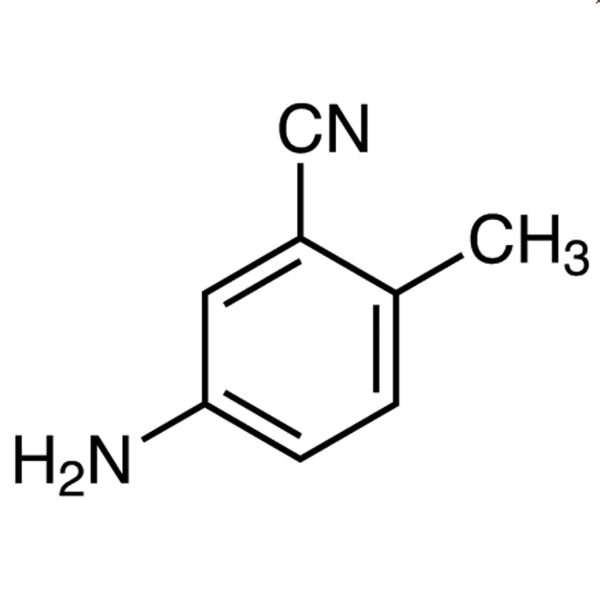
5-Amino-2-methylbenzonitrile is a chemical compound widely used as a foundational building block in the synthesis of complex organic molecules. This compound contains both an amino group and a nitrile group, making it highly versatile in various chemical reactions, including nucleophilic and substitution reactions. Its structural features enable it to participate in a wide range of synthetic pathways, making it an essential reagent in modern chemical laboratories. Due to its reactivity and functional group diversity, it is a key component in the development of new materials and pharmaceutical compounds.
The compound is valued for its chemical stability under controlled conditions and its high melting and boiling points, which facilitate efficient purification and separation processes. These properties allow for precise control during chemical reactions, especially in applications requiring high-temperature stability. Additionally, its ability to form stable intermediates with various reagents enhances its utility in synthetic chemistry. The combination of reactivity and stability makes it a preferred choice for researchers seeking reliable and consistent results.
In Indonesian laboratories, 5-Amino-2-methylbenzonitrile is commonly used in scientific research, particularly in pharmacological studies, drug synthesis, and material development. Its availability and chemical properties make it a standard reagent in academic and industrial research settings. Researchers in Indonesia rely on this compound for its reliability and effectiveness in producing high-quality chemical products. Its role in advancing scientific innovation is significant, supporting both educational and commercial research initiatives.
Related TCI products
- Used in pharmaceutical research for the synthesis of bioactive compounds due to its reactivity and functional group versatility.
- Applied in organic synthesis to create complex molecules through nucleophilic and substitution reactions.
- Employed in material science for the development of new polymers and functional materials.
- Utilized in academic research for teaching and experimental purposes in chemistry courses.
- Integrated into drug discovery programs to explore potential therapeutic agents and chemical derivatives.
| Brand | TCI |
|---|---|
| CAS number | 50670-64-9 |
| Molecular formula | — |
| Purity | — |
| Category | Chemistry > Building Blocks > Non-Heterocyclic Building Blocks |
| Pack sizes | Available in standard laboratory quantities |
| Physical form | Solid |
| Storage | Store in a cool, dry place away from light and moisture |
This compound should be stored in a cool, dry environment, away from direct sunlight and moisture. It is recommended to use airtight containers to prevent exposure to air and humidity, which may affect its stability. Due to its reactivity, it should be handled with care, using appropriate personal protective equipment such as gloves and safety goggles. It is important to ensure proper ventilation in the workspace to minimize inhalation risks. Storage conditions should be maintained at a consistent temperature to preserve its chemical integrity and ensure safe handling in laboratory settings. Always follow standard chemical safety protocols when working with this compound.
—
Produk Terkait
-
2-Amino-5-methylbenzonitrile TCI A2843
Regular price Rp 3.075.450,00Regular price -
2-Amino-4-methylbenzonitrile TCI A2448
Regular price From Rp 2.068.500,00Regular price -
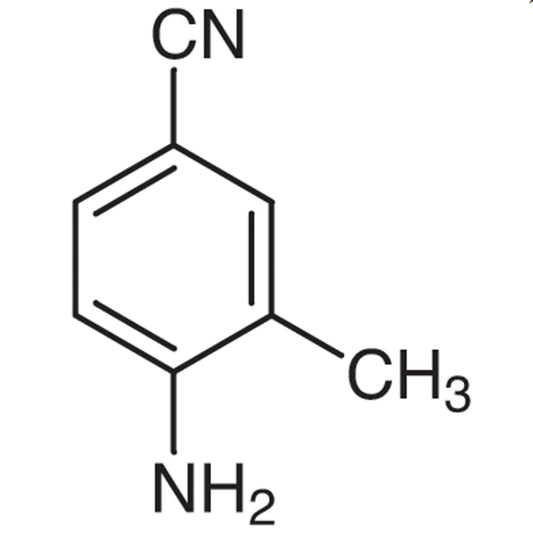
4-Amino-3-methylbenzonitrile TCI A2107
Regular price From Rp 769.650,00Regular price -
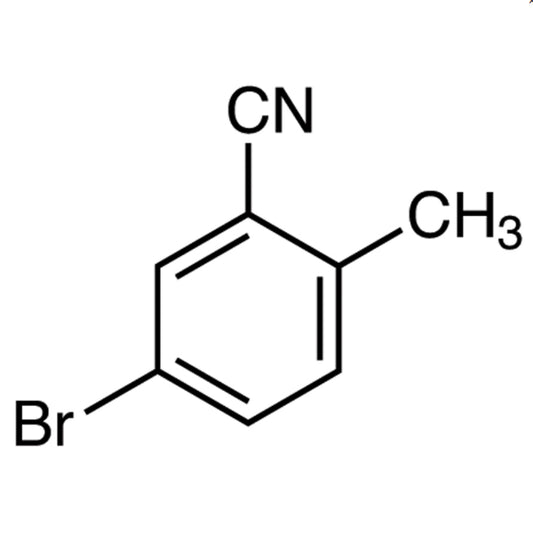
5-Bromo-2-methylbenzonitrile TCI B4808
Regular price From Rp 717.150,00Regular price -
2-Bromo-5-methylbenzonitrile TCI B4678
Regular price From Rp 717.150,00Regular price -
4-Bromo-2-methylbenzonitrile TCI B3993
Regular price Rp 2.359.350,00Regular price -
4-Bromo-3-methylbenzonitrile TCI B2718
Regular price From Rp 2.041.200,00Regular price -
4-tert-Butylbenzonitrile TCI B1576
Regular price From Rp 1.618.050,00Regular price