2-Azido-1,3-bis[(2,2-dimethyl-1,3-dioxan-5-yl)oxy]propane is a complex organic compound widely used in laboratory settings for its versatility in chemical reactions. As a building block in organic synthesis, it serves as a foundational component for the creation of more intricate molecular structures. Its unique molecular design allows it to participate in various synthetic pathways, making it an essential tool for chemists and researchers. This compound is particularly valuable in the development of new pharmaceuticals and advanced materials due to its reactivity and structural adaptability.
The compound's reactivity stems from its azido group, which is highly reactive and capable of undergoing substitution and coupling reactions. Additionally, the presence of dioxane groups enhances its compatibility with a range of reagents, enabling diverse synthetic applications. Its chemical stability under controlled conditions ensures reliable performance in laboratory experiments, while its molecular complexity allows for precise control over reaction outcomes. These properties make it a preferred choice for researchers seeking to design and synthesize complex molecules.
In Indonesian laboratories, this compound is commonly used in academic and research institutions for organic chemistry, pharmacology, and materials science projects. Due to its specialized nature, it is often utilized in advanced research programs where precise molecular manipulation is required. Its availability through reliable suppliers like AMI Scientific ensures that researchers in Indonesia can access this essential building block for their scientific endeavors.
TCI brochures (PDF)
- Click Chemistry 2026-09-08 · p. 8
Related TCI products
- TCI B3694 1585236-34-5 (2S,3S,5R,6R)-5,6-Bis(azidomethyl)-2,3-dimethoxy-2,3-dimethyl-1,4-dioxane
- TCI T1733 68733-20-0 1,3,4,6-Tetra-O-acetyl-2-azido-2-deoxy-alpha-D-mannopyranose
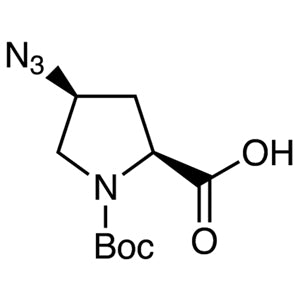
- TCI A3129 132622-65-2 cis-4-Azido-N-(tert-butoxycarbonyl)-L-proline
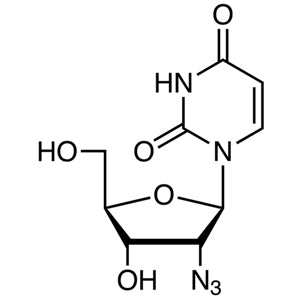
- TCI A2942 26929-65-7 2'-Azido-2'-deoxyuridine
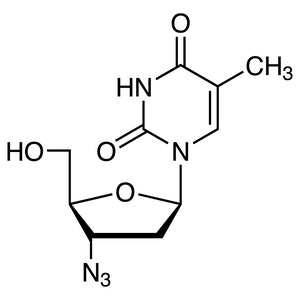
- TCI A2052 30516-87-1 3'-Azido-3'-deoxythymidine
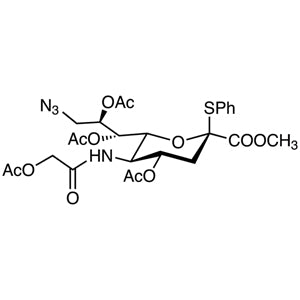
- TCI M2696 1195053-25-8 Methyl (Phenyl 5-Acetoxyacetamido-4,7,8-tri-O-acetyl-9-azido-3,5,9-trideoxy-2-thio-D-glycero-beta-D-galacto-2-nonulopyranosid)onate
- Organic synthesis projects benefit from this compound's reactivity and structural versatility, allowing for the creation of complex molecules with high precision.
- Pharmaceutical research utilizes its azido group for conjugation reactions, aiding in the development of new drug compounds and therapeutic agents.
- Materials science applications leverage its unique molecular framework to design advanced polymers and functional materials with tailored properties.
- Analytical chemistry laboratories use it as a reference standard for characterizing reaction intermediates and monitoring synthetic processes.
- Bioorganic research incorporates it in the synthesis of bioactive molecules, contributing to the exploration of new biological activities and molecular interactions.
| Brand | TCI |
|---|---|
| CAS number | 1392500-07-0 |
| Molecular formula | — |
| Purity | — |
| Category | Chemistry > Building Blocks > Non-Heterocyclic Building Blocks |
| Pack sizes | Available in various quantities as per supplier specifications |
| Physical form | Solid, typically in crystalline or powder form |
| Storage | Store in a cool, dry place away from light and moisture |
This compound should be stored in a cool, dry environment, away from direct light and moisture to maintain its chemical stability. It is recommended to use airtight containers made of glass or high-density polyethylene to prevent contamination and degradation. Due to its reactivity, it should be handled with care using appropriate personal protective equipment, such as gloves and safety goggles. In laboratory settings, it is important to ensure proper ventilation to minimize exposure to vapors. The compound should be kept in a secure location, away from incompatible substances to prevent unintended reactions. Proper labeling and storage conditions are essential to ensure safe handling and long-term usability in research applications.
—
Product Categories
Produk Terkait
-
(2S,3S,5R,6R)-5,6-Bis(azidomethyl)-2,3-dimethoxy-2,3-dimethyl-1,4-dioxane TCI B3694
Regular price Rp 1.908.900,00Regular priceRp 1.350.300,00Sale price Rp 1.908.900,00 -
1,3,4,6-Tetra-O-acetyl-2-azido-2-deoxy-alpha-D-mannopyranose TCI T1733
Regular price Rp 5.512.500,00Regular priceRp 3.870.300,00Sale price Rp 5.512.500,00 -
cis-4-Azido-N-(tert-butoxycarbonyl)-L-proline TCI A3129
Regular price From Rp 1.167.600,00Regular priceRp 831.600,00Sale price From Rp 1.167.600,00 -
2'-Azido-2'-deoxyuridine TCI A2942
Regular price Rp 5.114.550,00Regular priceRp 3.592.050,00Sale price Rp 5.114.550,00 -
3'-Azido-3'-deoxythymidine TCI A2052
Regular price From Rp 2.464.350,00Regular priceRp 1.738.800,00Sale price From Rp 2.464.350,00 -
Methyl(Phenyl5-Acetoxyacetamido-4,7,8-tri-O-acetyl-9-azido-3,5,9-trideoxy-2-thio-D-glycero-beta-D-galacto-2-nonulopyranosid)onate TCI M2696
Regular price Rp 10.890.600,00Regular priceRp 7.631.400,00Sale price Rp 10.890.600,00 -
Methyl(Phenyl5-Acetamido-4,7,8-tri-O-acetyl-9-azido-3,5,9-trideoxy-2-thio-D-glycero-beta-D-galacto-2-nonulopyranosid)onate TCI M2695
Regular price Rp 24.088.050,00Regular priceRp 16.859.850,00Sale price Rp 24.088.050,00 -
1,2,3-Tris(2-cyanoethoxy)propane TCI T0525
Regular price From Rp 3.763.200,00Regular priceRp 2.647.050,00Sale price From Rp 3.763.200,00