1,2,3-Tris(2-cyanoethoxy)propane is a chemical compound widely used in laboratory settings for the synthesis of complex molecules. As a building block in organic chemistry, it serves as a versatile intermediate in various synthetic pathways. Its unique molecular structure, featuring three 2-cyanoethoxy groups attached to a propane backbone, makes it a valuable resource for chemists aiming to create a wide range of functional compounds. This compound is essential in the development of heterocyclic and organic molecules, playing a crucial role in both academic and industrial research.
The compound's stability under specific conditions and its ability to participate in multiple reaction types, such as nucleophilic substitution and coupling reactions, make it a preferred choice for synthetic chemists. Its polar nature allows it to dissolve in common organic solvents like ethyl acetate and methanol, enhancing its usability in diverse experimental setups. These properties contribute to its effectiveness as a flexible and reliable reagent in chemical synthesis.
In Indonesian laboratories, 1,2,3-Tris(2-cyanoethoxy)propane is extensively used in organic chemistry research and the development of new compounds. Its adaptability and chemical reactivity make it a popular choice for both educational and industrial applications. Researchers rely on this compound to explore new synthetic routes and to create compounds with specific functionalities for various applications in pharmaceuticals, materials science, and chemical engineering.
Related TCI products
- TCI B0928 80-04-6 2,2-Bis(4-hydroxycyclohexyl)propane (mixture of isomers)
- TCI B0494 80-05-7 2,2-Bis(4-hydroxyphenyl)propane
- TCI A2474 1392500-07-0 2-Azido-1,3-bis[(2,2-dimethyl-1,3-dioxan-5-yl)oxy]propane
- TCI H1846 4704-94-3 2-(Hydroxymethyl)propane-1,3-diol
- TCI C3659 104-29-0 3-(4-Chlorophenoxy)propane-1,2-diol
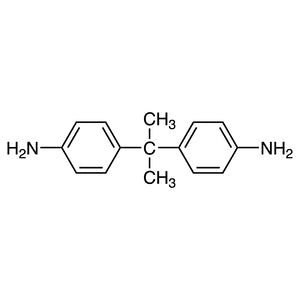
- TCI B6743 2479-47-2 4,4'-(Propane-2,2-diyl)dianiline
- Organic synthesis is a primary application where this compound is used to create complex molecules with specific functionalities.
- Heterocyclic compound development benefits from its structure, allowing for the formation of ring systems in pharmaceutical and material science research.
- Polymer chemistry applications utilize its reactivity to form cross-linked structures, enhancing material properties in industrial settings.
- Analytical chemistry experiments leverage its solubility and reactivity for testing reaction mechanisms and kinetic studies.
- Medicinal chemistry research employs this compound as a building block for the synthesis of drug candidates with targeted biological activities.
| Brand | TCI |
|---|---|
| CAS number | 2465-93-2 |
| Molecular formula | — |
| Purity | — |
| Category | Chemistry > Building Blocks > Non-Heterocyclic Building Blocks |
| Pack sizes | Available in various quantities as per standard laboratory supply |
| Physical form | Liquid |
| Storage | Store in a cool, dry place away from light and incompatible materials |
This compound should be stored in a cool, dry environment, away from direct sunlight and sources of heat. It is recommended to use sealed containers made of materials compatible with organic solvents to prevent evaporation and contamination. Due to its polar nature, it is important to handle it with appropriate personal protective equipment, including gloves and safety goggles, to ensure safety during handling. Proper ventilation should be maintained in the laboratory to minimize exposure to vapors. The compound should not be stored near incompatible substances such as strong acids or bases, as they may react adversely. Regular inspection of storage conditions and containers is essential to maintain the integrity and safety of the compound.
—
Produk Terkait
-
2,2-Bis(4-hydroxycyclohexyl)propane(mixtureofisomers) TCI B0928
Regular price From Rp 557.550,00Regular priceRp 405.300,00Sale price From Rp 557.550,00 -
2,2-Bis(4-hydroxyphenyl)propane TCI B0494
Regular price From Rp 477.750,00Regular priceRp 333.900,00Sale price From Rp 477.750,00 -
2-Azido-1,3-bis[(2,2-dimethyl-1,3-dioxan-5-yl)oxy]propane TCI A2474
Regular price Rp 4.796.400,00Regular priceRp 3.369.450,00Sale price Rp 4.796.400,00 -
2-(Hydroxymethyl)propane-1,3-diol TCI H1846
Regular price From Rp 1.961.400,00Regular priceRp 1.387.050,00Sale price From Rp 1.961.400,00 -
3-(4-Chlorophenoxy)propane-1,2-diol TCI C3659
Regular price From Rp 557.550,00Regular priceRp 405.300,00Sale price From Rp 557.550,00 -
4,4'-(Propane-2,2-diyl)dianiline TCI B6743
Regular price Rp 3.153.150,00Regular priceRp 2.220.750,00Sale price Rp 3.153.150,00 -
Ethyl6-[(2-Cyanoethoxy)(4,4-diphenylcyclohexyloxy)phosphoryloxy]hexanoate TCI E1313
Regular price From Rp 3.524.850,00Regular priceRp 2.480.100,00Sale price From Rp 3.524.850,00 -
TetracyanoethyleneOxide TCI T1439
Regular price Rp 3.735.900,00Regular priceRp 2.628.150,00Sale price Rp 3.735.900,00