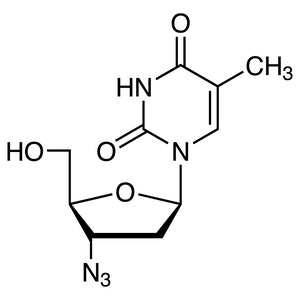
2'-Azido-2'-deoxyuridine (Aza-UDP) is a chemical compound widely used in biochemical and biotechnological applications within laboratory settings. This compound is structurally similar to a nucleotide but features an azido group at the 2' position of deoxythymidine. Its unique structure makes it a valuable reagent for click chemistry reactions, particularly in molecular conjugation processes. In research environments, Aza-UDP serves as a versatile building block for synthesizing complex molecules with high specificity and efficiency. Its role is critical in the development of advanced chemical and biological systems.
The key properties of Aza-UDP that make it a preferred choice include its high reactivity and ability to form stable covalent bonds with various functional groups such as alcohols and amines. This reactivity allows it to participate in rapid and selective chemical reactions, which is essential for applications requiring precision. Additionally, its chemical stability and purity ensure consistent results in experimental procedures. These characteristics make Aza-UDP a reliable and efficient reagent for a wide range of scientific investigations.
In Indonesian laboratories, Aza-UDP is commonly used in biomedical research, organic chemistry, and biotechnology. It plays a crucial role in the development of conjugation techniques and in the modification of biological molecules. Its presence supports the advancement of drug development, biosensor creation, and molecular engineering. The compound is an essential tool for researchers aiming to achieve accurate and reproducible outcomes in their experiments.
TCI brochures (PDF)
- 2'-Modified Ribonucleosides 2025-01-28 · p. 1
- Nucleosides, Nucleotides, Nucleic Acids and Related Reagents 2026-03-23 · p. 3
- Click Chemistry 2026-09-08 · p. 7
- Molecular conjugation in biotechnology for labeling and functionalization of biomolecules due to its azido group enabling click chemistry reactions.
- Biosensor development where Aza-UDP is used to attach specific molecular probes for enhanced detection and specificity in analytical assays.
- Drug development applications where the compound facilitates the synthesis of complex pharmaceutical compounds through efficient chemical coupling.
- Organic synthesis in chemical laboratories for the creation of novel compounds with tailored properties through selective chemical modifications.
- Research in nucleic acid chemistry where Aza-UDP is utilized for the study of nucleotide analogs and their biological interactions in genetic and biochemical processes.
| Brand | TCI |
|---|---|
| CAS number | 26929-65-7 |
| Molecular formula | — |
| Purity | — |
| Category | Chemistry > Chemical Biology > Conjugation Chemistry/Click Chemistry |
| Pack sizes | Available in various quantities as per standard laboratory reagent packaging |
| Physical form | Solid powder |
| Storage | Store in a cool, dry place away from light and moisture |
Aza-UDP should be stored in a cool, dry environment, away from direct light and moisture to maintain its chemical integrity. It is recommended to use airtight containers to prevent exposure to humidity and air, which could affect its stability. Due to its reactivity, it should be handled in a well-ventilated area, and appropriate personal protective equipment such as gloves and safety goggles should be worn. Avoid contact with incompatible substances, and ensure proper disposal according to local regulations. Regular monitoring of storage conditions is advised to ensure the compound remains suitable for use in laboratory applications.
—
Product Categories
- Biochemicals and ReagentsNucleosides, Nucleotides, OligonucleotidesNucleoside Analogs
- Pharmaceutical Development and Drug Discovery ResearchConjugation Chemistry/Click ChemistryAzides [Conjugation Chemistry/Click Chemistry]
- Pharmaceutical Development and Drug Discovery ResearchConjugation Chemistry/Click ChemistryNucleoside Azides/Alkynes [Conjugation Chemistry/Click Chemistry]
Produk Terkait
-
3'-Azido-3'-deoxythymidine TCI A2052
Regular price From Rp 2.464.350,00Regular priceRp 1.738.800,00Sale price From Rp 2.464.350,00 -
5-Ethynyl-2'-deoxyuridine TCI E1057
Regular price From Rp 1.643.250,00Regular priceRp 1.164.450,00Sale price From Rp 1.643.250,00 -
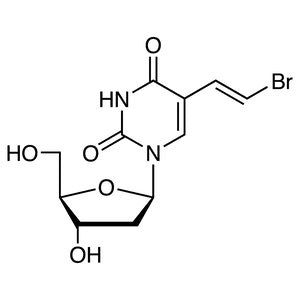
(E)-5-(2-Bromovinyl)-2'-deoxyuridine TCI B3404
Regular price Rp 5.221.650,00Regular priceRp 3.666.600,00Sale price Rp 5.221.650,00 -
5-Bromo-2'-deoxyuridine TCI B1575
Regular price From Rp 2.252.250,00Regular priceRp 1.590.750,00Sale price From Rp 2.252.250,00 -
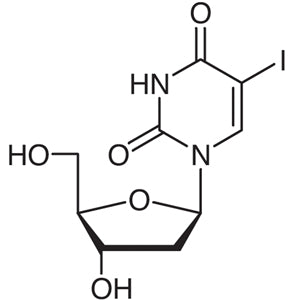
5-Iodo-2'-deoxyuridine TCI I0258
Regular price From Rp 1.749.300,00Regular priceRp 1.239.000,00Sale price From Rp 1.749.300,00 -
2'-Deoxyuridine TCI D0060
Regular price From Rp 822.150,00Regular priceRp 590.100,00Sale price From Rp 822.150,00 -
2',3'-Dideoxyuridine TCI D6106
Regular price Rp 9.646.350,00Regular priceRp 6.760.950,00Sale price Rp 9.646.350,00 -
1,3,4,6-Tetra-O-acetyl-2-azido-2-deoxy-alpha-D-mannopyranose TCI T1733
Regular price Rp 5.512.500,00Regular priceRp 3.870.300,00Sale price Rp 5.512.500,00