Anhydrous Aluminum Bromide (AlBr₃) is a versatile inorganic compound widely used in chemical reactions, particularly in catalysis and inorganic chemistry. It plays a crucial role in laboratory settings where high reactivity and catalytic efficiency are required. This compound is commonly employed in nucleophilic substitution reactions and the synthesis of organic compounds. Its ability to act as a strong Lewis acid makes it an essential reagent for various synthetic processes. Due to its reactivity, it is often used in reactions that demand high catalytic activity and rapid reaction rates.
Aluminum Bromide Anhydrous is known for its high reactivity, solubility in organic solvents, and strong corrosive properties. It is a white solid that dissolves readily in solvents such as ethers and chloroform. Its anhydrous form ensures minimal interaction with moisture, reducing the risk of unwanted side reactions. This characteristic makes it a preferred choice for applications requiring precise control over reaction conditions. Additionally, its ability to form complexes with various organic and inorganic compounds enhances its utility in synthetic chemistry.
In Indonesian laboratories, AlBr₃ is frequently used in research and development projects involving catalytic processes and the synthesis of complex compounds. Its availability in anhydrous form ensures that experiments remain efficient and free from impurities. It is commonly found in academic and industrial settings where chemical synthesis and catalytic reactions are central to the work being conducted.
TCI brochures (PDF)
- Metallic Salts 2025-11-06 · p. 4
- Used in nucleophilic substitution reactions due to its strong Lewis acidic properties, making it an effective catalyst for promoting reaction rates.
- Applied in the synthesis of organic compounds, where its ability to activate substrates enhances the efficiency of chemical transformations.
- Employed in the preparation of bromaluminates, which are important intermediates in various inorganic synthesis processes.
- Utilized in catalytic systems requiring high reactivity and stability under varying reaction conditions.
- Found in complex compound synthesis, where its reactivity helps in forming coordination complexes with various ligands.
| Brand | TCI |
|---|---|
| CAS number | 7727-15-3 |
| Molecular formula | — |
| Purity | — |
| Category | Chemistry > Catalysis and Inorganic Chemistry > Main-group Elements |
| Pack sizes | Available in various quantities as per standard laboratory supply |
| Physical form | White solid |
| Storage | Store in a cool, dry place away from moisture and incompatible materials |
Anhydrous Aluminum Bromide should be stored in a cool, dry environment to prevent moisture absorption, which can lead to hydrolysis and reduce its effectiveness. It is recommended to use airtight containers made of inert materials such as glass or polyethylene to ensure long-term stability. Due to its corrosive nature, it should be handled with appropriate personal protective equipment, including gloves and safety goggles. Avoid contact with skin and eyes, and ensure proper ventilation in the workspace. Always store it away from strong oxidizing agents and other reactive substances to maintain safety in the laboratory.
—
Product Categories
- Catalysis and Inorganic ChemistryMain-group Elements [Catalysis and Inorganic Chemistry]Aluminum [Catalysis and Inorganic Chemistry]
- Catalysis and Inorganic ChemistryMetallic Salts [Catalysis and Inorganic Chemistry]Bromide Salts [Metallic Salts]
- Synthetic ReagentsAcids, Bases [Synthetic Reagents]Acids [Synthetic Reagents]
Produk Terkait
-
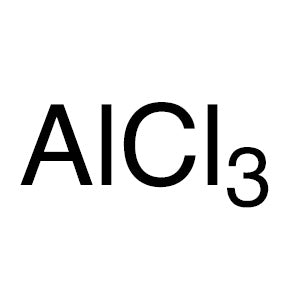
Aluminum(III)Chloride TCI A1831
Regular price From Rp 795.900,00Regular priceRp 556.500,00Sale price From Rp 795.900,00 -
LithiumBromide TCI L0210
Regular price Rp 689.850,00Regular priceRp 481.950,00Sale price Rp 689.850,00 -
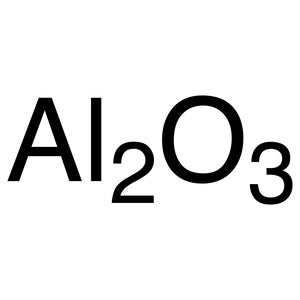
Aluminum(III)Oxide,AEROXIDE(regR)AluC TCI A3546
Regular price Rp 1.220.100,00Regular priceRp 852.600,00Sale price Rp 1.220.100,00 -
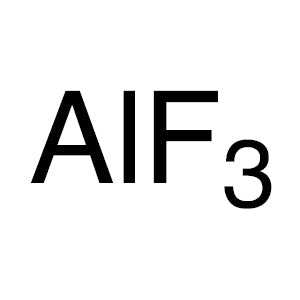
Aluminum(III)Fluoride TCI A3470
Regular price From Rp 1.220.100,00Regular priceRp 852.600,00Sale price From Rp 1.220.100,00 -
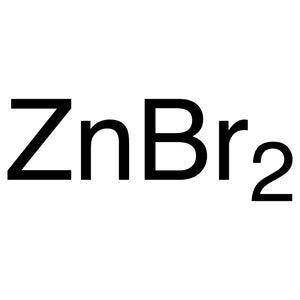
ZincBromide TCI Z0013
Regular price From Rp 610.050,00Regular priceRp 426.300,00Sale price From Rp 610.050,00 -
StrontiumBromide TCI T4155
Regular price From Rp 2.359.350,00Regular priceRp 1.649.550,00Sale price From Rp 2.359.350,00 -
Tin(II)Bromide[forPerovskiteprecursor] TCI T3573
Regular price From Rp 1.565.550,00Regular priceRp 1.094.100,00Sale price From Rp 1.565.550,00 -
Antimony(III)Bromide TCI A3588
Regular price From Rp 2.625.000,00Regular priceRp 1.835.400,00Sale price From Rp 2.625.000,00