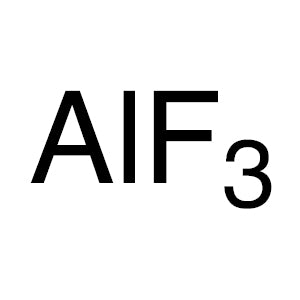
Aluminum(III) Fluoride (AlF₃), with the CAS number 7784-18-1, is a chemical compound widely used in laboratory settings for its versatile chemical properties. It plays a crucial role in catalytic reactions and inorganic chemistry, particularly in the synthesis of both organic and inorganic compounds. Its ability to form complexes with various metals makes it a valuable tool in chemical processes that require enhanced reactivity and selectivity. As a key component in catalytic systems, AlF₃ is often employed in reactions where precise control over reaction pathways is essential. Its unique properties make it indispensable in modern chemical research and industrial applications.
AlF₃ is known for its amphoteric nature, meaning it can react with both acids and bases, which provides flexibility in reaction conditions. This characteristic is particularly useful in environments where pH control is critical. Additionally, its high melting point ensures stability under elevated temperatures, making it suitable for high-temperature processes. The compound also exhibits a stable crystalline structure, contributing to its reliability in laboratory applications. These properties collectively make AlF₃ a preferred choice for researchers and chemists seeking a versatile and stable reagent.
In Indonesian laboratories, AlF₃ is extensively used in chemical research, especially in catalysis and synthesis. It is commonly found in academic and industrial research settings where its unique properties are leveraged for complex chemical transformations. The compound’s role in material science and refractory material production further underscores its importance in the scientific community. Its widespread use in Indonesia reflects its value in both educational and applied research contexts.
TCI brochures (PDF)
- Metallic Salts 2025-11-06 · p. 2
- Catalytic Reactions: AlF₃ is widely used in catalytic systems due to its ability to form complexes with various metals, enhancing reaction efficiency and selectivity.
- Organic Synthesis: It plays a key role in the synthesis of organic compounds, particularly in reactions requiring precise control over reaction pathways.
- Inorganic Chemistry: AlF₃ is essential in inorganic chemistry for its ability to facilitate reactions involving metal complexes and anionic species.
- Material Science Research: Its amphoteric nature and high melting point make it ideal for studying material properties under extreme conditions.
- Refractory Material Production: AlF₃ is used in the creation of refractory materials that can withstand high temperatures and chemical corrosion.
| Brand | TCI |
|---|---|
| CAS number | 7784-18-1 |
| Molecular formula | — |
| Purity | — |
| Category | Chemistry > Catalysis and Inorganic Chemistry > Main-group Elements |
| Pack sizes | Available in various quantities as per standard laboratory supply |
| Physical form | Solid |
| Storage | Store in a cool, dry place away from moisture and direct sunlight |
Aluminum(III) Fluoride should be stored in a cool, dry environment to maintain its chemical stability. It is recommended to keep the material in airtight containers to prevent moisture absorption, which can affect its properties. Due to its potential reactivity, it should be stored away from incompatible substances such as strong acids or bases. Proper labeling of storage containers is essential for safety and traceability. Laboratory personnel should wear appropriate personal protective equipment when handling AlF₃ to minimize exposure risks. Regular inspection of storage conditions ensures the material remains in optimal condition for use in research applications.
—
Produk Terkait
-
Aluminum(III)Oxide,AEROXIDE(regR)AluC TCI A3546
Regular price Rp 1.220.100,00Regular priceRp 852.600,00Sale price Rp 1.220.100,00 -
AluminumBromideAnhydrous TCI A2692
Regular price From Rp 743.400,00Regular priceRp 519.750,00Sale price From Rp 743.400,00 -
Aluminum(III)Chloride TCI A1831
Regular price From Rp 795.900,00Regular priceRp 556.500,00Sale price From Rp 795.900,00 -
Zinc(II)Fluoride TCI Z0050
Regular price From Rp 903.000,00Regular priceRp 631.050,00Sale price From Rp 903.000,00 -
StrontiumFluoride TCI T4027
Regular price From Rp 743.400,00Regular priceRp 519.750,00Sale price From Rp 743.400,00 -
MagnesiumFluoride TCI M3395
Regular price From Rp 1.565.550,00Regular priceRp 1.094.100,00Sale price From Rp 1.565.550,00 -
Lead(II)Fluoride TCI L0424
Regular price From Rp 557.550,00Regular priceRp 389.550,00Sale price From Rp 557.550,00 -
Indium(III)Fluoride TCI I1160
Regular price From Rp 2.889.600,00Regular priceRp 2.020.200,00Sale price From Rp 2.889.600,00