TCI L0210 Lithium Bromide is a simple inorganic salt formed from lithium and bromide ions, yet it serves an unusually wide range of purposes in the laboratory. The salt is well known for its very strong capacity to absorb water, as well as for dissolving readily in water and in a number of polar organic solvents. In chemical laboratories, this material is used as a reagent, as an additive in solvent mixtures, as a source of bromide ions, and as a supporting material for experiments that require the adjustment of ionic strength or that depend on unusual dissolving behaviour.
The most prominent characteristic of lithium bromide is its extreme hygroscopicity, which causes it to draw water vapour readily from the surrounding air, to the point that it may deliquesce if left exposed. Far from being only a handling concern, this property is deliberately exploited in moisture-absorbing systems and in absorption refrigeration. In organic chemistry, lithium bromide is useful for dehydrohalogenation reactions and halogen exchange, and it serves as an additive that improves the solubility of certain polymers in dimethylformamide or dimethylacetamide.
In Indonesian laboratories, these characteristics make the material suitable for routine synthetic work, for solvent system preparation, and for sample preparation steps that call for a reliable source of bromide ions. Highly concentrated solutions are also recognised for their ability to disrupt hydrogen bonding, which is why they are used to dissolve proteins and natural polymers that resist ordinary solvents. The salt is therefore a practical choice for research, teaching, and analytical laboratories alike.
TCI brochures (PDF)
- Lithium Electrolytes 2026-04-06 · p. 1
- Lithium Compounds for Research and Experimental Use 2026-02-10 · p. 1
- Lithium Battery Research Reagents 2026-06-04 · p. 2
- Battery Research Reagents 2026-09-18 · p. 3
- Metallic Salts 2025-11-06 · p. 4
Related TCI products
- TCI L0212 10377-51-2 Lithium Iodide (999%, trace metals basis) (Low water content)
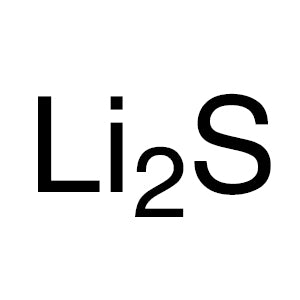
- TCI L0364 12136-58-2 Lithium Sulfide
- TCI L0420 176719-70-3 Lithium [(Nonafluorobutyl)sulfonyl][(trifluoromethyl)sulfonyl]azanide
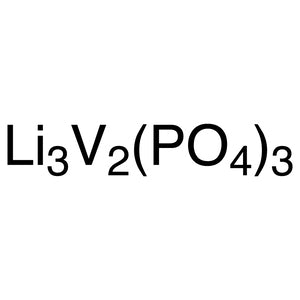
- TCI L0417 84159-18-2 Lithium Vanadium Phosphate (Li3V2(PO4)3)
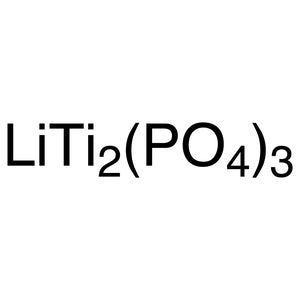
- TCI L0416 30622-39-0 Lithium Titanium Phosphate (LiTi2(PO4)3)
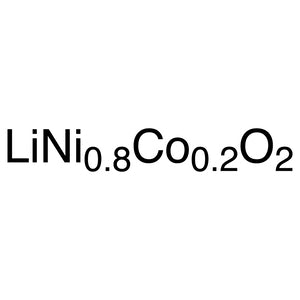
- TCI L0415 113066-89-0 Lithium Nickel Cobalt Oxide (LiNi08Co02O2)
- Dehydrohalogenation reactions — lithium bromide supports the elimination of hydrogen halides in organic synthesis, making it a practical reagent where controlled halide chemistry is required in the reaction medium.
- Halogen exchange chemistry — the salt acts as a convenient source of bromide ions for substitution of other halides, allowing chemists to convert substrates into the corresponding bromo compounds.
- Polymer dissolution in polar amide solvents — added to dimethylformamide or dimethylacetamide, it markedly improves the solubility of certain polymers that otherwise dissolve poorly in those media.
- Protein and natural polymer solubilisation — concentrated solutions disrupt hydrogen bonding, so they can dissolve proteins and natural polymers that remain insoluble in ordinary laboratory solvents.
- Ionic strength adjustment and solvent additive work — its high solubility in water and polar organic solvents lets it tune ionic strength or modify dissolving behaviour in experimental systems.
| Brand | TCI |
|---|---|
| CAS number | 7550-35-8 |
| Molecular formula | — |
| Purity | — |
| Category | Chemistry > Catalysis and Inorganic Chemistry > Main-group Elements [Catalysis and Inorganic Chemistry] |
| Pack sizes | available in the standard TCI catalogue pack sizes; please confirm the currently listed options when ordering |
| Physical form | solid inorganic salt, strongly hygroscopic |
| Storage | keep tightly closed in a dry place, protected from atmospheric moisture |
- Product code: L0210
Because lithium bromide is extremely hygroscopic, storage conditions matter more than they do for ordinary salts. Keep the material in a tightly closed container in a dry, well-ventilated area, and limit the time the container stays open on the bench, since exposed material will absorb moisture from the air and may eventually deliquesce. Original manufacturer packaging or tightly sealed glass or plastic containers are suitable; a desiccator is advisable for opened stock. Weigh out quantities promptly and reseal immediately. Handle with gloves, safety glasses, and a laboratory coat, work in a well-ventilated area or fume hood to avoid dust inhalation, and follow the manufacturer safety data sheet together with your institution's standard laboratory procedures for waste collection and spill response.
—
Product Categories
- Catalysis and Inorganic ChemistryMain-group Elements [Catalysis and Inorganic Chemistry]Lithium [Catalysis and Inorganic Chemistry]
- Catalysis and Inorganic ChemistryMetallic Salts [Catalysis and Inorganic Chemistry]Bromide Salts [Metallic Salts]
- Synthetic ReagentsAcids, Bases [Synthetic Reagents]Acids [Synthetic Reagents]
- Synthetic ReagentsInorganic Salts [Synthetic Reagents]
Produk Terkait
-
LithiumIodide(999%,tracemetalsbasis)(Lowwatercontent) TCI L0212
Regular price From Rp 1.618.050,00Regular priceRp 1.146.600,00Sale price From Rp 1.618.050,00 -
LithiumSulfide TCI L0364
Regular price From Rp 2.491.650,00Regular priceRp 1.741.950,00Sale price From Rp 2.491.650,00 -
Lithium[(Nonafluorobutyl)sulfonyl][(trifluoromethyl)sulfonyl]azanide TCI L0420
Regular price From Rp 3.392.550,00Regular priceRp 2.387.700,00Sale price From Rp 3.392.550,00 -
LithiumVanadiumPhosphate(Li3V2(PO4)3) TCI L0417
Regular price From Rp 3.683.400,00Regular priceRp 2.575.650,00Sale price From Rp 3.683.400,00 -
LithiumTitaniumPhosphate(LiTi2(PO4)3) TCI L0416
Regular price From Rp 3.870.300,00Regular priceRp 2.705.850,00Sale price From Rp 3.870.300,00 -
LithiumNickelCobaltOxide(LiNi08Co02O2) TCI L0415
Regular price From Rp 1.829.100,00Regular priceRp 1.278.900,00Sale price From Rp 1.829.100,00 -
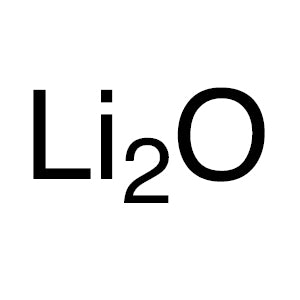
LithiumOxide TCI L0403
Regular price From Rp 1.298.850,00Regular priceRp 908.250,00Sale price From Rp 1.298.850,00 -
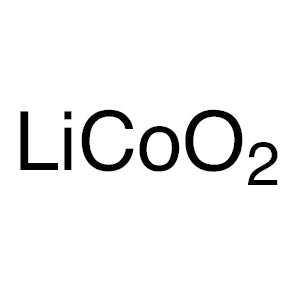
LithiumCobalt(III)Oxide TCI L0384
Regular price From Rp 1.829.100,00Regular priceRp 1.278.900,00Sale price From Rp 1.829.100,00



![TCI L0420 176719-70-3 Lithium [(Nonafluorobutyl)sulfonyl][(trifluoromethyl)sulfonyl]azanide](http://amiscientific.com/cdn/shop/files/TCI2510L0420_495d6d2d-c256-4908-a7a0-1af1a85a5651.jpg?v=1792646534&width=533)
![176719-70-3 Lithium [(Nonafluorobutyl)sulfonyl][(trifluoromethyl)sulfonyl]azanide - AMI Scientific](http://amiscientific.com/cdn/shop/files/TCI2510L0420.jpg?v=1767121891&width=533)