![176719-70-3 Lithium [(Nonafluorobutyl)sulfonyl][(trifluoromethyl)sulfonyl]azanide - AMI Scientific](http://amiscientific.com/cdn/shop/files/TCI2510L0420.jpg?v=1767121891&width=1946)
![176719-70-3 Lithium [(Nonafluorobutyl)sulfonyl][(trifluoromethyl)sulfonyl]azanide - AMI Scientific](http://amiscientific.com/cdn/shop/files/TCI2510L0420.jpg?v=1767121891&width=1445)
Lithium [(Nonafluorobutyl)sulfonyl][(trifluoromethyl)sulfonyl]azanide is a complex chemical compound used in various laboratory applications, particularly in catalysis and inorganic chemistry. This compound plays a crucial role in chemical reactions due to its unique molecular structure, which consists of an azanide ion bonded to two distinct sulfonyl groups. Its versatility makes it a valuable reagent for researchers working on advanced chemical synthesis and reaction mechanisms. The compound is especially useful in studies involving redox reactions and substitution processes, where its reactivity and stability under controlled conditions are essential.
The compound's reactivity and chemical stability make it a preferred choice for modern chemical research. Its fluorinated structure contributes to both reactivity and selectivity, allowing it to participate in highly specific reactions. The presence of fluorine also enhances its stability in certain environments, making it suitable for use in controlled laboratory settings. These properties make it an ideal candidate for applications requiring precision and efficiency, such as the synthesis of complex organic compounds. Its unique chemical profile supports a wide range of experimental approaches in both academic and industrial research.
In Indonesian laboratories, this compound is widely used in applied chemistry research and higher education. It is commonly found in research institutions and universities that focus on catalytic processes and organic synthesis. Its application in both teaching and research settings highlights its importance in advancing chemical knowledge and innovation in the region. The compound's role in these environments underscores its significance as a key reagent in modern chemical experimentation.
- Catalytic Reactions: This compound is ideal for catalytic processes due to its ability to facilitate complex chemical transformations with high efficiency.
- Organic Synthesis: Its unique structure allows it to participate in the synthesis of complex organic molecules, making it a valuable tool in synthetic chemistry.
- Redox Reactions: The compound's reactivity makes it suitable for redox reactions, where it can act as either an oxidizing or reducing agent depending on the reaction conditions.
- Substitution Reactions: Its sulfonyl groups enable it to participate in substitution reactions, particularly in the context of fluorinated compounds.
- Research and Education: It is frequently used in both research and teaching environments to support experimental studies and chemical education.
| Brand | TCI |
|---|---|
| CAS number | 176719-70-3 |
| Molecular formula | — |
| Purity | — |
| Category | Chemistry > Catalysis and Inorganic Chemistry > Main-group Elements |
| Pack sizes | Available in various quantities as per supplier specifications |
| Physical form | Solid or liquid, depending on the specific formulation |
| Storage | Store in a cool, dry place away from moisture and direct sunlight |
This compound should be stored in a cool, dry environment, away from moisture and direct sunlight to maintain its chemical integrity. It is recommended to use airtight containers made of materials that are chemically inert, such as glass or high-density polyethylene, to prevent contamination and degradation. Due to its reactivity, it should be handled with care using appropriate personal protective equipment, including gloves and safety goggles. In laboratory settings, it should be stored separately from incompatible substances to avoid any potential chemical interactions. Proper ventilation is also essential when working with this compound to ensure a safe working environment.
—
Produk Terkait
-
TCI B5774 5,10-Bis(4,4,5,5-tetramethyl-1,3,2-dioxaborolan-2-yl)naphtho[1,2-c:5,6-c']bis([1,2,5]oxadiazole)
Regular price Rp 10.255.350,00Regular price -
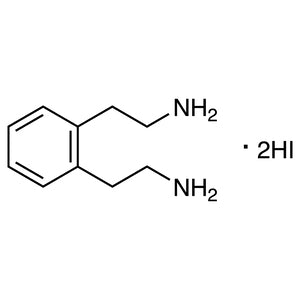
Dihydroiodide TCI B6569
Regular price From Rp 1.936.200,00Regular price -
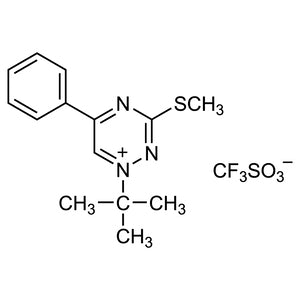
Trifluoromethanesulfonate TCI B7003
Regular price From Rp 1.936.200,00Regular price
![5,10-Bis(4,4,5,5-tetramethyl-1,3,2-dioxaborolan-2-yl)naphtho[1,2-c:5,6-c']bis([1,2,5]oxadiazole) - TCI B5774 - AMI Scientific](http://amiscientific.com/cdn/shop/files/TCI2510B5774.jpg?v=1769180228&width=533)