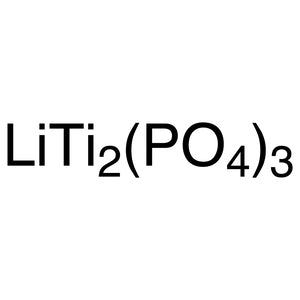
Lithium Titanium Phosphate (LiTi₂(PO₄)₃), with CAS number 30622-39-0, is a chemical compound widely used in laboratory settings, particularly in the fields of catalysis and inorganic chemistry. This material plays a crucial role in the synthesis and characterization of advanced materials, especially those with electrochemical properties. Its stability and chemical inertness make it an essential component in various experimental processes. Due to its unique structure, it is frequently employed in the development of electrode materials for lithium-ion batteries, contributing to the advancement of energy storage technologies.
One of the key reasons for its popularity is its stable crystalline structure and high chemical resistance. These properties ensure that the material remains consistent under various experimental conditions, making it a reliable choice for precise and reproducible research. Additionally, its excellent ionic conductivity is vital for applications involving charge transfer and energy storage. The compound’s inert nature also minimizes unwanted side reactions, which is critical in maintaining the integrity of experimental results.
In Indonesian laboratories, Lithium Titanium Phosphate is commonly used in energy and material research. It is a preferred material for studies related to renewable energy sources and advanced battery technologies. Many research institutions and universities in Indonesia utilize this compound for its reliability and performance in electrochemical applications. Its consistent quality and high purity make it suitable for experiments requiring precision and accuracy.
- Electrode Material Development for Lithium-Ion Batteries: Lithium Titanium Phosphate is ideal for creating high-performance electrode materials due to its stable structure and excellent ionic conductivity.
- Energy Storage Research: This compound is widely used in studies focused on improving the efficiency and longevity of energy storage systems.
- Material Characterization Studies: Its chemical inertness and consistent properties make it suitable for advanced material analysis and testing.
- Catalytic Reaction Testing: The compound’s stability and resistance to chemical reactions make it a valuable tool in catalytic experiments.
- Electrochemical Sensor Development: Its electrochemical properties are beneficial in the creation of sensors for detecting various chemical substances.
| Brand | TCI |
|---|---|
| CAS number | 30622-39-0 |
| Molecular formula | — |
| Purity | — |
| Category | Chemistry > Catalysis and Inorganic Chemistry > Main-group Elements |
| Pack sizes | Available in various quantities as per standard laboratory supply |
| Physical form | Powder |
| Storage | Store in a cool, dry place away from moisture and direct sunlight |
Lithium Titanium Phosphate should be stored in a cool, dry environment to maintain its chemical stability and prevent degradation. It is recommended to keep the material in airtight containers to avoid exposure to moisture and contaminants. Due to its inert nature, it does not react readily with the environment, but standard laboratory safety practices should still be followed. When handling, ensure proper ventilation and use appropriate personal protective equipment. The material is generally non-hazardous, but care should be taken to avoid inhalation of fine particles. Proper storage ensures the material remains effective and safe for use in experimental applications.
—
Produk Terkait
-
TCI B5774 5,10-Bis(4,4,5,5-tetramethyl-1,3,2-dioxaborolan-2-yl)naphtho[1,2-c:5,6-c']bis([1,2,5]oxadiazole)
Regular price Rp 10.255.350,00Regular price -
Dihydroiodide TCI B6569
Regular price From Rp 1.936.200,00Regular price -
Trifluoromethanesulfonate TCI B7003
Regular price From Rp 1.936.200,00Regular price
![5,10-Bis(4,4,5,5-tetramethyl-1,3,2-dioxaborolan-2-yl)naphtho[1,2-c:5,6-c']bis([1,2,5]oxadiazole) - TCI B5774 - AMI Scientific](http://amiscientific.com/cdn/shop/files/TCI2510B5774.jpg?v=1769180228&width=533)