![5334-30-5 4-Amino-1-phenylpyrazolo[3,4-d]pyrimidine - AMI Scientific](http://amiscientific.com/cdn/shop/files/TCI2510A2737.jpg?v=1771058521&width=1946)
![5334-30-5 4-Amino-1-phenylpyrazolo[3,4-d]pyrimidine - AMI Scientific](http://amiscientific.com/cdn/shop/files/TCI2510A2737_3712354b-ce17-45ca-af91-e23cc42779a8.jpg?v=1771058807&width=1946)
![5334-30-5 4-Amino-1-phenylpyrazolo[3,4-d]pyrimidine - AMI Scientific](http://amiscientific.com/cdn/shop/files/TCI2510A2737.jpg?v=1771058521&width=1445)
![5334-30-5 4-Amino-1-phenylpyrazolo[3,4-d]pyrimidine - AMI Scientific](http://amiscientific.com/cdn/shop/files/TCI2510A2737_3712354b-ce17-45ca-af91-e23cc42779a8.jpg?v=1771058807&width=1445)
4-Amino-1-phenylpyrazolo[3,4-d]pyrimidine is a chemical compound widely used in life science research. It belongs to the category of biochemicals and reagents, specifically within the field of enzymes, enzyme inhibitors, and enzyme substrates. This compound plays a crucial role in laboratory settings by serving as a tool for studying enzymatic reactions and their mechanisms. Its unique molecular structure enables it to interact with various proteins and enzymes, making it an essential component in biochemical investigations.
The compound is valued for its stability and ease of handling in solid form, which facilitates its use in a wide range of experimental conditions. Its ability to act as both a substrate and an inhibitor makes it versatile for different types of biochemical assays. Additionally, its availability in various packaging options allows researchers to select the most suitable form for their specific experimental needs. This adaptability ensures that it remains a reliable choice for both academic and industrial research.
In Indonesian laboratories, 4-Amino-1-phenylpyrazolo[3,4-d]pyrimidine is commonly used in biochemistry and pharmacology studies. It is frequently employed in enzyme activity assays and substrate testing, supporting research aimed at understanding biological processes and drug development. Its reliability and effectiveness have made it a preferred material for institutions and research centers across Indonesia, contributing to the advancement of scientific knowledge in the region.
TCI brochures (PDF)
- Nucleosides, Nucleotides, Nucleic Acids and Related Reagents 2026-03-23 · p. 11
Related TCI products
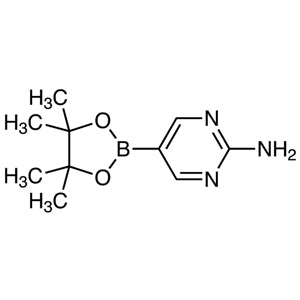
- TCI A3087 402960-38-7 2-Amino-5-(4,4,5,5-tetramethyl-1,3,2-dioxaborolan-2-yl)pyrimidine
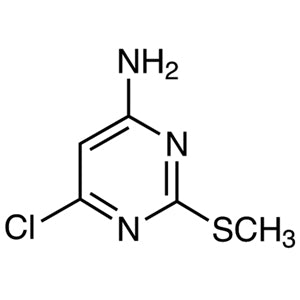
- TCI A2848 1005-38-5 4-Amino-6-chloro-2-(methylthio)pyrimidine
- TCI A2716 145783-15-9 5-Amino-4,6-dichloro-2-(propylthio)pyrimidine
- TCI A2522 16075-42-6 2-Amino-4-(trifluoromethyl)pyrimidine
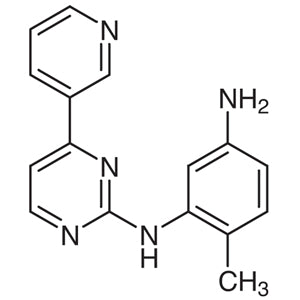
- TCI A2308 152460-10-1 2-(5-Amino-2-methylanilino)-4-(3-pyridyl)pyrimidine
- TCI A0432 61-82-5 3-Amino-1,2,4-triazole
- Enzyme Kinetics Studies: This compound is ideal for measuring enzyme activity and substrate turnover rates due to its ability to act as a substrate or inhibitor.
- Drug Discovery Research: It is used in screening programs to identify potential enzyme targets and assess the inhibitory effects of new compounds.
- Biochemical Assays: Its stability and reactivity make it suitable for use in various biochemical assays that require precise control over enzymatic reactions.
- Pharmacological Testing: It supports experiments that evaluate the interaction between enzymes and potential therapeutic agents.
- Molecular Interaction Studies: Its unique molecular structure allows it to be used in studies examining protein-enzyme interactions and binding affinities.
| Brand | TCI |
|---|---|
| CAS number | 5334-30-5 |
| Molecular formula | — |
| Purity | — |
| Category | Life Science > Biochemicals and Reagents > Enzymes, Enzyme Inhibitors, Enzyme Substrates |
| Pack sizes | Available in various packaging options to suit different experimental needs |
| Physical form | Solid |
| Storage | Store in a cool, dry place away from direct sunlight |
This compound should be stored in a cool, dry place, away from direct sunlight and sources of heat. It is recommended to use airtight containers to prevent moisture absorption and contamination. Due to its chemical nature, it should be handled with appropriate personal protective equipment, such as gloves and safety goggles, to ensure laboratory safety. Avoid exposure to incompatible substances and ensure proper ventilation in the workspace. Regular monitoring of storage conditions is essential to maintain the integrity and effectiveness of the compound in research applications.
—
Produk Terkait
-
2-Amino-5-(4,4,5,5-tetramethyl-1,3,2-dioxaborolan-2-yl)pyrimidine TCI A3087
Regular price From Rp 1.458.450,00Regular price -
4-Amino-6-chloro-2-(methylthio)pyrimidine TCI A2848
Regular price Rp 1.724.100,00Regular price -
5-Amino-4,6-dichloro-2-(propylthio)pyrimidine TCI A2716
Regular price From Rp 637.350,00Regular price -
2-Amino-4-(trifluoromethyl)pyrimidine TCI A2522
Regular price From Rp 1.060.500,00Regular price -
2-(5-Amino-2-methylanilino)-4-(3-pyridyl)pyrimidine TCI A2308
Regular price From Rp 505.050,00Regular price -
3-Amino-1,2,4-triazole TCI A0432
Regular price From Rp 505.050,00Regular price -
4-Iodo-3,5-dimethylpyrazole TCI I0771
Regular price From Rp 769.650,00Regular price -
4-Iodo-1-methylpyrazole-5-carboxylicAcid TCI I0786
Regular price From Rp 2.969.400,00Regular price