1-Acetylguanidine is a chemical compound widely used as a foundational building block in the synthesis of complex molecules. Its unique molecular structure enables it to act as a versatile linker between various functional groups during chemical reactions. In the laboratory, this compound plays a crucial role in the development of new organic and pharmaceutical compounds. Due to its reactivity, it is often selected as a key reagent in substitution and coupling reactions, where it facilitates the formation of more complex molecular structures.
The chemical properties of 1-Acetylguanidine make it a preferred choice for researchers. It exhibits stability under certain conditions but is highly sensitive to moisture and air exposure. Its simple yet flexible molecular structure allows it to readily react with a variety of reagents, making it suitable for high-speed and high-efficiency reactions. The solid form of the compound also simplifies weighing and handling in laboratory settings, enhancing its practicality for routine use.
In Indonesian laboratories, 1-Acetylguanidine is extensively utilized in organic and pharmaceutical research. It is commonly found in academic and research institutions where scientists work on the development of new compounds with potential applications in medicine and industry. Its reliability and effectiveness have made it a staple in the chemical toolkit of many Indonesian laboratories.
- Organic synthesis applications benefit from 1-Acetylguanidine due to its ability to act as a versatile building block in the formation of complex molecular structures.
- Pharmaceutical research often employs this compound for the development of new drug molecules, as it can participate in key reaction steps that lead to the creation of bioactive compounds.
- It is ideal for coupling reactions where the formation of stable intermediates is essential for the synthesis of target molecules.
- In academic research settings, 1-Acetylguanidine is used to explore new reaction pathways and chemical transformations.
- Its reactivity and flexibility make it a valuable reagent in the synthesis of heterocyclic compounds and functionalized derivatives.
| Brand | TCI |
|---|---|
| CAS number | 5699-40-1 |
| Molecular formula | — |
| Purity | — |
| Category | Chemistry > Building Blocks > Non-Heterocyclic Building Blocks |
| Pack sizes | Available in various quantities suitable for laboratory use |
| Physical form | Solid |
| Storage | Store in a dry, cool place away from moisture and air exposure |
1-Acetylguanidine should be stored in a dry, cool environment to maintain its chemical stability. It is recommended to keep the compound in a sealed container to prevent exposure to moisture and air, which can degrade its properties. Suitable containers include glass or plastic vessels with tight-fitting lids. In laboratory settings, it is important to handle the compound with care, using appropriate personal protective equipment such as gloves and safety goggles. Avoid direct contact with skin and eyes, and ensure proper ventilation when working with this reagent. Regular monitoring of storage conditions is advised to ensure the integrity of the material remains intact.
—
Product Categories
Produk Terkait
-
1,3-Di-o-tolylguanidine TCI D0953
Regular price From Rp 557.550,00Regular priceRp 405.300,00Sale price From Rp 557.550,00 -
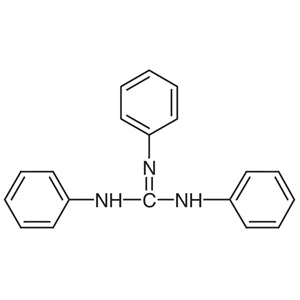
1,2,3-Triphenylguanidine TCI T1316
Regular price Rp 5.803.350,00Regular priceRp 4.074.000,00Sale price Rp 5.803.350,00 -
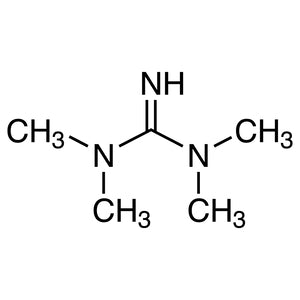
1,1,3,3-Tetramethylguanidine TCI T0148
Regular price From Rp 742.350,00Regular priceRp 534.450,00Sale price From Rp 742.350,00 -
1-MethylguanidineSulfate TCI M1691
Regular price Rp 2.306.850,00Regular priceRp 1.628.550,00Sale price Rp 2.306.850,00 -
1,1-DiethylguanidineSulfate TCI D2035
Regular price From Rp 2.809.800,00Regular priceRp 1.980.300,00Sale price From Rp 2.809.800,00 -
1,1-DimethylguanidineSulfate TCI D1799
Regular price From Rp 637.350,00Regular priceRp 460.950,00Sale price From Rp 637.350,00 -
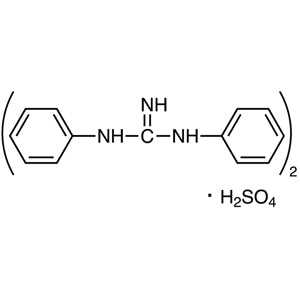
1,3-DiphenylguanidineSulfate TCI D1348
Regular price From Rp 1.881.600,00Regular priceRp 1.331.400,00Sale price From Rp 1.881.600,00 -
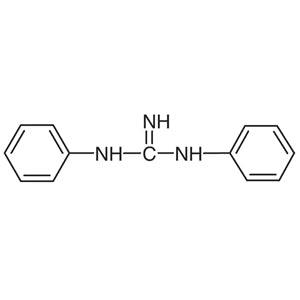
1,3-Diphenylguanidine TCI D0892
Regular price From Rp 530.250,00Regular priceRp 386.400,00Sale price From Rp 530.250,00