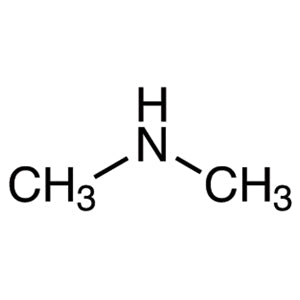
1,1,3,3-Tetramethylguanidine (TMG) from TCI is a guanidine derivative in which all four hydrogens on the terminal nitrogens are replaced by methyl groups. The result is a strong, metal-free organic base supplied as a liquid. In synthetic laboratories, TMG works as a base and as a catalyst in many reactions that form carbon–carbon and carbon–heteroatom bonds. Researchers often pick it when they need a base stronger than ordinary tertiary amines that is still easy to handle and dissolves readily in organic solvents.
TMG's high basicity comes from resonance stabilization of the guanidinium cation formed after protonation. The positive charge is spread across three nitrogen atoms, so the conjugate acid is very stable. The methyl groups make TMG highly soluble in organic solvents, and the one remaining N–H group allows further reactivity, such as forming salts and ionic liquids. Because it is a metal-free organic base, TMG is also useful when metal residues must be avoided, for example when making compounds intended for biological testing.
In Indonesia, TMG is relevant to organic chemistry, medicinal chemistry, and green chemistry laboratories at universities and research institutions. Synthetic chemists use it to develop new reaction methods, prepare intermediates, and study base-catalyzed transformations. Graduate students and research groups working on catalysis, ionic liquids, or bioactive molecules will find it a practical reagent to keep on hand. It also fits well into teaching and research labs that need a dependable strong organic base without the handling demands of metal-based bases.
TCI brochures (PDF)
- Hypervalent Iodine Reagents for Ethynylation 2024-07-23 · p. 2
Related TCI products
- TCI B6052 29166-72-1 2-tert-Butyl-1,1,3,3-tetramethylguanidine
- TCI M1691 598-12-9 1-Methylguanidine Sulfate
- TCI D1799 598-65-2 1,1-Dimethylguanidine Sulfate
- TCI D2035 77297-00-8 1,1-Diethylguanidine Sulfate
- TCI T3614 75-50-3 Trimethylamine (ca. 8% in Toluene, ca. 1mol/L)
- TCI T2893 75-50-3 Trimethylamine (ca. 25% in Isopropyl Alcohol, ca. 3mol/L)
- Base-mediated organic synthesis: TMG is a strong, soluble organic base, so it can deprotonate substrates efficiently in reactions where ordinary tertiary amines are too weak.
- Catalysis of carbon–carbon bond formation: TMG serves as a catalyst for reactions that build carbon–carbon bonds, and it stays homogeneous in common organic solvents.
- Carbon–heteroatom bond formation: TMG's basicity and catalytic activity support reactions that form bonds between carbon and heteroatoms, which are central to building functionalized molecules.
- Metal-free synthesis for biological testing: because TMG contains no metal, it helps chemists avoid metal residues in compounds meant for biological assays or medicinal chemistry screening.
- Preparation of salts and ionic liquids: TMG's remaining N–H group and strong basicity let it form guanidinium salts and ionic liquids, which are studied in green chemistry research.
From the TCI brochure
- Reagent in heavy-metal-free ethynylation with T3272
| Brand | TCI (product code T0148) |
|---|---|
| CAS number | 80-70-6 |
| Molecular formula | — |
| Purity | — |
| Category | Chemistry > Building Blocks > Non-Heterocyclic Building Blocks |
| Pack sizes | available in several pack sizes; contact AMI Scientific for current options |
| Physical form | liquid |
| Storage | keep tightly closed in a cool, dry, well-ventilated place, following the manufacturer's SDS |
Store 1,1,3,3-Tetramethylguanidine in its original, tightly sealed container in a cool, dry, well-ventilated area, away from heat sources, acids, and incompatible materials. As a strong organic base, it should be kept apart from acidic reagents and protected from moisture and air to preserve its quality. Handle it in a fume hood while wearing suitable personal protective equipment, including chemical-resistant gloves, safety goggles, and a lab coat. Avoid contact with skin and eyes, and do not inhale vapors. Always check the Safety Data Sheet supplied by TCI for detailed hazard, first-aid, and disposal information, and dispose of waste according to local regulations.
—
Produk Terkait
-
2-tert-Butyl-1,1,3,3-tetramethylguanidine TCI B6052
Regular price From Rp 1.618.050,00Regular priceRp 1.146.600,00Sale price From Rp 1.618.050,00 -
1-MethylguanidineSulfate TCI M1691
Regular price Rp 2.306.850,00Regular priceRp 1.628.550,00Sale price Rp 2.306.850,00 -
1,1-DimethylguanidineSulfate TCI D1799
Regular price From Rp 637.350,00Regular priceRp 460.950,00Sale price From Rp 637.350,00 -
1,1-DiethylguanidineSulfate TCI D2035
Regular price From Rp 2.809.800,00Regular priceRp 1.980.300,00Sale price From Rp 2.809.800,00 -
Trimethylamine(ca.8%inToluene,ca.1mol/L) TCI T3614
Regular price Rp 1.087.800,00Regular priceRp 760.200,00Sale price Rp 1.087.800,00 -
Trimethylamine(ca.25%inIsopropylAlcohol,ca.3mol/L) TCI T2893
Regular price From Rp 717.150,00Regular priceRp 500.850,00Sale price From Rp 717.150,00 -
1,8-Bis(dimethylamino)naphthalene[forDehydrohalogenation] TCI B1018
Regular price From Rp 980.700,00Regular priceRp 701.400,00Sale price From Rp 980.700,00 -
Dimethylamine(ca.11%inIsopropylAlcohol,ca.2mol/L) TCI D4198
Regular price From Rp 717.150,00Regular priceRp 500.850,00Sale price From Rp 717.150,00