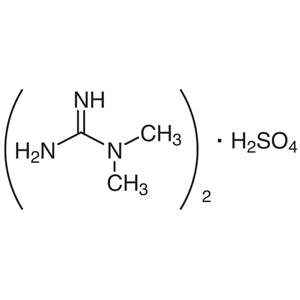
1,1-Dimethylguanidine Sulfate is a chemical compound widely used as a foundational material in various chemical reactions, particularly in the synthesis of organic compounds. This compound plays a crucial role in laboratory settings where a strong basic environment is required. Its ability to act as a catalyst or reagent in the formation of complex molecules makes it an essential component in both academic and industrial research. Due to its reactivity and versatility, it is frequently employed in organic chemistry and chemical engineering applications.
The compound is known for its strong basic properties, which make it highly effective in reactions that require a basic medium. Its chemical structure is stable, and it dissolves easily in organic solvents such as ethyl acetate and ethanol. This solubility and reactivity allow it to interact with a wide range of functional groups, making it a flexible choice for different chemical processes. The unique chemical properties of 1,1-Dimethylguanidine Sulfate enable its use in various reactions, including coupling, substitution, and deprotonation.
In Indonesian laboratories, 1,1-Dimethylguanidine Sulfate is extensively used in both pure and applied chemical research. It is commonly found in educational institutions and research organizations that focus on product development, quality testing, and scientific studies. Its availability and effectiveness make it a preferred choice for a wide range of chemical applications in the Indonesian scientific community.
- Organic synthesis reactions benefit from its strong basic properties, making it ideal for deprotonation and substitution processes.
- It is commonly used in catalytic processes where a stable and reactive base is required for efficient reaction pathways.
- In the development of pharmaceutical compounds, it serves as a key reagent in the formation of complex molecular structures.
- Its solubility in organic solvents makes it suitable for use in solution-based chemical reactions and purification techniques.
- It is widely applied in analytical chemistry for the preparation of reagents and the standardization of chemical solutions.
| Brand | TCI |
|---|---|
| CAS number | 598-65-2 |
| Molecular formula | — |
| Purity | — |
| Category | Chemistry > Building Blocks > Non-Heterocyclic Building Blocks |
| Pack sizes | Available in various quantities as per standard laboratory supply options |
| Physical form | Solid powder |
| Storage | Store in a cool, dry place away from moisture and direct sunlight |
This compound should be stored in a cool, dry environment to maintain its chemical stability and prevent degradation. It is recommended to keep it in a sealed container to avoid exposure to moisture and air, which can affect its reactivity. Due to its strong basic nature, it should be handled with appropriate personal protective equipment, such as gloves and safety goggles, to ensure laboratory safety. It is important to store it away from incompatible materials to prevent any unwanted chemical interactions. Proper labeling and storage conditions are essential to maintain its effectiveness and ensure safe use in laboratory settings.
—
Produk Terkait
-
1-MethylguanidineSulfate TCI M1691
Regular price Rp 2.254.350,00Regular price -
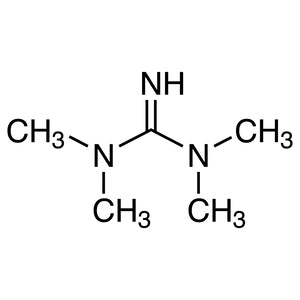
1,1,3,3-Tetramethylguanidine TCI T0148
Regular price From Rp 689.850,00Regular price -
1,1-DiethylguanidineSulfate TCI D2035
Regular price From Rp 2.757.300,00Regular price -
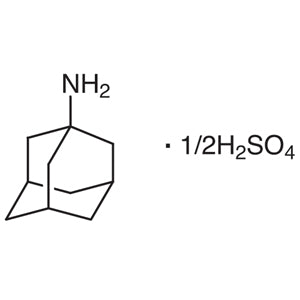
1-AdamantanamineSulfate TCI A1319
Regular price Rp 1.167.600,00Regular price -
AminoacetonitrileSulfate TCI A0912
Regular price From Rp 1.696.800,00Regular price -
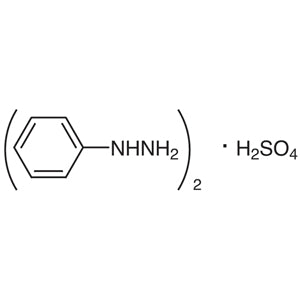
PhenylhydrazineSulfate TCI P0186
Regular price Rp 1.246.350,00Regular price -
1,4-PhenylenediamineSulfate TCI P0175
Regular price Rp 530.250,00Regular price -
1,3-PhenylenediamineSulfate TCI P0174
Regular price Rp 505.050,00Regular price