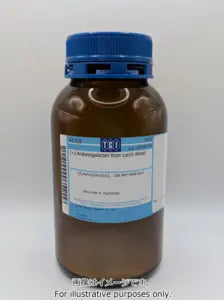
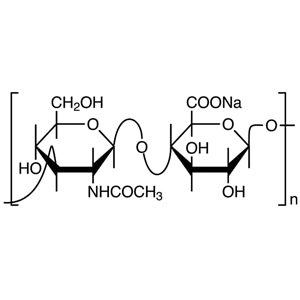
Gum Arabic, with CAS number 9000-01-5, is a widely used chemical material in laboratory experiments, particularly in the fields of chemical biology and glycoscience. This natural extract is derived from the sap of the Acacia tree and possesses colloidal properties and high viscosity. Its versatility makes it an essential component in various laboratory procedures, where it functions as a binder, solvent, or diluent. Due to its stability and resistance to degradation, Gum Arabic is a reliable choice for complex synthesis and characterization processes.
The non-reactive and non-toxic nature of Gum Arabic, along with its excellent water solubility, contributes to its popularity in laboratory settings. These characteristics ensure that it does not interfere with chemical reactions or compromise the integrity of experimental results. Its ability to form stable suspensions, emulsions, and solutions makes it ideal for use in a wide range of applications. Additionally, its lack of hazardous chemical components ensures a safe working environment in the laboratory.
In Indonesian laboratories, Gum Arabic is commonly used in scientific and industrial research, especially in the development of formulations and the study of complex compounds. Its stability and compatibility with various substances make it a preferred material for long-term research projects. Its widespread use reflects its importance in both academic and applied research settings in Indonesia.
TCI brochures (PDF)
- Polysaccharides 2025-02-13 · p. 1
- Biomaterials Research Reagents 2025-02-19 · p. 4
Related TCI products
- Suspension Preparation: Gum Arabic is ideal for creating stable suspensions due to its colloidal properties and high viscosity, ensuring uniform dispersion of particles.
- Emulsion Formulation: Its ability to act as an emulsifier makes it suitable for producing stable oil-in-water or water-in-oil emulsions in chemical and pharmaceutical applications.
- Solvent and Diluent Use: It serves as a non-reactive solvent and diluent in various chemical reactions, particularly in biochemical and glycoscience experiments.
- Stabilization of Reagents: Its non-degradable nature makes it useful for stabilizing reagents and maintaining the integrity of solutions over extended periods.
- Formulation Development: Gum Arabic is frequently used in the development of cosmetic, pharmaceutical, and food-related formulations due to its compatibility and functional properties.
| Brand | TCI |
|---|---|
| CAS number | 9000-01-5 |
| Molecular formula | — |
| Purity | — |
| Category | Chemistry > Chemical Biology > Glycoscience |
| Pack sizes | As available from supplier |
| Physical form | Powder |
| Storage | Store in a cool, dry place away from direct sunlight |
Gum Arabic should be stored in a cool, dry environment to maintain its stability and prevent degradation. It is recommended to use airtight containers to protect it from moisture and contaminants. Due to its non-reactive nature, it does not require special handling beyond standard laboratory safety practices. It should be kept away from sources of heat and direct sunlight to preserve its chemical integrity. In laboratory settings, it is important to ensure that the material is handled with clean, dry gloves to avoid contamination. Proper storage conditions help maintain its effectiveness and usability in various experimental applications.
—
Product Categories
- GlycoscienceApplications Using Glyco-materialsGlyco-engeneering [Applications Using Glyco-materials]
- GlycoscienceFunctional OligosaccharidesPolysaccharides [Functional Oligosaccharides]
- GlycosciencePolysaccharides [Glycoscience]
- Pharmaceutical Development and Drug Discovery ResearchDrug Delivery Systems (DDS)Natural Polymers (for DDS)
Produk Terkait
-
XylanfromCornCore TCI X0078
Regular price From Rp 1.458.450,00Regular priceRp 1.035.300,00Sale price From Rp 1.458.450,00 -
(+)-ArabinogalactanfromLarchWood TCI A1328
Regular price From Rp 1.246.350,00Regular priceRp 887.250,00Sale price From Rp 1.246.350,00 -
PectinfromCitrus TCI P0024
Regular price From Rp 637.350,00Regular priceRp 460.950,00Sale price From Rp 637.350,00 -
KonjacGlucomannan TCI K0075
Regular price From Rp 2.227.050,00Regular priceRp 1.572.900,00Sale price From Rp 2.227.050,00 -
PotassiumHyaluronatefromBacteria TCI H1808
Regular price Rp 7.287.000,00Regular priceRp 5.111.400,00Sale price Rp 7.287.000,00 -
HyaluronicAcidSodiumSaltfromBacteria TCI H1791
Regular price From Rp 1.988.700,00Regular priceRp 1.405.950,00Sale price From Rp 1.988.700,00 -
PotassiumHyaluronatefromCockscomb TCI H0652
Regular price Rp 9.459.450,00Regular priceRp 6.630.750,00Sale price Rp 9.459.450,00 -
SodiumHyaluronatefromCockscomb TCI H0603
Regular price From Rp 2.411.850,00Regular priceRp 1.702.050,00Sale price From Rp 2.411.850,00