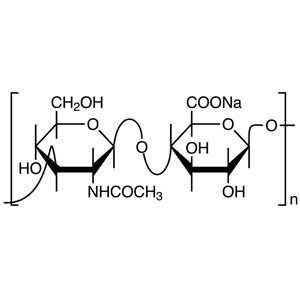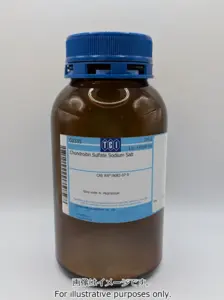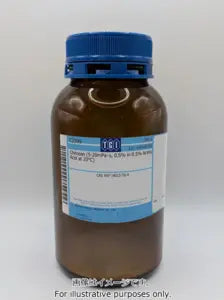
Hyaluronic Acid Sodium Salt from Bacteria (TCI H1791, CAS 9067-32-7) is a chemical compound widely used in biochemical and biomedical research. This sodium salt of hyaluronic acid is a naturally occurring polysaccharide found in connective tissues and bodily fluids. In the laboratory, it plays a crucial role in studying molecular structures, protein interactions, and various applications in pharmacology and biomedicine. Its unique properties make it an essential component for researchers aiming to explore the behavior of biomolecules in aqueous environments.
The compound is highly hydrophilic, which allows it to interact effectively with water and biological molecules. This property is particularly valuable in experiments involving hydration, lubrication, and tissue engineering. Additionally, it is stable under certain conditions and dissolves easily in water, making it convenient for use in a wide range of experimental setups. Its non-toxic and non-hazardous nature further enhances its safety profile, making it a preferred choice for laboratory use.
In Indonesian laboratories, this compound is commonly used in health, cosmetic, and biomedical research. Researchers from educational and research institutions rely on it to develop pharmaceutical products, study degenerative diseases, and explore its potential in regenerative medicine. Its versatility and reliability make it a staple in many scientific investigations across various fields.
TCI brochures (PDF)
- Anti-Glycosaminoglycan Antibodies 2023-07-28 · p. 2
- Polysaccharides 2025-02-13 · p. 2
- Biomaterials Research Reagents 2025-02-19 · p. 4
- Pharmaceutical Ingredients for Research and Experimental Use 2026-03-09 · p. 49
- Reagents for Biological Research 2025-03-11 · p. 22
Related TCI products
- TCI H1808 31799-91-4 Potassium Hyaluronate from Bacteria
- TCI H0603 9067-32-7 Sodium Hyaluronate from Cockscomb
- TCI H0652 31799-91-4 Potassium Hyaluronate from Cockscomb
- TCI H1807 9004-61-9 Hyaluronic Acid from Bacteria
- TCI H0595 9004-61-9 Hyaluronic Acid from Cockscomb
- TCI C0335 9082-07-9 Chondroitin Sulfate Sodium Salt
- Used in biomedical research for studying the role of hyaluronic acid in tissue repair and wound healing due to its ability to bind water and support cellular functions.
- Applied in cosmetic science to develop skincare products that enhance hydration and skin elasticity because of its high hydrophilicity and compatibility with biological systems.
- Utilized in pharmacology for drug delivery systems where it serves as a carrier for therapeutic agents due to its biocompatibility and solubility in aqueous solutions.
- Employed in molecular biology for investigating protein interactions and structural analysis of glycosaminoglycans in cellular environments.
- Integrated into regenerative medicine studies to support the development of scaffolds and biomaterials that mimic the extracellular matrix.
| Brand | TCI |
|---|---|
| CAS number | 9067-32-7 |
| Molecular formula | — |
| Purity | — |
| Category | Chemistry > Chemical Biology > Glycoscience |
| Pack sizes | Available in various quantities as per standard laboratory supply |
| Physical form | Powder |
| Storage | Store in a cool, dry place away from direct sunlight |
This compound should be stored in a cool, dry environment to maintain its stability and prevent degradation. It is recommended to keep it in a sealed container to avoid moisture absorption, which could affect its solubility and performance. As it is non-toxic and non-hazardous, standard laboratory safety protocols are sufficient for handling. However, it is important to ensure that the container is properly labeled to prevent confusion with other substances. The compound is stable under normal laboratory conditions and does not require special refrigeration unless specified by the manufacturer. Always follow general laboratory practices to ensure safe and effective use.
—
Product Categories
- Chemical BiologyGlycoscienceApplications Using Glyco-materials
- Chemical BiologyGlycoscienceEnzyme, Lectin, Antibody [Glycoscience]
- Chemical BiologyGlycoscienceFunctional Oligosaccharides
- Chemical BiologyGlycoscienceOligosaccharides by Component Sugar
- Chemical BiologyGlycosciencePolysaccharides [Glycoscience]
- Pharmaceutical Development and Drug Discovery Research ReagentsDrug Delivery Systems (DDS)Natural Polymers (for DDS)
- GlycoscienceApplications Using Glyco-materialsGlyco-engeneering [Applications Using Glyco-materials]
- GlycoscienceApplications Using Glyco-materialsGlyco-utilization [Applications Using Glyco-materials]
- GlycoscienceEnzyme, Lectin, Antibody [Glycoscience]Glycohydrases and Related Reagents [Glycoscience]
- GlycoscienceFunctional OligosaccharidesGlycosaminoglycan [Functional Oligosaccharides]
- GlycoscienceFunctional OligosaccharidesPolysaccharides [Functional Oligosaccharides]
- GlycoscienceOligosaccharides by Component SugarGlucosamine [Oligosaccharides by Component Sugar]
- GlycoscienceOligosaccharides by Component SugarGlucuronic Acids [Oligosaccharides by Component Sugar]
- GlycosciencePolysaccharides [Glycoscience]
- Biochemicals and ReagentsPharmaceutical Research Reagents (for Experimental Use)Cosmetic Research Reagents (for Experimental Use)
- Pharmaceutical Development and Drug Discovery ResearchPharmaceutical Research Reagents (for Experimental Use)Cosmetic Research Reagents (for Experimental Use)
- Pharmaceutical Development and Drug Discovery ResearchDrug Delivery Systems (DDS)Natural Polymers (for DDS)
Produk Terkait
-
PotassiumHyaluronatefromBacteria TCI H1808
Regular price Rp 7.287.000,00Regular priceRp 5.111.400,00Sale price Rp 7.287.000,00 -
SodiumHyaluronatefromCockscomb TCI H0603
Regular price From Rp 2.411.850,00Regular priceRp 1.702.050,00Sale price From Rp 2.411.850,00 -
PotassiumHyaluronatefromCockscomb TCI H0652
Regular price Rp 9.459.450,00Regular priceRp 6.630.750,00Sale price Rp 9.459.450,00 -
HyaluronicAcidfromBacteria TCI H1807
Regular price Rp 6.095.250,00Regular priceRp 4.277.700,00Sale price Rp 6.095.250,00 -
HyaluronicAcidfromCockscomb TCI H0595
Regular price Rp 8.745.450,00Regular priceRp 6.130.950,00Sale price Rp 8.745.450,00 -
ChondroitinSulfateSodiumSalt TCI C0335
Regular price From Rp 2.121.000,00Regular priceRp 1.498.350,00Sale price From Rp 2.121.000,00 -
Chitosan(5-20mPa.s,0.5%in0.5%AceticAcidat20degC) TCI C2395
Regular price Rp 717.150,00Regular priceRp 516.600,00Sale price Rp 717.150,00 -
PectinfromCitrus TCI P0024
Regular price From Rp 637.350,00Regular priceRp 460.950,00Sale price From Rp 637.350,00